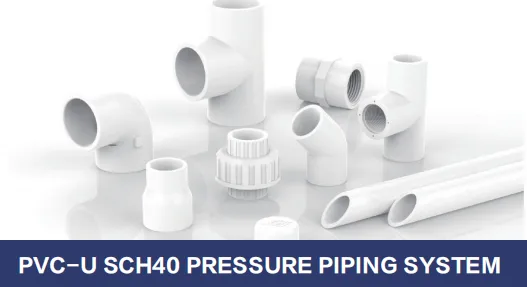
Every building, whether it's a cozy home, a bustling hospital, or a sprawling factory, relies on one invisible yet critical component: its piping system. From delivering clean water to removing wastewater, from powering industrial processes to ensuring fire safety, the right piping can make or break the functionality and longevity of any structure. Among the many options available today, the PVC-U SCH40 pressure piping system stands out as a workhorse—durable, reliable, and trusted by engineers, contractors, and homeowners alike. But what exactly is it, and why has it become a staple in modern infrastructure? Let's dive in.
Defining PVC-U SCH40 Pressure Piping System
Let's start with the basics. PVC-U, or Unplasticized Polyvinyl Chloride, is a rigid, strong variant of PVC (Polyvinyl Chloride) that contains no plasticizers. Unlike flexible PVC (often used in hoses or cables), PVC-U is stiff and built to withstand pressure, making it ideal for structural applications. Now, "SCH40" refers to the pipe's "schedule"—a standardized measurement of wall thickness. In the world of piping, "Schedule 40" is a common designation, indicating a wall thickness designed to handle moderate to high pressure levels, depending on the pipe diameter.
So, when we talk about a
PVC-U SCH40 pressure piping system
, we're referring to a network of rigid, unplasticized PVC pipes with Schedule 40 wall thickness, engineered to transport fluids (liquids or gases) under pressure. These systems are typically paired with compatible
pipes fittings
—like elbows, tees, couplings, and valves—to create a seamless, leak-proof network. And because they're part of a broader ecosystem, many suppliers also offer
plastic valve system
options to ensure every component works in harmony.
Core Benefits: Why PVC-U SCH40 Stands Out
1. Exceptional Pressure Handling Capabilities
The "SCH40" designation isn't just a label—it's a promise of strength. Thanks to its thicker walls (compared to lower schedules like SCH20), PVC-U SCH40 pipes are designed to handle higher internal pressures. For example, a 1-inch SCH40 PVC-U pipe can typically withstand pressures up to 450 psi (pounds per square inch) at 73°F, making it suitable for a wide range of applications, from residential water supply to industrial fluid transfer. This pressure rating ensures the system remains stable even during peak demand—say, when multiple taps are open in a home or a factory's production line is running at full capacity.
2. Unmatched Corrosion and Chemical Resistance
Metal pipes—like galvanized steel or copper—have a Achilles' heel: corrosion. Over time, exposure to water, soil, or chemicals can cause rust, pitting, or degradation, leading to leaks, reduced water quality, and costly replacements. PVC-U SCH40 pipes, however, are inherently resistant to corrosion. They don't rust, rot, or react with most acids, alkalis, or salts, making them ideal for harsh environments. Whether it's municipal water with trace minerals, industrial wastewater with mild chemicals, or irrigation systems pumping fertilizers, these pipes hold their ground, ensuring long-term performance without degradation.
3. Cost-Effective and Low Maintenance
Let's talk numbers. Compared to metal alternatives like copper or stainless steel, PVC-U SCH40 pipes are significantly more affordable upfront. But the savings don't stop there. Unlike steel, which requires periodic painting or coating to prevent rust, or copper, which may need insulation to avoid condensation, PVC-U pipes are virtually maintenance-free. They don't need protective treatments, and their smooth inner surface resists scale buildup—meaning better water flow and fewer clogs over time. For homeowners and businesses, this translates to lower long-term costs: less money spent on repairs, replacements, or energy (since unobstructed flow reduces pump strain).
4. Lightweight and Easy to Install
Anyone who's ever lifted a heavy steel pipe knows installation can be backbreaking work. PVC-U SCH40 pipes, by contrast, are lightweight—roughly 1/5 the weight of steel pipes of the same size. This makes transportation, handling, and installation a breeze, even in tight spaces like crawl spaces or ceiling cavities. Contractors can cut them with basic tools (a handsaw or pipe cutter), and joining them is simple: solvent cement welding, a process where a special adhesive fuses the pipe and fitting into a single, permanent bond. No need for heavy machinery, threading, or soldering—saving time and labor costs on the job site.
5. Longevity That Stands the Test of Time
When you invest in a piping system, you want it to last. PVC-U SCH40 delivers. With proper installation and maintenance, these pipes can have a lifespan of 50 years or more—often outliving the buildings they serve. They're resistant to UV radiation (when installed indoors or covered), and their rigid structure resists impact and deformation, even in areas with heavy foot traffic or soil movement. In fact, many municipal water systems installed in the 1970s and 1980s are still operational today, a testament to PVC-U SCH40's durability.
How Does PVC-U SCH40 Compare to Other Piping Materials?
To truly appreciate PVC-U SCH40, it helps to see how it stacks up against other common piping materials. Let's break it down:
|
Material
|
Pressure Rating (Typical)
|
Corrosion Resistance
|
Installation Ease
|
Cost (Per Foot)
|
Estimated Lifespan
|
|
PVC-U SCH40
|
Up to 450 psi (1-inch pipe)
|
Excellent (resists rust, chemicals)
|
High (lightweight, solvent welding)
|
$0.50–$2.00
|
50+ years
|
|
Copper
|
Up to 1,000 psi (type L)
|
Good (prone to pitting in acidic water)
|
Moderate (requires soldering, heavy)
|
$3.00–$8.00
|
40–50 years
|
|
Galvanized Steel
|
Up to 300 psi (1-inch pipe)
|
Poor (rusts over time)
|
Low (heavy, requires threading)
|
$2.50–$5.00
|
20–30 years
|
|
PPR (Polypropylene Random Copolymer)
|
Up to 100 psi (hot water)
|
Good (resists chemicals, not UV-stable)
|
Moderate (heat fusion needed)
|
$1.50–$3.00
|
40–50 years
|
As the table shows, PVC-U SCH40 offers a winning balance of pressure handling, corrosion resistance, and affordability—making it the go-to choice for most non-high-temperature, pressure-based applications.
Where Is PVC-U SCH40 Used? Real-World Applications
PVC-U SCH40's versatility means it's used across industries. Here are just a few examples:
Residential and Commercial Water Supply
From bathroom faucets to kitchen sinks, PVC-U SCH40 pipes deliver clean, pressurized water to homes and offices. Their corrosion resistance ensures no metallic taste leaches into the water, and their smooth inner walls reduce flow resistance, keeping water pressure consistent.
Irrigation and Agriculture
Farms and golf courses rely on PVC-U SCH40 to transport water over long distances. Its resistance to fertilizers, pesticides, and soil chemicals makes it ideal for underground irrigation lines, and its lightweight design simplifies installation across large fields.
Industrial and Manufacturing
In factories, PVC-U SCH40 pipes carry coolants, lubricants, and non-corrosive chemicals between machines. Their chemical resistance and pressure handling make them safe for use in food processing, pharmaceuticals, and chemical manufacturing (where harsh substances are common).
Wastewater and Drainage
While SCH40 is often associated with pressure applications, it's also used in gravity-fed drainage systems (paired with
PVC DWV pipe
, another common variant). Its smooth surface prevents clogs, and its durability stands up to the abrasive nature of wastewater.
Of course, even the best piping system is only as good as the components used. That's why partnering with a trusted
PVC-U SCH40 pressure piping system supplier
is critical. A reputable supplier doesn't just sell pipes—they offer
PVC-U SCH40 pressure piping system solutions
tailored to your project's needs. This includes:
Quality Assurance
Top suppliers source pipes and fittings that meet industry standards (like ASTM or ISO), ensuring consistent wall thickness, pressure ratings, and material purity. This reduces the risk of leaks or failures down the line.
Expertise and Support
Whether you're a contractor unsure about pipe sizing or a homeowner planning a DIY project, a good supplier provides technical guidance. They can help you calculate pressure requirements, select compatible
pipes fittings
, and even recommend installation best practices.
Comprehensive Product Lines
The best suppliers offer a full range of, from pipes and fittings to
plastic valve system
options. This ensures all components are designed to work together, minimizing compatibility issues and ensuring a seamless install.
Final Thoughts: PVC-U SCH40—A Smart Investment in Infrastructure
At the end of the day, a piping system is more than just a network of tubes—it's the circulatory system of any building. And when it comes to reliability, affordability, and performance, PVC-U SCH40 pressure piping systems deliver on all fronts. Whether you're building a new home, upgrading a factory, or maintaining a municipal water system, this workhorse material offers the strength, durability, and peace of mind you need.
So, the next time you turn on the tap or walk past a construction site, take a moment to appreciate the unsung hero beneath your feet: the PVC-U SCH40 pipe, quietly doing its job, day in and day out. And when it's time to choose your next piping system, remember—quality matters. Partner with a supplier who understands your needs, and you'll enjoy decades of trouble-free performance.