
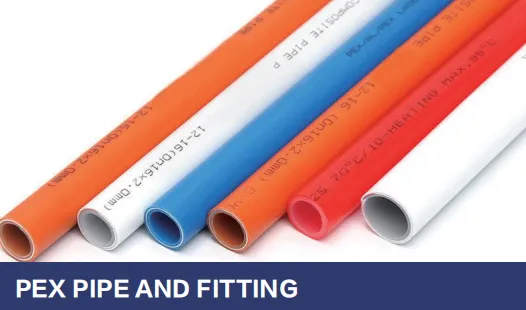
Walk into any modern home, office, or hospital, and behind the walls, under the floors, or within the ceilings, there's a network working tirelessly to keep daily life running smoothly: the plumbing system. Among the unsung heroes of this network are PEX pipes—flexible, durable, and increasingly indispensable in both residential and commercial construction. But have you ever stopped to think about how these pipes make their way from factories to building sites? Enter the PEX pipe and fitting supplier: a critical link that does far more than just "sell pipes." In this article, we'll unpack what it truly means to be a PEX pipe and fitting supplier, explore their core responsibilities, and explain why they're essential partners in building stronger, more efficient plumbing systems.
Before diving into the role of a supplier, let's get clear on the star of the show: PEX pipes. Short for cross-linked polyethylene, PEX is a type of plastic piping that's revolutionized plumbing since its rise in the 1980s. Unlike traditional copper or rigid PVC pipes, PEX is flexible, which means it can bend around corners without the need for multiple elbow fittings, reducing the risk of leaks. It's also resistant to corrosion, scale buildup, and freezing temperatures—qualities that make it ideal for everything from hot water lines in homes to radiant floor heating systems in commercial buildings.
PEX pipes come in three main types: PEX-A, PEX-B, and PEX-C, each with slight differences in flexibility and manufacturing processes. PEX-A, for example, is the most flexible and can even "remember" its shape after being bent, making it perfect for tight spaces. PEX-B, on the other hand, is stiffer but more affordable, a popular choice for residential projects. PEX-C is known for its durability and is often used in commercial settings. No matter the type, though, all PEX pipes share a common trait: they rely on high-quality fittings to connect sections, control flow, and ensure a watertight seal. And that's where the PEX pipe and fitting supplier comes in.
At first glance, you might think a PEX pipe and fitting supplier is just someone who stocks pipes and sells them to contractors or builders. But that's a narrow view. In reality, these suppliers are strategic partners who bridge the gap between manufacturers and the people who need the products. They don't just move inventory—they provide expertise, solve problems, and ensure that projects have the right materials, at the right time, and for the right application. Whether you're a small plumbing contractor working on a single-family home or a large developer building a hospital complex, a reliable PEX pipe and fitting supplier is the backbone of your plumbing success.
The first and most critical responsibility of any PEX pipe and fitting supplier is ensuring that the products they offer are of the highest quality. After all, a plumbing system is only as strong as its weakest component. A burst pipe or a faulty fitting can lead to water damage, mold growth, and costly repairs—nightmares no homeowner or builder wants to face. That's why suppliers take sourcing and quality control incredibly seriously.
To start, reputable suppliers partner with established manufacturers who adhere to strict industry standards. They vet these manufacturers thoroughly, checking for certifications like ASTM International standards (ASTM F876/F877 for PEX pipes, for example) or NSF/ANSI 61 for lead-free compliance. They also conduct their own testing: sampling pipes to check for pressure resistance, temperature tolerance (PEX pipes typically handle temperatures from -40°F to 200°F), and chemical resistance (to ensure they don't leach harmful substances into drinking water). For fittings, they verify materials—brass, copper, or poly alloy—and test for tightness and durability under stress.
In regions like Saudi Arabia, where building standards are rigorous and climate conditions (high temperatures, hard water) can strain plumbing systems, this quality focus becomes even more critical. A Saudi Arabia building materials supplier specializing in PEX pipes, for instance, might go the extra mile to source pipes with enhanced UV resistance or fittings coated to prevent corrosion from mineral-heavy water. For them, quality isn't just a box to check—it's a promise to clients that their projects will stand the test of time.
Walk into a hardware store and you might see rows of PEX pipes and fittings, but choosing the right ones for a project isn't as simple as grabbing the first option. That's where a PEX pipe and fitting supplier's technical expertise shines. These professionals don't just know their products—they understand how they perform in real-world scenarios. They can answer questions like: "Which PEX type is best for radiant floor heating?" (Spoiler: PEX-A, thanks to its flexibility) or "Will this fitting work with both hot and cold water lines?" (Most brass fittings will, but it depends on the pressure rating).
This expertise is especially valuable for clients who aren't plumbing specialists. Imagine a homeowner tackling a DIY bathroom renovation. They might know they need PEX pipes but not realize that PEX-B is more cost-effective for short runs, while PEX-A is better for longer, more complex layouts. A supplier would ask about the project scope, budget, and local building codes, then recommend the right PEX pipe and fitting solutions—saving the homeowner time, money, and frustration. For commercial clients, like contractors building a school or hospital, suppliers dive even deeper: advising on pipe sizing (to meet flow rate requirements), insulation needs (for energy efficiency), and compatibility with existing systems (like connecting PEX to older copper pipes).
Technical support also extends to installation guidance. PEX pipes use unique connection methods—crimp, clamp, or push-fit fittings—and each requires specific tools and techniques. A good supplier will not only sell the fittings but also explain how to use them properly, share tips to avoid common mistakes (like over-crimping, which can crack pipes), and even provide training materials for contractors new to PEX. In short, they're not just selling products—they're empowering clients to install them correctly.
No two construction projects are the same. A luxury apartment building in Riyadh will have different plumbing needs than a rural school in Jeddah. That's why customization is a key responsibility for PEX pipe and fitting suppliers. They don't offer a one-size-fits-all approach; instead, they work with clients to create tailored PEX pipe and fitting solutions that align with project goals, budget, and constraints.
Customization can take many forms. For example, a hotel developer might need PEX pipes in specific lengths to minimize waste—say, 25-foot sections instead of the standard 100-foot rolls. A supplier can coordinate with manufacturers to cut pipes to order. Or a hospital might require color-coded pipes to differentiate between potable water, gray water, and medical gas lines; suppliers can source pipes in blue, green, or red to meet this need. Fittings, too, can be customized: specialized adapters for connecting PEX to other pipe materials, or low-profile elbows for tight spaces like under-sink cabinets.
Even beyond physical customization, suppliers offer solution-based customization. For a client building a net-zero energy home, that might mean recommending PEX pipes with integrated insulation to reduce heat loss in hot water lines. For a developer working in an earthquake-prone area, it could involve suggesting flexible PEX-A pipes that can withstand ground movement without cracking. The goal? To turn a client's unique challenge into a tailored solution that works.
In construction, time is money. A delayed shipment of PEX pipes can hold up an entire plumbing phase, pushing back deadlines and increasing labor costs. That's why inventory management is another critical responsibility for PEX pipe and fitting suppliers. These professionals maintain warehouses stocked with a wide range of PEX pipes (different types, sizes, lengths) and fittings (crimp rings, elbows, tees, valves) to ensure clients can get what they need, when they need it.
But inventory management isn't just about "having stock"—it's about anticipating demand. Suppliers track industry trends (like the growing popularity of radiant heating systems, which boost demand for PEX pipes) and seasonal fluctuations (more home renovations in spring, leading to higher pipe orders). They also work closely with clients to understand their project timelines, so they can reserve stock for large orders. For example, a supplier might set aside 5,000 feet of PEX-B pipe and 200 crimp fittings for a contractor who's scheduled to start a 50-home development in three months. This proactive approach ensures that when the contractor is ready to build, the materials are ready too.
Logistics play a role here, too. Suppliers coordinate delivery schedules to align with construction phases—dropping off pipes at the start of the plumbing rough-in, then fittings a week later when needed. They work with reliable shipping partners to ensure on-time delivery, even to remote job sites. For urgent orders, many offer expedited shipping options, because they know that a single missing fitting shouldn't bring a project to a halt.
Building codes and regulations vary by region, and plumbing systems are no exception. What's allowed in one city might be prohibited in another, and violating these rules can lead to fines, project delays, or even legal liability. That's why PEX pipe and fitting suppliers take compliance seriously. They stay up-to-date on local, national, and international regulations to ensure the products they offer meet all legal requirements.
Take Saudi Arabia, for example. The country has strict building codes overseen by the Saudi Standards, Metrology and Quality Organization (SASO). A Saudi Arabia building materials supplier must ensure that their PEX pipes comply with SASO's plumbing standards, which cover everything from pressure ratings to material safety. Similarly, in the EU, PEX pipes must meet CE marking requirements, while in the U.S., they must adhere to state-specific codes (like California's strict lead-free laws). Suppliers not only source products that meet these standards but also provide clients with documentation—certificates, test reports, and compliance statements—to prove it. This gives clients peace of mind, knowing their projects will pass inspections.
Regulatory expertise also extends to emerging trends, like sustainability. Many regions now require plumbing materials to be eco-friendly, and suppliers are responding by offering PEX pipes made from recycled materials or fittings with low carbon footprints. They can guide clients on green certifications (like LEED) and how PEX pipe and fitting solutions can contribute to earning those points—a valuable selling point for eco-conscious developers.
In a world where you can buy almost anything online with a click, what sets a great PEX pipe and fitting supplier apart? Customer service. These suppliers understand that plumbing projects are stressful enough without having to deal with unresponsive vendors or confusing order processes. That's why they prioritize building long-term relationships with clients, starting from the first inquiry.
Customer-centric service looks like this: A contractor calls with a last-minute order for 100 feet of PEX pipe and is greeted by a friendly representative who knows their name and project history. The representative checks inventory, confirms delivery for the next morning, and follows up to ensure the shipment arrived on time. For a new client, a supplier might offer a consultation to understand their business needs, then create a personalized pricing plan or loyalty program. Even after the sale, they check in: "How did the PEX-A pipes work for your radiant heating project?" or "Do you need help troubleshooting that fitting issue?"
This focus on service is especially important for small businesses and DIYers, who may not have the same resources as large contractors. A supplier might offer flexible payment terms, rent tools for installation, or even refer trusted plumbers to clients who need help. For them, every client—no matter how big or small—is worth investing in.
The relationship between a supplier and client doesn't end when the pipes are delivered. What if a batch of fittings arrives damaged? Or a pipe fails prematurely? That's where after-sales support comes in. A reputable PEX pipe and fitting supplier stands behind their products, offering warranties, handling returns, and resolving issues quickly.
Warranty management is a big part of this. Most PEX pipes come with manufacturer warranties (some up to 25 years), but suppliers act as intermediaries, helping clients navigate the claims process. If a pipe fails due to a manufacturing defect, the supplier will coordinate with the manufacturer to arrange a replacement, track the shipment, and ensure the client is compensated for any costs incurred (like labor to remove and reinstall the faulty pipe). For clients, this means one less headache—they don't have to deal directly with the manufacturer; the supplier handles it.
After-sales support also includes addressing client concerns. Maybe a contractor notices that the PEX pipes they ordered are slightly different in color than expected. A good supplier will explain that color variations are normal and don't affect performance, or offer to swap them out if the client is unhappy. Or if a fitting leaks during installation, the supplier might send a technician to inspect the issue, determine if it's a product defect or an installation error, and provide a solution—whether that's a replacement fitting or additional training for the installer.
The plumbing industry is constantly evolving, and PEX pipe and fitting suppliers can't afford to stand still. New materials, technologies, and sustainability practices emerge every year, and suppliers must stay informed to keep their clients competitive. This means attending trade shows, collaborating with manufacturers on product development, and investing in research to understand emerging trends.
One trend gaining traction, for example, is "smart plumbing," where PEX pipes are integrated with sensors to monitor flow rates, detect leaks, and optimize water usage. Suppliers are already starting to offer these smart PEX solutions, helping clients build more efficient, connected buildings. Another trend is the rise of antimicrobial PEX pipes, which are treated to resist mold and bacteria growth—ideal for hospitals, schools, and other healthcare settings. Suppliers are sourcing these specialized pipes and educating clients on their benefits, positioning themselves as innovators rather than just distributors.
By staying ahead of trends, suppliers also help clients future-proof their projects. A developer building a residential complex today might not need smart plumbing, but a supplier could explain how installing PEX pipes compatible with future smart sensors could increase the property's value down the line. In this way, suppliers become strategic advisors, helping clients make decisions that benefit them long after the project is complete.
At the end of the day, a PEX pipe and fitting supplier is more than a vendor—they're a partner in building. They ensure quality, provide expertise, customize solutions, manage logistics, navigate regulations, and stand behind their products. Whether you're building a single home or a sprawling commercial complex, the right supplier can make the difference between a plumbing system that works seamlessly for decades and one that's plagued by issues.
So the next time you turn on a faucet or step onto a warm radiant floor, take a moment to appreciate the PEX pipes that make it possible—and the suppliers who ensure those pipes are reliable, high-quality, and perfectly suited to the job. Because in the world of construction, success isn't just about the materials you use—it's about the partners you choose.
| PEX Type | Flexibility | Temperature Range | Common Applications | Supplier Recommendation |
|---|---|---|---|---|
| PEX-A | Highest (can bend up to 90° without fittings) | -40°F to 200°F | Radiant floor heating, long/complex runs | Best for large commercial projects or DIYers needing flexibility |
| PEX-B | Moderate (stiffer than PEX-A) | -40°F to 180°F | Residential hot/cold water lines, short runs | Most cost-effective for standard home plumbing |
| PEX-C | Lowest (rigid, similar to PVC) | -40°F to 180°F | Commercial plumbing, high-pressure systems | Ideal for projects needing durability over flexibility |
Recommend Products












