
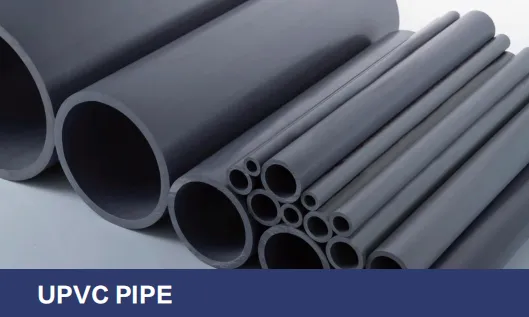
When sourcing UPVC pipes for international construction projects, verifying a supplier's certifications is not just a formality — it is a critical step that determines whether the materials will meet regulatory requirements, perform reliably, and pass inspection in the target market. This guide outlines the essential certifications any UPVC pipe supplier should hold to serve international markets with confidence.
International construction projects operate under strict regulatory frameworks. Each country or region enforces its own set of standards governing material composition, dimensional tolerances, pressure ratings, and safety requirements. A supplier without the appropriate certifications may ship products that fail inspection, cause project delays, or even result in legal liability. For procurement managers and project engineers, the certifications a supplier holds are the most reliable indicator of product quality and compliance readiness.
As a pipes fittings supplier serving diverse global markets, understanding these certification requirements is essential to building trust with international buyers and ensuring smooth customs clearance and site acceptance.
Different markets rely on different standards. A competent UPVC pipe supplier should be familiar with — and certified against — the standards relevant to their target regions. Below are the most widely recognized international standards:
| Standard | Region | Application |
|---|---|---|
| ISO 1452 | International | UPVC piping systems for water supply and drainage |
| BS EN 1452 | Europe / UK | UPVC pressure pipes for potable water |
| ASTM D1785 | North America | PVC plastic pipe schedules (SCH 40 / SCH 80) |
| DIN 8062 | Germany | UPVC pipe dimensions and tolerances |
| AS/NZS 1477 | Australia / New Zealand | PVC pressure pipes for water supply |
| SASO | Saudi Arabia / GCC | UPVC pipe compliance for Gulf construction projects |
| JIS K 6741 | Japan | Unplasticized PVC pipes |
A supplier that holds product certifications against multiple standards demonstrates readiness to serve diverse markets — a key advantage for international buyers managing multi-country projects.
Beyond product-specific standards, suppliers should maintain internationally recognized quality management certifications. These demonstrate that the manufacturer operates under consistent, audited processes:
Beyond management system certifications, product-level testing is where the real quality assurance happens. Buyers should verify that the supplier can provide:
In the Gulf region, Dubai Municipality and other local authorities require product-specific compliance certificates. Suppliers exporting to Saudi Arabia need SASO certification, and many projects in the UAE require ESMA (Emirates Authority for Standardization and Metrology) approval. A building material supplier targeting the GCC market must be prepared to meet these requirements before shipments arrive.
For the EU market, CE marking is mandatory for construction products covered by harmonized standards. UPVC pipes for potable water must comply with the Drinking Water Directive and relevant national regulations such as WRAS (UK) or KIWA (Netherlands).
Suppliers exporting to the United States and Canada should have NSF/ANSI 61 certification for potable water contact and UL listing for electrical conduit applications. ASTM D1785 compliance is the baseline expectation for PVC pipes in North American projects.
In emerging markets, international standards often serve as the reference framework. However, local import regulations may require specific certifications. A supplier with experience in these markets will understand the need for pre-shipment inspection certificates (such as SGS or Bureau Veritas reports) and country-specific import compliance documentation.
When evaluating a UPVC pipe supplier, always request the following documentation package:
A reputable supplier will provide these documents without hesitation. If a supplier is reluctant or only offers a single generic ISO certificate without product-line-specific details, that is a red flag.
Working with a comprehensive supplier that offers certified products across multiple categories — from pipes and fittings to walls, flooring, sanitary fixtures, and customized furniture — simplifies procurement and compliance management. When a single supplier can provide documentation packages across product lines, project managers save time on verification and reduce the risk of compliance gaps between different material sources.
COLORIA GROUP, as a one-stop solution provider for building materials, understands the importance of certification and quality assurance across all product categories. With a global outlook and a commitment to meeting international standards, the company supports clients in navigating the complex landscape of construction material compliance — ensuring that every shipment meets the standards required by the destination market.
Selecting an UPVC pipe supplier with the right certifications is one of the most important procurement decisions on any international construction project. By verifying that a supplier holds relevant ISO management certifications, product-specific compliance certificates, and provides thorough batch-level traceability, project teams can avoid costly delays and quality failures. Always prioritize suppliers who demonstrate transparency, documented quality processes, and a genuine commitment to international standards compliance.
Recommend Products












