
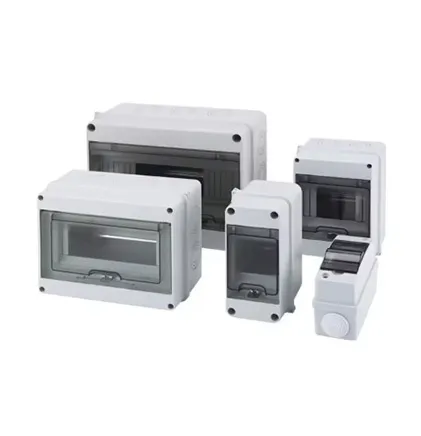
When sourcing optical distribution boxes for large-scale building and infrastructure projects, one of the most critical questions procurement teams ask is: what certifications should a wholesaler hold? Certifications are not just paperwork — they are the foundation of product quality, safety compliance, and long-term reliability. For contractors, developers, and project managers working with a building material supplier on residential or commercial developments, understanding these certification requirements is essential to making informed procurement decisions.
The most fundamental certification any optical distribution box wholesaler should possess is ISO 9001:2015. This international standard certifies that the supplier operates a consistent quality management system (QMS) covering design, production, inspection, and after-sales service. For a wholesaler, ISO 9001 means that every batch of distribution boxes is manufactured under controlled processes with documented quality checks at each stage.
When evaluating a wholesaler, buyers should verify the ISO 9001 certificate number directly through the issuing body's online portal. A common red flag is when the company name on the ISO certificate does not match the legal name on the business registration — this often indicates a trading company presenting a manufacturer's credentials as their own. A reputable one-stop architectural solution provider will have no issue sharing their certificate for verification.
For any wholesaler targeting the European Economic Area (EEA), the CE marking is non-negotiable. The CE marking confirms that the product meets EU safety, health, and environmental protection requirements under the applicable directives. For optical distribution boxes, this typically falls under the Low Voltage Directive (LVD) 2014/35/EU and the Electromagnetic Compatibility (EMC) Directive 2014/30/EU.
A valid CE compliance package should include a Declaration of Conformity (DoC) signed by an authorized representative, along with supporting test reports. Buyers should not accept a CE badge on a product photo alone — always request the full documentation package.
The Restriction of Hazardous Substances (RoHS) directive is another mandatory certification for wholesalers supplying the EU and many other global markets. RoHS restricts the use of six hazardous materials — including lead, mercury, and cadmium — in electrical and electronic equipment. Optical distribution boxes, which contain PCBs, connectors, and metal components, must comply with RoHS limits.
A credible wholesaler should provide RoHS test reports from an accredited laboratory, with XRF (X-ray fluorescence) or wet chemistry analysis results for each restricted substance. These reports should reference the specific product model numbers being ordered.
Optical distribution boxes are often installed in outdoor environments — on building facades, utility poles, or in underground vaults — making ingress protection (IP) ratings critically important. The IEC 60529 standard defines IP ratings, and for outdoor enclosures, IP65, IP66, or IP68 are common requirements.
Key distinction: "IP68" on a datasheet is a self-declaration unless accompanied by a third-party test report specifying submersion depth, duration, and laboratory accreditation. Always request the full test report — not just the certificate badge — and verify the lab's accreditation number through CNAS or ILAC-MRA databases.
The test report must match the specific product model being ordered. A test report for a 12-port enclosure does not cover a 24-port enclosure with a different cable gland configuration, even if they share the same shell design.
For wholesalers supplying the United States and Canadian markets, UL certification is essential. UL 50 and UL 50E standards cover enclosures for electrical equipment, and compliance demonstrates that the product has been tested for safety by a Nationally Recognized Testing Laboratory (NRTL).
The TÜV certification and GS (Geprüfte Sicherheit) mark provide additional safety assurance beyond the mandatory CE marking. TÜV-tested products have undergone rigorous independent testing at accredited German laboratories, giving buyers extra confidence in the product's quality and safety.
For optical distribution boxes that incorporate active electronic components, FCC compliance under Part 15 is required for the U.S. market. This ensures the device does not cause harmful electromagnetic interference.
Certifications are only as valuable as their authenticity. Here is a practical checklist for verifying a wholesaler's credentials before placing an order:
| Certification | Applicable Market | What It Covers | Verification Method |
|---|---|---|---|
| ISO 9001:2015 | Global | Quality management system | Online portal of issuing body |
| CE Marking | European Economic Area | Safety, health, environmental protection | Declaration of Conformity + test reports |
| RoHS | EU and global markets | Hazardous substance restrictions | XRF or lab analysis report |
| IEC 60529 (IP Rating) | Global | Ingress protection against dust and water | CNAS/ILAC-accredited lab report |
| UL 50/50E | USA, Canada | Electrical enclosure safety | UL online certification directory |
| TÜV / GS Mark | Germany, Europe | Independent safety testing | TÜV certificate database |
| FCC Part 15 | United States | Electromagnetic compatibility | FCC ID lookup |
While certifications are the foundation, a truly reliable wholesaler brings more to the table. They should offer batch traceability — the ability to trace any product back to its production date, material source, and inspection records. They should provide pre-shipment inspection reports with photos and dimensional checks performed on the production line. And they should be able to accommodate live factory video walkthroughs on short notice, demonstrating transparency in their operations.
For construction and development projects, working with a comprehensive one-stop architectural solution provider simplifies procurement. Instead of qualifying multiple suppliers for different product categories — distribution boxes, cables, pipes, fixtures, and more — a single certified partner with a broad product portfolio reduces administrative overhead while ensuring consistent quality across all materials.
COLORIA GROUP provides a comprehensive range of certified building materials — from electrical distribution boxes and cables to walls, flooring, sanitary fixtures, and custom furniture — all backed by rigorous quality assurance and global compliance standards.
Contact COLORIA GROUP TodayThis article is for informational purposes only. Certification requirements may vary by country and project specification. Always consult with your procurement team and local regulatory authorities for project-specific compliance requirements.
Recommend Products












