
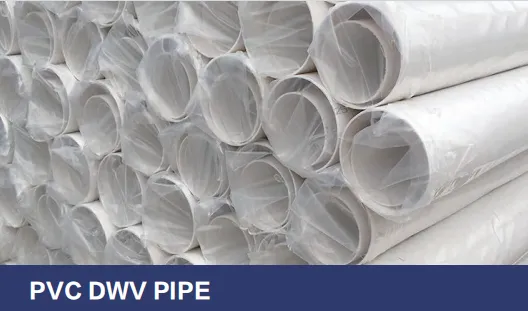
When sourcing PVC DWV (Drain, Waste, and Vent) pipes for a construction project, one of the most important steps is verifying that the supplier holds the right certifications. Certifications serve as independent proof that the pipes meet recognized safety, performance, and quality standards. Without them, you risk installing substandard materials that may fail prematurely, cause costly repairs, or even violate local building codes. This article covers the key certifications every reputable pvc dwv pipe supplier should have and explains what each certification means in practice.
ASTM D2665 is the defining standard for PVC DWV pipe used in building drainage, waste, and vent systems across North America and many international markets. This standard specifies requirements for materials, dimensions, workmanship, and performance under non-pressure gravity-flow conditions. Pipes manufactured to ASTM D2665 have thinner walls than pressure-rated Schedule 40 pipes, which makes them lighter and more cost-effective for gravity drainage applications. The standard covers sizes from 1-1/4 inches to 6 inches, covering the full range of typical indoor drainage needs in residential and commercial buildings.
A supplier that produces DWV pipe to ASTM D2665 must demonstrate consistent quality control in extrusion, maintain proper dimensional tolerances, and pass specified flattening and impact resistance tests. When you evaluate a pvc dwv pipe supplier, ask to see their ASTM D2665 compliance documentation or third-party test reports. This standard is the minimum baseline — without it, the pipe should not be used in any code-compliant building drainage system.
Before a pipe can meet any application standard, the raw PVC compound itself must be properly classified. ASTM D1784 defines the rigid PVC cell classification system that identifies key material properties such as impact resistance, tensile strength, modulus of elasticity, and deflection temperature. For DWV applications, the compound typically meets the 12454 cell classification, which indicates specific minimum values for these properties. A qualified pipes fittings supplier should be able to provide material certification showing that their PVC compound conforms to the appropriate ASTM D1784 classification. This ensures the pipe has the chemical resistance, durability, and structural integrity required for long-term service in drainage environments.
NSF/ANSI 14 is the overarching certification standard for plastic piping systems, and plumbing codes in many jurisdictions require DWV pipes and fittings to carry this certification. The scope of NSF/ANSI 14 extends well beyond potable water — it covers DWV, sewer, gas distribution, radiant heating, fire safety, and electrical conduit applications. NSF conducts rigorous testing based on ASTM and ISO standards, including evaluations for long-term strength and performance reliability.
The certification process includes initial qualification testing, ongoing monitor tests, compliance audits, and quality control testing at the manufacturing facility. This continuous oversight is what distinguishes NSF/ANSI 14-certified products from uncertified alternatives. For a building material supplier serving international markets, holding NSF/ANSI 14 certification signals a serious commitment to quality and opens doors to projects where code compliance is non-negotiable.
While DWV pipes do not carry potable water, there are scenarios where health-effect certifications still matter. NSF/ANSI 61 evaluates whether materials leach harmful contaminants such as heavy metals or volatile organic compounds into water. NSF/ANSI 372 specifically verifies lead-free compliance as defined by the U.S. Safe Drinking Water Act. In mixed-use buildings where DWV pipes run near potable water lines, or in jurisdictions with strict environmental regulations, these certifications provide an extra layer of assurance. Many project specifications now require all plastic piping products — including DWV — to carry NSF/ANSI 61 and 372 marks, regardless of their intended end use.
Beyond product-specific standards, a supplier's quality management system is equally important. ISO 9001 is the globally recognized standard for quality management, and it requires manufacturers to implement documented processes for design, production, inspection, and continuous improvement. A supplier with ISO 9001 certification demonstrates that quality is not left to chance — it is built into every stage of production through systematic controls, regular internal audits, and corrective action procedures. When evaluating a supplier, ISO 9001 certification indicates that the company has the organizational discipline to consistently deliver products that meet specifications, batch after batch.
Depending on the destination market, additional certifications may be required. The table below summarizes the most common regional standards for PVC DWV pipe:
| Region | Key Standard | Description |
|---|---|---|
| North America | ASTM D2665 + NSF/ANSI 14 | DWV pipe standard with NSF certification for building code compliance |
| Australia / New Zealand | AS/NZS 1260 | PVC-U non-pressure DWV pipe and fittings; includes BEP PVC environmental provisions |
| Europe | EN 1329-1 | PVC-U piping systems for soil and waste discharge inside buildings |
| Middle East | SASO / ESMA | Often require ASTM or EN compliance with additional local conformity assessment |
| Africa | SABS / ARSO | South African and African regional standards, often referencing ISO or EN base standards |
A globally oriented pvc dwv pipe supplier should be familiar with the certification requirements of the target market and hold the necessary approvals. This is especially important for large-scale projects where non-compliant materials can cause significant delays and financial penalties.
Certifications are only meaningful if they are genuine and current. Here are practical steps for verifying a supplier's credentials:
Finding a supplier that holds the right certifications is only part of the equation. Construction projects often require multiple categories of building materials — from pipes and fittings to walls, flooring, sanitary fixtures, and electrical components. Working with a single, comprehensive building material supplier simplifies procurement, reduces logistics complexity, and ensures consistent quality across all material categories. A one-stop solution provider like COLORIA GROUP, headquartered in Foshan, China, with an overseas agent in Saudi Arabia, offers over 13 product categories including PVC DWV pipes, UPVC pipes, PPR pipes, CPVC piping systems, and a full range of complementary building materials — all backed by relevant certifications and decades of industry experience.
Conclusion
The certifications a PVC DWV pipe supplier holds directly reflect the quality and reliability of their products. At a minimum, look for ASTM D2665 compliance for the pipe itself and ASTM D1784 for the raw material. For projects in code-regulated markets, NSF/ANSI 14 certification is often mandatory, and NSF/ANSI 61 plus 372 add health-effect assurance. ISO 9001 rounds out the picture by demonstrating that the supplier operates a systematic quality management approach. Region-specific standards such as AS/NZS 1260 or EN 1329-1 may also apply depending on the project location.
By understanding these certifications and knowing how to verify them, procurement professionals can make informed decisions and avoid the costly consequences of substandard materials. The time invested in checking a supplier's credentials up front pays for itself many times over through trouble-free installation and long-term system performance.
Recommend Products












