
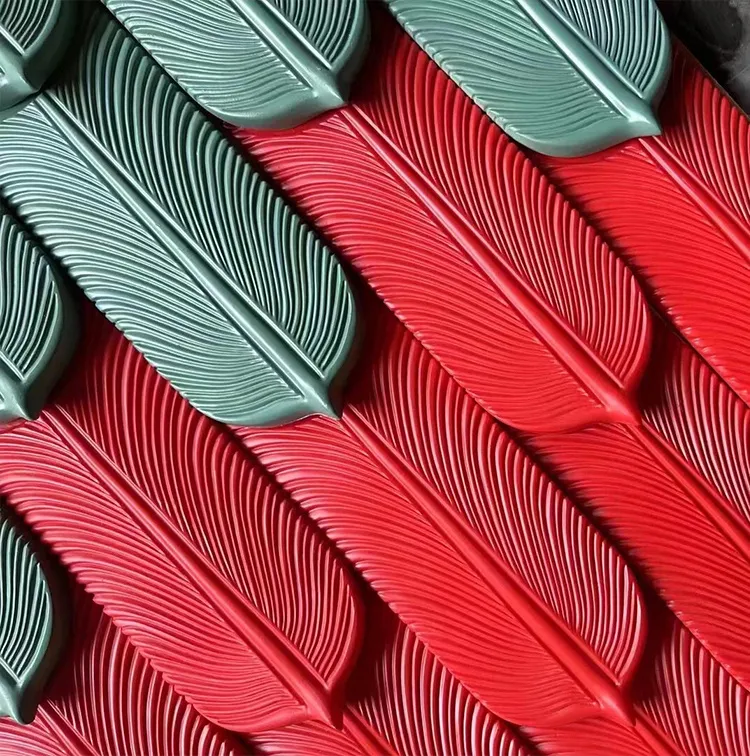
When specifying feather stone wall panels for high-rise building projects, the supplier's certification portfolio is not a marketing checkbox—it is the foundation of structural safety, fire compliance, and long-term durability. Architects, contractors, and project owners need to know exactly which certifications separate a qualified feather stone supplier from one that poses project risk. This article breaks down the essential certifications every feather stone supplier should hold for high-rise applications.
ISO 9001 is the baseline certification for any credible building material supplier. It verifies that the manufacturer operates under a documented quality management system covering raw material sourcing, production process control, final inspection, and after-sales service. For high-rise applications, where batch-to-batch consistency is critical, ISO 9001 ensures that every feather stone panel leaving the factory meets the same dimensional tolerances, color calibration, and structural integrity standards.
A supplier without ISO 9001 certification cannot demonstrate process-level accountability. When reviewing a supplier, request the current certificate and verify its scope includes stone panel manufacturing specifically—not just general trading or distribution activities.
Key Check: Ask for the ISO 9001 certificate number and verify it against the issuing body's online database. Certificates should be renewed annually and cover the specific production facility, not just a corporate office address.
For any feather stone panel destined for the European market or projects following EU technical standards, CE marking under EN 1469 is mandatory. EN 1469 is the harmonized European standard for natural stone products used in cladding and paving. It covers flexural strength, water absorption, frost resistance, and dimensional stability—all critical parameters for feather stone panels installed at height.
The CE marking confirms that the decorative profiles and stone panels have been tested by a notified body and meet the declared performance values. For a high-rise facade, the flexural strength value under EN 1469 is particularly important: panels must withstand wind loads that increase exponentially with building height.
Key Check: The Declaration of Performance (DoP) must list the specific stone type, the tested thickness, and the notified body identification number. A generic DoP that does not reference the exact feather stone product is insufficient.
Fire safety is the single most consequential certification for high-rise cladding materials. EN 13501-1 classifies construction products by their reaction to fire. For building facades over 18 meters in height, many jurisdictions now mandate A1 (non-combustible) or A2-s1,d0 (limited combustibility with no smoke production) rated materials as a baseline requirement.
Natural stone, including feather stone panels, can achieve A1 classification when the material contains zero organic binders, resins, or polymer additives. However, composite feather stone panels that use a backing layer or adhesive system must have the full assembly tested—not just the stone face. A supplier who claims A1 fire rating without providing the complete EN 13501-1 test report from an accredited laboratory such as SGS or Bureau Veritas should not be considered for high-rise projects.
Key Check: Request the full EN 13501-1 test certificate covering the complete panel assembly (stone layer, adhesive, and any backing). The report must specify the exact product name, thickness, and density tested. For composite panels, a single-component certificate is not sufficient.
If the project is located in North America or follows US/Canadian building codes, the feather stone supplier must demonstrate compliance with relevant ASTM standards. The key standards include ASTM C615 (granite dimension stone), ASTM C616 (sandstone dimension stone), and ASTM C170 (compressive strength of dimension stone). These standards define minimum physical property thresholds for density, absorption, compressive strength, and modulus of rupture.
ASTM C97 (absorption and bulk specific gravity) and ASTM C99 (modulus of rupture) are particularly relevant for feather stone panels used in exterior cladding, as they directly address the material's resistance to moisture ingress and structural loading. Suppliers serving the North American market should provide test reports from an ISO/IEC 17025 accredited laboratory for each production batch.
Sustainability requirements are increasingly embedded in high-rise building specifications, particularly for projects pursuing LEED, BREEAM, or other green building certifications. ISO 14001 certification demonstrates that the supplier operates an environmental management system covering waste reduction, energy efficiency, and responsible raw material sourcing.
For feather stone production specifically, environmental management is critical because quarrying and processing generate significant stone dust and slurry. A certified supplier should have documented procedures for water recycling, dust suppression, and waste stone repurposing. Some leading suppliers also offer Environmental Product Declarations (EPDs) that quantify the carbon footprint and embodied energy of their feather stone panels, enabling project teams to calculate the facade's contribution to whole-building lifecycle assessments.
Beyond formal certifications, high-rise projects demand independent third-party verification of product performance. Reputable feather stone suppliers maintain ongoing relationships with accredited testing laboratories such as SGS, Bureau Veritas, TÜV, or Intertek. These labs conduct regular batch testing covering:
Key Check: A supplier should be able to provide third-party test reports within 48 hours of request. Reports older than 12 months may not reflect current production quality. For large projects, consider commissioning independent pre-shipment inspection at the factory.
| Certification | What It Covers | Why It Matters for High-Rise |
|---|---|---|
| ISO 9001 | Quality management system | Ensures batch-to-batch consistency and process control |
| CE Marking (EN 1469) | Natural stone product performance | Mandatory for EU market; validates flexural strength and durability |
| EN 13501-1 (A1/A2) | Reaction to fire classification | Non-negotiable for buildings over 18m; eliminates facade fire risk |
| ASTM C615/C616/C170 | Dimensional stone physical properties | Required for North American projects; covers strength and absorption |
| ISO 14001 | Environmental management | Supports green building certifications and responsible sourcing |
| ISO 45001 | Occupational health and safety | Demonstrates safe manufacturing practices and worker protection |
| SGS / Bureau Veritas | Third-party batch testing | Independent verification of flexural strength, freeze-thaw, and color consistency |
Certification claims are only as good as the documentation that backs them. Before finalizing a feather stone supplier for a high-rise project, take the following verification steps:
Choosing a feather stone supplier for high-rise applications is a decision that affects structural safety, fire compliance, and the building's long-term appearance. By demanding ISO 9001, CE marking under EN 1469, EN 13501-1 fire classification, ASTM compliance, ISO 14001, and current third-party test reports, specifiers can eliminate substandard suppliers before the first sample is ordered. A qualified feather stone supplier will have all of these documents organized and ready to share—because in high-rise construction, documentation is as important as the stone itself.
Recommend Products












