
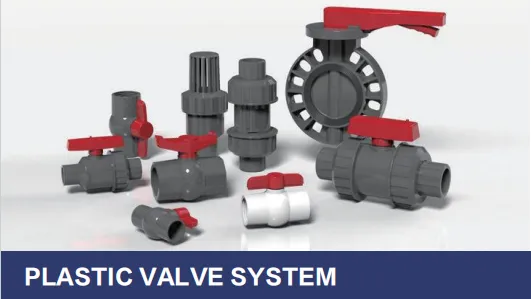
If you're wondering why everyone in engineering circles seems to be talking about plastic valves these days, you're in the right place. These little components might not make headlines, but they're quietly revolutionizing how we handle fluids everywhere – from pharmaceutical labs to your home's plumbing.
We've come a long way since the bronze valves Roman engineers designed for their aqueducts. Today, plastic valve systems are stepping into the spotlight, offering solutions where traditional metal valves fall short. Their secret? An incredible combination of chemical resistance, cost efficiency, and flexibility that makes them perfect for modern challenges.
Think about aggressive chemical cocktails that would eat through metal. Materials like PVC, CPVC, and PVDF in plastic valves laugh in the face of corrosive acids and bases. They're the unsung heroes preventing environmental disasters in chemical transfer systems.
Imagine sterile environments where a single metal ion could ruin a vaccine batch. Plastic valves – especially those USP Class VI rated ones – are the gatekeepers here. After gamma irradiation sterilization, they ensure life-saving drugs remain contamination-free in single-use biopharmaceutical setups.
That "pure" water is surprisingly hungry to dissolve metals. Systems using PEEK polyethylene stay ion-free – critical for semiconductor manufacturing where a single impurity can wreck microchips worth thousands.
At first glance, metal valves seem sturdy and reliable. But peel back the layers:
As one plant manager told me: "When our stainless steel valves started failing after six months in hydrochloric acid service, we switched to CPVC valves. That was five years ago – they're still going strong."
Of course, plastic valves aren't perfect superheroes. You wouldn't want them handling steam at 200 psi or supporting heavy piping without reinforcement. Temperature limitations vary by material – while PEEK can handle around 250°C, your standard PVC taps out at 60°C. Pressure ratings matter too; most peak around 150 psi.
Environmental responsibility enters the chat when discussing fluoropolymers like PTFE. The industry's wrestling with microplastics and PFAS concerns, but innovative recycling programs and next-gen biodegradable plastics are emerging. Like any technology, it's a journey where conscientious engineers must balance current needs against future consequences.
Beyond industrial settings, plastic valves pop up in places you might not expect:
Water purification systems rely heavily on them due to their contaminant-free performance. In residential settings, their integration with pipe fittings has revolutionized DIY plumbing repairs – no welding torches needed, just solvent cement. Even backyard swimming pools benefit from their chlorine resistance.
Perhaps most fascinating? Their role in pilot-scale green hydrogen projects. When engineers started producing hydrogen at small facilities, they discovered conventional valves couldn't withstand the permeation. Specially formulated plastic valves proved unexpectedly perfect.
As we stare down challenges like global water scarcity and pharmaceutical breakthroughs, plastic valve systems will keep evolving. Nanocomposite materials promise higher temperature tolerance. Bio-based resins could solve sustainability concerns. And 3D printing? It's already enabling custom valve designs in hours instead of weeks.
At the end of the day, these plastic wonders remind us that innovation often comes in small packages. They might not look impressive sitting in a warehouse bin, but in the right application, they perform minor miracles daily – keeping chemicals contained, medicines pure, and your morning shower flowing.
Recommend Products












