
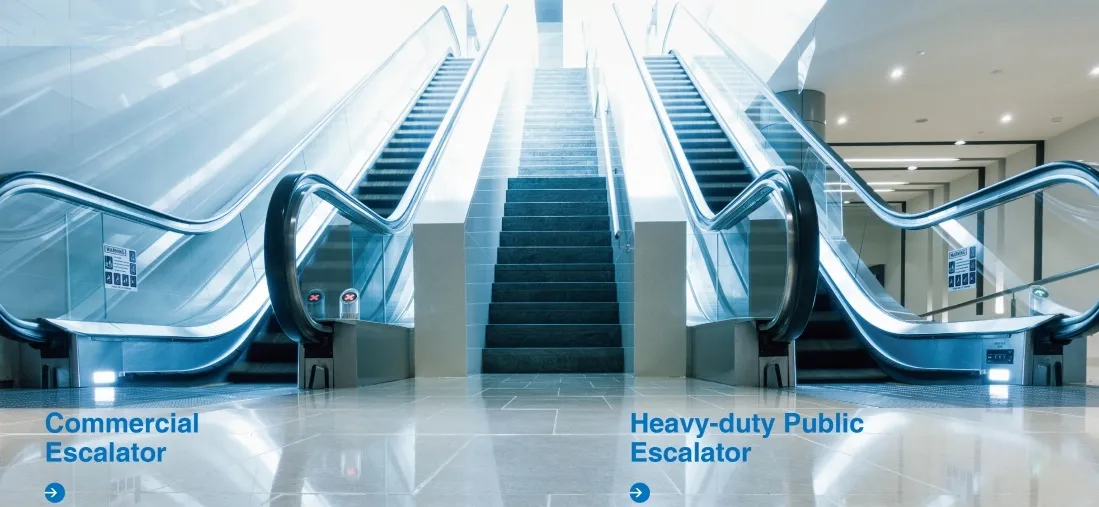
You see them every day in malls, airports, and subway stations – those moving staircases we call escalators. They're incredibly convenient, sure, but ever stop to think about how much energy these giants consume? Picture this: in a busy shopping center, escalators can run for 12-15 hours daily, sometimes longer. That adds up, both in electricity bills and carbon footprint. But here's the good news: we don't have to choose between convenience and sustainability. Let's explore how smarter approaches to escalator operation are changing the game, slicing energy bills while keeping people moving.
Those sleek stainless-steel beasts? They're sneaky energy consumers. Older models are particularly thirsty, gobbling up anywhere between 3-10 kW per hour – enough to power several homes! And get this: research shows up to 80% of their energy gets wasted during idle moments when no one's actually using them. It's like leaving your car engine running in the parking lot all day while doing errands inside the store.
Let's talk numbers from Helsinki's case study: when a major retail store swapped their old escalators for smarter systems, they saw energy consumption plummet by nearly 50%. Picture what that does to operating costs for places with multiple units. That’s not just pocket change – that's potentially tens of thousands of dollars saved annually. Now imagine scaling that to every transit hub or shopping center in a city. The financial and environmental impacts become enormous.
Think of VSDs like cruise control for escalators. Instead of always running at top speed – even when empty – these smart systems dial down the speed when usage is low. Picture the difference between flooring your accelerator on an empty highway versus adjusting speed to actual traffic conditions. During a mall's quiet morning hours, an escalator with VSD technology might slow to 20-30% of its normal speed , cutting energy use dramatically without compromising safety.
This approach is brilliantly simple: escalators go to sleep when nobody's around and wake up when needed. Like flipping off lights when leaving a room, but automated. Sensors detect approaching passengers (with some cool fail-safe mechanisms to prevent unexpected stops) and seamlessly restart. Research from Scandinavian installations shows these systems achieve 42-52% energy savings compared to constantly running models. That's transformative when applied across hundreds of escalators city-wide.
While not directly about the mechanical operation, lighting contributes significantly to escalators' energy profiles. Upgrading conventional bulbs to LEDs slashes energy use for illumination by up to 75%. Plus, these modern lights last much longer – fewer replacements mean lower maintenance hassles. As one facilities manager put it: "It's the low-hanging fruit of escalator efficiency upgrades."
Instead of treating every escalator location the same, smart operators now analyze traffic patterns like detectives. Where do peaks occur? What's the typical passenger weight distribution? Helsinki's study proved that understanding these patterns allows for hyper-targeted energy strategies. For instance, airports schedule different operational modes for departure gates versus baggage claim areas based on passenger behavior.
Newer escalators incorporate lightweight composite materials and energy-efficient motors that require less power to move the same load. It's the equivalent of switching from a gas-guzzling SUV to a hybrid for mass transportation infrastructure. These designs reduce friction, require less torque, and recover energy during descent phases.
Energy efficiency isn't just about hardware – it's about upkeep. Properly lubricated systems, tension-calibrated handrails, and well-aligned steps minimize friction and mechanical resistance. Regular tune-ups are like changing your car's air filter: when components work smoothly together, less energy gets wasted as heat and vibration.
Retrofitting older escalators or choosing premium efficiency models might make accountants initially balk. But look deeper: with energy savings of 40-60% achievable, payback periods often clock in at under 3 years in high-usage environments. After that? Pure operational savings that boost the bottom line month after month.
Beyond direct savings, there's reputation capital. Forward-thinking malls and transit systems actively promote their energy reductions: "Our redesigned hub saves enough escalator power annually to light 300 homes." These aren't just stats – they resonate with environmentally conscious consumers and tenants increasingly drawn to sustainable operations.
Imagine escalators communicating directly with building management systems. During grid peak-demand times, escalators could temporarily reduce operations while lighting or HVAC compensates – all seamless to users. Or coordinating with subway timetables to ramp up operation minutes before train arrivals. This isn't sci-fi – it's the logical next step in infrastructure intelligence.
Innovative operators are testing subtle cues: green lighting for moving walks encourages usage during low-demand periods, while gentle speed variations suggest walking rather than standing. One Japanese experiment reduced energy use 7% just by changing lighting patterns that subconsciously altered passenger movement.
Here's a revolutionary concept: could escalators become energy producers? Prototypes capturing kinetic energy from descent are already testing. Think about it – every downward step generates recoverable power. It transforms escalators from energy consumers into potential contributors to a building's power grid.
Begin with energy audits to identify your worst offenders – typically high-traffic 24/7 locations. Prioritize VSD retrofits which offer the fastest returns. Then implement staged upgrades: lighting → sensor systems → eventual mechanical replacements. Budget-conscious managers can phase this over multiple fiscal cycles while capturing savings to fund later stages.
Not all "energy-efficient" escalator solutions are equal. Look for vendors with third-party verification of claims (UL or equivalent certifications). Insist on real-world case studies showing actual operating data – not just lab numbers. Maintenance agreements matter too: efficient systems need specialized care to maintain savings over decades.
Training maintenance teams to think efficiency-first improves outcomes more than any sensor. And communicating changes to the public? That's crucial. When a London Underground station reduced escalator speeds during non-peak hours, clear signage explaining why prevented confusion: "We've adjusted speeds to conserve enough electricity to power 15 homes daily."
The journey toward smarter escalator operation isn't just about trimming kilowatts – it represents a fundamental shift in how we view public infrastructure. By embracing technologies like VSD and stop-go systems, integrating with smarter building networks, and adopting thoughtful operational habits, we're creating urban spaces that serve people efficiently without draining resources excessively.
Every escalator modernization represents a small victory against waste. And collectively? These changes reduce strain on power grids, slash operational expenses, and demonstrate that convenience and sustainability can perfectly coexist. The solutions exist – now it's about having the foresight to implement them. Because in today's world, moving people efficiently means moving energy thoughtfully too.
In practical terms, these measures don't just reduce escalator energy consumption ; they transform how we fund and think about urban mobility infrastructure. That's progress you can literally see in motion every time the stairs beneath you respond intelligently to your presence – and your absence.
Recommend Products












