
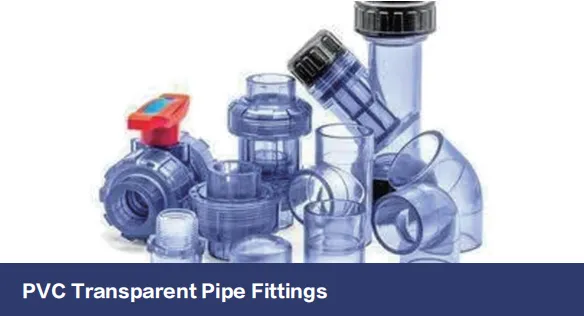
The Complete Guide to Seeing Your Flow Systems Clearly
Fun fact: Clear PVC pipe fittings let you literally "see your system working" - kind of like having X-ray vision for plumbing!
Ever wish you could see what's happening inside your pipes? That's where PVC transparent pipe fittings come into play. These clever plastic components are changing how we build everything from home aquariums to industrial chemical systems. Unlike traditional opaque pipes, clear PVC lets you monitor flow, spot blockages, and catch contamination without taking anything apart.
Think about coffee brewing stations in your favorite cafe, where transparent pipes let baristas monitor coffee flow - that's PVC transparency at work! Or consider research labs where scientists need to watch chemical reactions as they happen. These fittings aren't just functional - they're problem-solving game changers.
Three big reasons professionals are switching to transparent fittings:
Now that we see why clear PVC matters, let's explore all the fitting types that make these systems work.
These 90° and 45° fittings are the corner-takers of the piping world. Need to navigate around obstacles or make neat right-angle turns? Elbows are your solution.
Pro Tip: Always use one size larger than your pipe when navigating thick fluids like syrups or oils to reduce friction losses.
T-shaped connectors that split or combine flows. Essential when you need branch lines in breweries, aquaculture systems, or chemical mixing setups. The transparency lets you see flow distribution in all directions.
The straight connectors that join two pipes end-to-end. Clear couplings provide continuous visibility - no blind spots where debris can hide. Ideal for applications where cleanliness monitoring is critical.
These magical fittings connect different pipe sizes or materials. Switching from clear PVC to copper? Need to connect 1" to ¾"? Adapters bridge the gap while maintaining maximum visibility.
When your system needs to transition between pipe sizes, these cone-shaped fittings keep things moving smoothly. Watching pressure changes through clear reducers helps technicians spot flow issues.
These clever fittings allow for easy disconnection without cutting pipes. Essential anywhere regular cleaning or maintenance occurs. A brewery using this system told us: "Being able to take apart equipment for cleaning without calling a plumber saves us thousands yearly!"
Clear end caps provide termination with visibility. Watch fluid reach endpoints or monitor trapped air pockets - critical in irrigation systems and laboratory setups.
Clear ball valves let you see exactly when flow starts/stops through their chambers. Great for precise fluid control in pharmaceutical manufacturing where process visibility matters.
When tees aren't enough, crosses manage complex distribution needs. They're like miniature town squares for your fluids, handling intersections where four pipes meet.
This includes sight glasses for focused observation, in-line flow meters for measurements, and filter housings with clear bowls. A beverage company told us these specialty fittings helped them detect contamination during production - making them indispensable for quality control.
Clear PVC pipes typically follow standard sizing similar to regular PVC:
| Application Type | Common Sizes | Wall Thickness |
|---|---|---|
| Laboratory/Medical | ¼" to ½" | Schedule 40 |
| Residential Aquariums | ¾" to 1" | Schedule 40 |
| Brewing/Distilling | 1.5" to 2" | Schedule 40 or 80 |
| Industrial Chemical | 3" to 6" | Schedule 80 |
Important sizing considerations:
PVC transparent pipes outperform alternatives in several key ways:
| Material | Clarity | Chemical Resistance | Cost Factor |
|---|---|---|---|
| Clear PVC | Very Good | Excellent | 1x |
| Glass | Perfect | Good | 3x |
| Acrylic | Excellent | Moderate | 2x |
| Polycarbonate | Excellent | Good | 4x |
Industrial designer tip: Combine PVC fittings with stainless steel components for the best durability/visibility balance in food processing applications.
Getting clear fittings securely connected requires the right approach:
1. Solvent Welding - Best for permanent connections using clear PVC cement (ensure compatibility)
2. Threaded Connections - Perfect for removable systems using PTFE tape for sealing
3. O-Ring Systems - Great for frequent maintenance/disassembly applications
Avoid Cloudy Joints: Use clear primer and cement - colored solvents can stain and obscure visibility.
Keep clear PVC transparent with proper care:
To prevent yellowing and brittleness:
"UV exposure is clear PVC's biggest enemy," says materials engineer Sarah Lin. "Even 6 months of direct sunlight can degrade unshielded pipes."
Proper care can extend clear PVC lifespan to 20+ years. Key strategies:
Transparent PVC fittings aren't just for moving water:
Contemporary interior designers increasingly use clear PVC fittings in retail environments for decorative displays. In one restaurant design, exposed transparent piping with colored liquids serves as both functional plumbing and conversation-starting decor.
Recommend Products












