
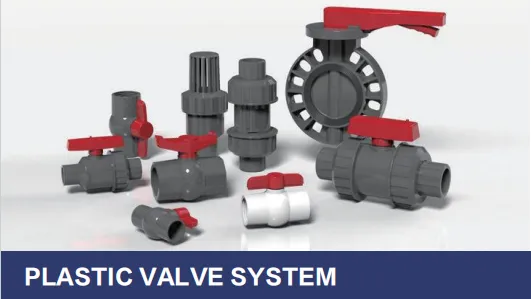
Picture this: You're walking through a modern water treatment plant, and instead of clunky metal valves everywhere, you see sleek, corrosion-resistant plastic valves humming along quietly. That's not science fiction – it's today's reality! Plastic valves have become the unsung heroes across industries from pharmaceuticals to agriculture, and here's why they're stealing the spotlight:
Unlike their metal counterparts, plastic valves laugh in the face of corrosive chemicals and salty environments. They're like the superheroes of the valve world – lighter on their feet (and your budget), resistant to chemical villains, and surprisingly durable. Whether we're talking about handling aggressive acids in a chemical plant or managing drinking water in municipal systems, plastic valves bring unique advantages to the table.
Not all plastics are created equal! When we talk about plastic valves, we're really discussing a family of specialized materials, each with their own superpowers:
The reliable workhorse of the plastic valve family. You've probably seen those white pipes and valves in residential plumbing. PVC's smooth interior keeps water flowing freely, it's nontoxic (perfect for drinking water), and it won't break the bank.
Think of PVC's tougher cousin. CPVC handles hotter temperatures – we're talking up to 200°F – making it ideal for hot water distribution in homes and industrial settings. That extra chlorine in its molecular structure gives it serious heat resistance.
The James Bond of valve materials. PVDF shrugs off practically every chemical you throw at it and handles high-purity applications like semiconductor manufacturing or pharmaceutical production. When failure isn't an option, PVDF steps up.
| Material | Max Temperature | Chemical Resistance | Common Applications |
|---|---|---|---|
| PVC | 140°F | Good | Residential plumbing, irrigation |
| CPVC | 200°F | Very Good | Hot water systems, industrial processes |
| PVDF | 280°F | Excellent | Chemical processing, high-purity systems |
Let's meet the all-stars of the plastic valve world. Each type has its specialty – like tools in a handyman's belt, you pick the right one for the job.
Imagine a hollow ball with a tunnel through its core. Rotate it 90 degrees, and flow stops completely. That simple, brilliant mechanism makes ball valves the go-to choice when you need positive shutoff. In industrial facilities using ppr pipes fittings , you'll often find these valves at critical junctions.
Where they shine:
Water treatment plants, chemical transfer, compressed air systems
Material match:
CPVC or PVDF for chemical resistance
Pro tip:
Opt for full-port designs when minimal flow restriction is critical
Picture a disc spinning in the pipe's center – that's the "butterfly" that gives these valves their name. Turn the handle parallel to the pipe, and flow gushes through. Turn it perpendicular, and flow stops. Their slim profile makes them perfect for tight spaces in HVAC systems or water treatment facilities.
Where they shine:
Large diameter pipes, cooling systems, bulk material handling
Material match:
PP (polypropylene) for its UV resistance
Pro tip:
Choose EPDM-seated versions for better sealing with slurries
These valves work like pinching a garden hose, but with surgical precision. A flexible diaphragm lowers to block flow or lifts to allow it. Since the diaphragm isolates the fluid from the working parts, they're perfect for keeping things contamination-free.
Where they shine:
Pharmaceutical production, food processing, abrasive slurries
Material match:
PTFE diaphragms for ultimate chemical resistance
Pro tip:
Specify linear actuators for precise flow control in batching operations
Choosing plastic valves isn't about grabbing whatever's cheapest. It's a thoughtful matchmaking process. Ask these critical questions:
Consider valve sizing carefully. Undersized valves create frustrating bottlenecks, while oversized ones cost more and offer poor control. When retrofitting metal systems, factor in thermal expansion differences – plastic reacts more to temperature changes.
Here's where plastic valves really sing: They demand far less pampering than metal valves. No frantic rust scraping sessions! Their smooth interiors resist gunk buildup, and chemical resistance means less wear. That said, stay alert to:
A simple annual inspection of your plastic valve system – checking for cracks, leaks, and smooth operation – will keep things humming for decades. Compared to metal valves needing constant attention, plastic valves are remarkably low-maintenance.
As we've explored the landscape of plastic valve systems, one thing becomes crystal clear: They're no longer just alternatives to metal valves but often the first-choice solution. From municipal water plants relying on PVC ball valves to semiconductor fabs using ultra-pure PVDF diaphragm valves, plastic valves are proving their worth.
The evolution continues, with smart valves integrating sensors and actuators for IIoT connectivity, and material scientists developing ever-more resilient polymers. Whether you're designing a new industrial processing system or upgrading home plumbing, plastic valves offer compelling advantages that deserve serious consideration. They've earned their place in the fluid control world – reliable, resilient, and ready for whatever you can pipe their way.
Recommend Products












