
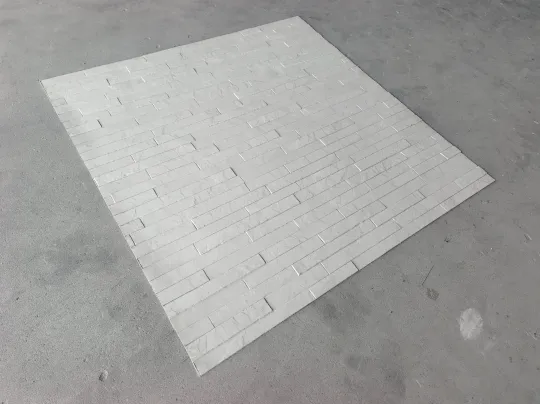
Picture this: You're walking through an ancient European village, your fingertips brushing against cathedral walls that have stood for centuries. That satisfying rough texture under your hand? That's the craftsmanship of stonemasons echoing through time. Stone masonry isn't just about stacking rocks – it's a conversation between human ingenuity and nature's raw materials. Today we're diving deep into this timeless craft, breaking down how these techniques actually work in the real world.
Modern architecture has rediscovered stone's magic too. I recently saw a flexible stone wall panel installation in Milan that blended age-old principles with space-age materials. Whether you're a homeowner dreaming of a cobblestone patio or a builder weighing structural options, understanding these techniques will change how you see every stone structure around you.
At its heart, stone masonry means building structures by bonding stones together with mortar. But that simple definition hides a world of sophistication. The ancients weren't just piling rocks – they engineered solutions:
→ Thermal Magic : Stone walls act like natural climate control. They absorb heat during the day and gently release it at night, just like those Mediterranean villas stay cool in summer without AC.
→ Structural Integrity : Think of the Roman aqueducts still standing after 2,000 years. Properly constructed stone masonry laughs at earthquakes and hurricanes.
→ Beauty That Ages : Unlike manufactured materials that deteriorate, stone develops character – those subtle weathering patterns tell a building's life story.
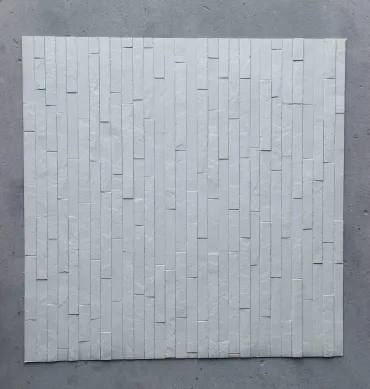
Rubble masonry is like jazz music – it thrives on improvisation within structure. Builders work with stones straight from the quarry, minimally shaped. The result? Walls with personality where every stone tells a geological story.
This is masonry's freestyle form. Imagine building a puzzle where every piece has unique dimensions. Masons become master balancers, strategically placing larger "jumper stones" that lock everything together like a 3D mosaic. That rustic cottage with charmingly uneven walls? That's uncoursed rubble whispering secrets of geological time.
Here's where wild stones get tamed into horizontal bands. Picture shelves of books with irregular spines lined up neatly. This technique creates rhythm while accommodating natural variations. Perfect for boundary walls where you want structural reliability with handmade charm.
Stones are shaped into irregular polygons that fit like a giant's jigsaw puzzle. Those interlocking angles create visual movement across the surface – catch one at sunset and watch how the shadows dance across the facets. Bonus: fewer vertical joints mean extra weather resistance.
If rubble is casual Friday, ashlar is black-tie elegance. Stones become precision-tailored suits, cut to exact dimensions. The mortar lines practically disappear, creating surfaces so smooth they beg to be touched.
| Type | Surface Treatment | Best For | Visual Effect |
|---|---|---|---|
| Ashlar Fine | Polished mirror finish | Monuments & luxury buildings | Seamless stone tapestry |
| Rock Faced | Natural texture with trimmed edges | Modern-rustic hybrids | Nature framed with precision |
| Chamfered | Bevelled 45° edges | Columns & architectural details | Light-catching dimensional lines |
Those elegant 45-degree bevels do more than look pretty. They protect edges from chipping while creating shadow lines that make structures appear to float. Modern innovators have reinvented this technique with polyurethane stone wall panels that maintain the classic aesthetic while simplifying installation.
Squared stone hits the sweet spot between rubble's rusticity and ashlar's formality. Stones get squared up for consistent corners but keep some natural character. The hybrid solution when you want order without sterility.
The future of stone masonry is unfolding in exciting ways:
→ Thin Stone Veneers : Full-depth stone experience at fraction of weight. Perfect for retrofits where structural loading is a concern.
→ Engineered Hybrids : Pair traditional methods with modern reinforcements. Imagine rubble work with hidden seismic stabilization grids.
→ BIM for Stone : Stonemasons now use 3D modeling to preview exactly how each stone will fit – drastically reducing on-site surprises.
Choosing techniques isn't just technical – it's about narrative. Ask yourself:
That mountain cabin might cry out for uncoursed rubble whispering wilderness tales, while an urban gallery demands ashlar's crisp minimalism.
From Inca temples to contemporary museums, stone masonry remains humanity's conversation with geology. Each technique offers a different dialect in this ancient language. Modern adaptations are extending that conversation – I recently touched a flexible stone wall panel system that bends like fabric yet maintains stone's essence.
The magic happens when builders understand not just how to place stones, but how to listen to what the stone wants to become. That's why these techniques endure – they're not about dominating nature, but collaborating with it to create shelter that inspires generations.
Recommend Products












