
Ever find yourself staring at rows of plastic pipes in a hardware store, scratching your head over acronyms like CPVC and UPVC? Trust me, you're not alone. These unassuming tubes do far more than shuttle water—they guard our homes from leaks, fire risks, and chemical nightmares. Yet most of us couldn’t tell them apart if our morning coffee depended on it!
And here’s where things get spicy… Choosing wrong could mean:
Today, we’ll crack the code on CPVC SCH80 and UPVC piping. Forget jargon overload—I’ll break it down like we’re chatting over coffee. You’ll walk away knowing exactly which pipe deserves a spot in your next project. Deal?
These two cousins look almost identical but behave as differently as chalk and cheese:
Imagine UPVC got a superhero upgrade. CPVC (Chlorinated Polyvinyl Chloride) started life as the same vinyl base but underwent a chlorine bath that tripled its heat tolerance . The SCH80 rating? That’s just bonus points—it means extra-thick walls for high-pressure missions like fire sprinklers or steam lines.
Best for: Hot water (up to 200°F!), chemical plants, industrial zones
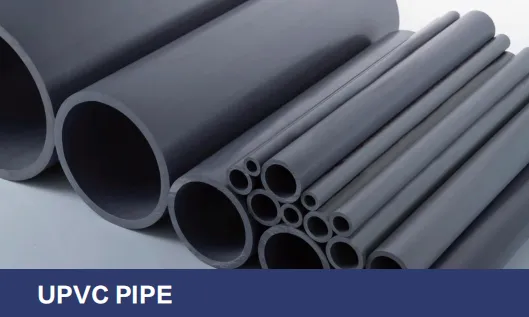
Unplasticized Polyvinyl Chloride—say that 5 times fast! Unlike its flexible PVC cousins, UPVC ditches softening additives. Result? A rigid, lightweight pipe that’s brilliantly affordable and corrosion-proof . It laughs at acids and salts but starts sweating at anything over 140°F.
Best for: Cold water lines, drainage, irrigation, outdoor DIY projects
Let’s put these rivals head-to-head where it counts:
| Category | CPVC SCH80 | UPVC |
|---|---|---|
| Heat Tolerance | 200°F (93°C) without flinching | ⚠️ Max 140°F (60°C) |
| Pressure Rating | ️♂️ 630 PSI @ 73°F (SCH80 thickness) | 450 PSI @ 73°F |
| Chemical Resistance | ☢️ Superior against acids, chlorine & solvents | Good, but crumbles with ketones |
| Fire Response | Self-extinguishing (critical in sprinklers) | Melts around 150°F |
| Installation Difficulty | Requires special CPVC solvent cement | ⚒️ Easy cut & glue with basic PVC cement |
| Cost (per 10ft pipe) | $25-$35 (premium materials + SCH80) | $10-$15 |
| Lifespan (average) | ⏳ 50-75 years | ⏳ 40-50 years |
Pro Tip: CPVC’s SCH80 rating doesn’t automatically beat thinner CPVC pipes. SCH80 just means thicker walls for extreme pressure needs . Standard SCH40 CPVC works great for home hot water lines!
Enough theory—let’s see where these pipes earn their keep:
Ever toured a chemical processing plant? Those steamy, pressurized lines moving corrosive liquids? Textbook CPVC territory:
I witnessed this firsthand in a semiconductor fab—their ultra-pure water system ran on CPVC. Why? Even microscopic corrosion could ruin $1M wafers!
Sun-soaked backyards, suburban homes, and farms—that’s UPVC’s kingdom:
My neighbor learned the hard way… Used standard PVC instead of UV-resistant UPVC for his gutter. Arizona sun melted it into modern art in 3 months!
Industrial applications tip: In wastewater treatment plants where bacterial fumes attack metal pipes, CPVC is replacing stainless steel at 1/3 the cost!
Spoiler: Neither pipe wins every round. Context is king!
CPVC wins when…
1. Your water heater output hits 150°F+ (UPVC gets soft at 140°F)
2. Budget allows premium protection for chemicals like trichloroethylene
3. Building codes require fire-rated piping
4. High-pressure surges occur (e.g., well pumps hitting 90 PSI)
UPVC wins when…
1. Project funds are tighter than a drum
2. You’re running cold water lines only
3. DIY simplicity matters (no fancy CPVC cement needed)
4. PVC toxicity concerns exist (UPVC’s plasticizer-free formula is safer)
Even Superman has kryptonite—here’s how not to botch your pipe job:
⚠️ Cement Catastrophes : I once saw a plumber use regular PVC glue on CPVC. Result? $5,000 leak repair after joints failed at year two. Moral? Always use yellow CPVC cement .
Hidden Costs : SCH80 means heavy-duty cutting tools. Forget cheap tubing cutters—you’ll need power saws or ratchet cutters ($80-$150 investment).
☀️ UV Degradation : Unlike CPVC, most UPVC lacks UV inhibitors. Outdoor use? Demand pipe labeled “UV-stabilized” or wrap it.
Cold Weather Crises UPVC gets brittle below 32°F. Freezing-climate installs? Insulate religiously—or listen to pipe concerts at 3 AM!
Drumroll please… CPVC vs UPVC isn’t a battle—it’s a collaboration . Here’s how experts mix them:
Hybrid Home System:
Commercial Hack:
Ultimately? Temperature and pressure decide everything . Match your pipe’s superpowers to your system’s kryptonite.
Pro Tip: Confused? Contact pipe manufacturers directly. I asked Lubrizol (CPVC makers) once—their engineers gave me a free 50-page chemical compatibility guide!
CPVC = Heat + Chemicals + Fire Safety
UPVC = Cold Water + Affordability + Simple DIY
Never swap CPVC/UPVC cements!
Mix pipes strategically—you don’t need just one
Recommend Products












