
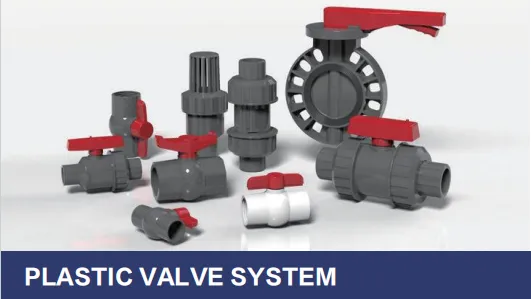
Ever paused to consider what's silently controlling the liquids flowing through the pipes beneath your feet or in industrial settings around you? Plastic valves have quietly revolutionized fluid control systems across countless applications. Unlike their clunky metal counterparts, these lightweight heroes solve real-world problems in surprisingly effective ways. Let's dive into the remarkable benefits that make plastic valves a game-changer for modern systems.
If you've worked with traditional metal valves, you've likely battled corrosion, wrestled with heavy installations, and watched budgets evaporate through maintenance leaks. Plastic valves arrived as the solution to these headaches, turning industry challenges into opportunities. From chemical plants to your local water treatment facility, these components are transforming how we control fluids—making systems lighter, cheaper, and longer-lasting without compromising performance.
What sets them apart isn't just one single feature but a combination of intelligent engineering and material science. Manufacturers began experimenting with high-performance thermoplastics like PVC, CPVC, polypropylene, and PVDF decades ago. Today, these materials have evolved into sophisticated valve systems that outperform metals in many demanding environments.
If you've ever seen metal valves reduced to flaky rust after exposure to seawater or chemicals, you'll appreciate this plastic superpower. Unlike metals that surrender to oxidation and chemical attacks, thermoplastics stand firm. This means:
Chemical processing plants now sleep easier knowing hydrochloric acid or chlorine won't compromise their valves by morning. Municipal water systems deliver cleaner water without metallic traces sneaking into your glass.
Forget needing three workers and a crane to install a valve. Plastic valves typically weigh 70-80% less than identical metal versions. This transforms installation and maintenance:
One plant manager shared: "We reduced valve installation time from 3 hours to 40 minutes—that's real productivity gain."
The savings begin upfront and keep giving throughout a valve's lifecycle. Consider this breakdown:
A water treatment facility documented 62% lower total ownership costs over 15 years after switching to plastic valves. The math speaks for itself.
Different plastics bring specialized resistance profiles. PVDF laughs at aggressive solvents, while CPVC handles chlorinated water beautifully. This tailored compatibility prevents:
Food processors especially love knowing their vanilla extract won't pick up metallic flavors while passing through valves.
Modern water plants run constant battles against scale, chlorine, and pH fluctuations. Plastic valves entered this arena as the undisputed champions:
In reverse osmosis systems where even trace metals cause membrane damage, plastic valves aren't optional—they're essential.
Carcinogenic solvents? Corrosive acids? Plastic valves handle them with ease:
One pharmaceutical plant quadrupled batch consistency simply by eliminating metallic contamination from valves.
Imagine biting into yogurt and tasting rust. Plastic valves prevent such nightmares through:
Dairy processors especially applaud how plastic valves withstand daily caustic cleaning without degradation.
Fertilizer-laden water accelerates metal corrosion exponentially. Plastic valves changed farming economics through:
As technology marches forward, plastic valves keep evolving. Nanocomposite formulations promise even greater strength while retaining corrosion resistance. "Smart valves" with embedded sensors monitor flow, pressure, and valve integrity in real-time—transforming maintenance from scheduled replacement to need-based intervention.
While no single solution fits every application, plastic valves have proven their worth across countless critical environments. Their unique combination of durability, economy, and chemical resistance solves problems that plagued engineers for decades. Next time you turn on a faucet or sip a soda, remember—there’s likely a plastic valve somewhere in that system, quietly outperforming metal ancestors while costing less to boot.
Recommend Products












