


The unsung heroes powering our modern world
Let's be honest – when was the last time you stopped to appreciate that humble bundle of wires charging your phone or bringing internet to your home? We live in a wireless-obsessed world where Bluetooth this and Wi-Fi that get all the glory. But behind every "wireless" miracle? There's always a cable doing the heavy lifting somewhere.
Cables are like the quiet backbone of our tech-driven lives. They're the veins carrying lifeblood to our gadgets, homes, and cities. Whether it's that USB-C cord you angrily untangle every morning or the massive underwater fiber optics linking continents, cables deserve some serious appreciation.
The Cable Basics: More Than Just Wires
Before we dive into the good stuff, let's clear something up: not all cables are created equal. At their simplest, cables are just protected conductors – materials that let electricity or signals flow through them. But what makes them special is how they're packaged and protected.
Fun fact: The basic concept of cables dates back to the early telegraph lines of the 19th century. What started as simple copper wires strung between poles has evolved into sophisticated engineering marvels that can withstand ocean depths and transmit data at nearly the speed of light.
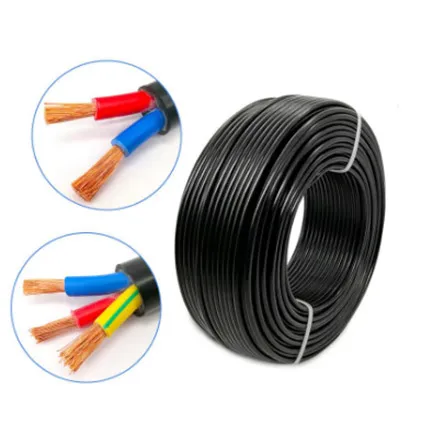
Modern cables are like miniature armored vehicles for electrons and data. They typically feature:
- Conductors: Usually copper or aluminum for electrical cables, glass fibers for optics
- Insulation: Materials like PVC or rubber that keep electricity where it belongs
- Shielding: Metal braids or foil that block interference
- Jacketing: The tough outer layer protecting against physical damage
The design varies wildly depending on whether they're meant to sit gently behind your TV or withstand being buried underground for decades. But regardless of type, all cables share some incredible benefits that make our modern lives possible.
The Incredible Benefits of Cables
Let's explore why, despite our wireless fantasies, cables remain absolutely essential:
1. Reliability You Can Count On
Ever been in a video call that froze at the worst possible moment? Or lost power because of a storm? Cables provide stability that wireless tech still struggles to match. A physical connection means:
- Consistent power delivery without dropouts
- Minimal data loss or interference
- Predictable performance regardless of weather
It's why critical infrastructure like hospitals and data centers will always rely on wired connections. When failure isn't an option, cables deliver.
2. Speed Demon Performance
While wireless tech has improved tremendously, it still can't match the raw speed potential of a good cable. Consider:
- Fiber optic cables: Can transmit data at up to 15.5 Tbps (that's terabits!)
- HDMI 2.1 cables: Handle 48 Gbps for buttery-smooth 8K video
- Power cables: Deliver electricity literally at light speed
The difference becomes especially noticeable with huge file transfers or high-resolution streaming where wireless connections choke but cables keep cruising.
3. Energy Efficiency
Here's something most people don't realize: cables are amazing energy savers. When we talk about power cables specifically:
- High-quality electrical cables lose less than 3% of energy as heat
- Underground cables avoid weather-related power losses
- Smart grid tech minimizes waste over long distances
Compared to wireless transmission which suffers significant energy dissipation over distance, cables keep more of that precious electricity going where it's needed.
4. Security Advantages
In our age of digital snooping, cables offer a surprisingly secure alternative to wireless. Why? Because hacking requires physical access. Benefits include:
- No radio signals to intercept from a distance
- Physical tampering is easier to detect
- Shielding prevents electromagnetic eavesdropping
It's why government agencies and financial institutions still prefer wired networks for their most sensitive operations – you can't hack what you can't physically touch.
5. Long-Term Cost Savings
Cables might seem expensive initially, but they're investment pieces:
- Quality electrical cables last 30-50 years
- Underground fiber optics have 25+ year lifespans
- Minimal ongoing maintenance costs
Compare this to wireless equipment that requires regular upgrades, suffers obsolescence faster, and needs more frequent replacement. Over decades, cables often win the cost battle.
6. Physical Durability
Modern cables are engineering marvels designed to survive extreme conditions:
- Submarine cables withstand ocean pressures at depths up to 8,000 meters
- Industrial cables tolerate extreme temperatures from -60°C to 200°C
- Armored cables resist crushing forces and rodent damage
This durability ensures critical services keep running even in disaster scenarios where wireless infrastructure might fail.
Real-World Heroes: Where Cables Shine
Let's move beyond theory and see cable benefits in action across different scenarios:
Home Sweet Wired Home
In your living space, cables provide:
- Stable internet: Ethernet backbones prevent Wi-Fi dead zones
- Clean power: Dedicated circuits prevent appliance interference
- Entertainment quality: HDMI delivers pristine 4K/HDR to TVs
- Safety: Proper wiring prevents electrical fires
That fancy smart home? It might have voice controls, but it's still powered by dozens of cables in your walls.
City Infrastructure Backbone
Urban areas rely on massive cable networks:
- Power grids: High-voltage cables distribute electricity across cities
- Internet exchange: Fiber optic trunks connect neighborhoods
- Traffic systems: Wired sensors control signals and monitors
Next time you're stuck at a traffic light, remember there's likely a bundle of control cables orchestrating the flow.
The Digital World's Foundation
Our online existence depends entirely on cables:
- ~1.3 million km of submarine cables connect continents
- Data centers use enough fiber to wrap the Earth 30x over
- Cloud computing relies on massive internal cable plants
That cat video streaming from across the world? It traveled through countless cables to reach your screen.
Overcoming Cable Challenges
Of course, cables aren't perfect. Let's address common concerns:
Installation headaches? Professional cable suppliers have developed amazing solutions like micro-trenching (narrow cuts in pavement) and directional boring (installing cables without digging trenches).
Environmental impact: While older cables contained problematic materials, modern alternatives feature:
- Recycled copper and aluminum conductors
- Lead-free insulation compounds
- Biodegradable jacketing materials
- Improved recycling programs (up to 95% recovery)
Wireless competition: Rather than replacing cables, wireless tech often complements them. Your phone connects wirelessly to a router... which then connects to a cable bringing it all together.
Future-Proof: Why Cables Aren't Going Anywhere
Emerging technologies ensure cables will remain relevant:
- Smart cables: Embedding sensors to monitor temperature, strain, and damage
- Superconductors: Materials that could transmit power with near-zero loss
- Quantum networking: Fiber optics being adapted for quantum encryption
- Higher capacities: Multi-core fibers multiplying data throughput
As we push technology boundaries – from electric vehicles to smart cities to AI – our need for reliable, high-capacity cabling only increases.
Making the Most of Your Cables
Practical tips for better cable experiences:
Choosing the Right Cable
Match cables to their purpose:
- Data cables: Look for CAT ratings (CAT6A for 10Gbps)
- Power cables: Consider gauge/thickness (lower gauge = more current)
- Outdoor use: Seek UV-resistant and waterproof ratings
Installation Best Practices
Maximize cable lifespan and performance:
- Avoid tight bends that stress conductors
- Use proper strain relief at connection points
- Separate power and data cables to prevent interference
- Label both ends for easy identification
Parting Thoughts: Celebrating the Cord
As we wrap up (pun absolutely intended), let's remember:
- Cables deliver unmatched reliability for critical systems
- They enable speeds wireless can't consistently match
- Cables form the backbone of our power and communication grids
- They're evolving with new tech rather than being replaced
So next time you plug in your laptop or flip a light switch, take a second to appreciate the incredible engineering in that simple cable. These unassuming wires truly electrify our modern world – bringing us power, information, and connection.










