



Wood-Plastic Composite (WPC) wall panels represent a revolutionary advancement in building materials that combines the natural aesthetics of wood with the durability and versatility of plastics. As the construction industry increasingly prioritizes sustainable and low-maintenance solutions, these panels have emerged as a go-to choice for architects, designers, and homeowners alike. Their unique composition offers remarkable benefits over traditional materials, driving widespread adoption across numerous application domains worldwide.
This comprehensive guide explores the extensive application ranges of WPC wall panels across residential, commercial, industrial, and specialized environments. We'll examine the structural characteristics that make them suitable for diverse settings and showcase real-world implementation scenarios where their advantages shine brightest.
Fundamental Properties Enabling Diverse Applications
Moisture Resistance
Unlike natural wood, WPC panels don't absorb water or support mold growth, making them ideal for high-humidity environments.
Thermal Performance
WPC provides superior insulation compared to metal cladding, reducing energy costs in temperature-regulated spaces.
Structural Integrity
Resistant to warping, cracking, and pest damage, WPC maintains structural performance for decades.
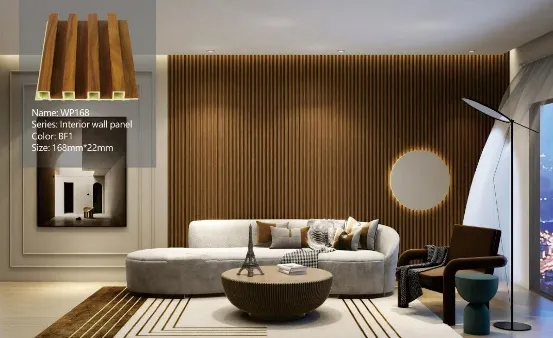
Residential Applications (40% of Global Usage)
Interior Design Solutions
Kitchen Backsplashes
Waterproof WPC panels prevent water damage near sinks while providing stylish, easy-to-clean surfaces that resist grease stains.
Bathroom Walls
Non-porous WPC eliminates moisture absorption issues common with drywall, preventing mold and mildew formation in steam environments.
Feature Walls
Decorative and 3D WPC panels create dramatic visual elements in living rooms and bedrooms, offering depth and texture without maintenance demands.
Exterior Applications
Building Facades
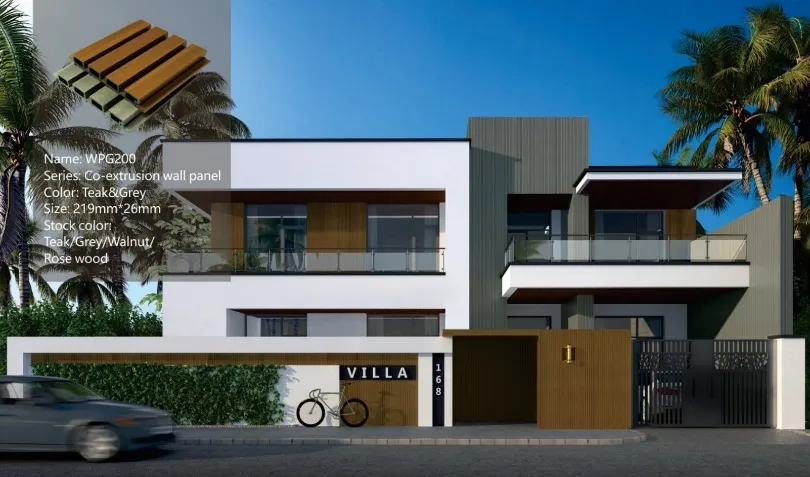
Solid WPC panels provide weather-resistant cladding that maintains appearance without painting, resisting UV degradation and temperature extremes.
Garden Structures
From decorative fences to gazebo walls, WPC withstands outdoor elements while retaining wood-like aesthetics, unaffected by soil moisture or insects.
Balcony and Terrace Partitions
Lightweight hollow-core panels offer privacy and weather protection without adding structural load to existing balconies.
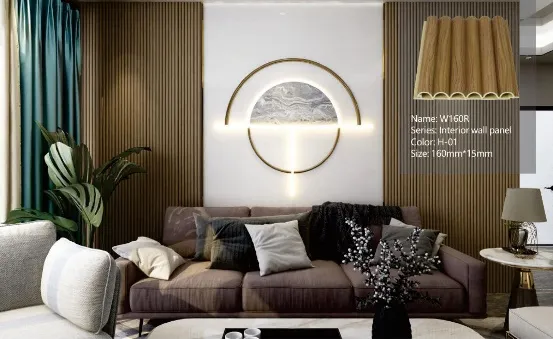
Commercial Applications (35% of Global Usage)
Hospitality Industry
Hotels increasingly use waterproof panels in pools and spas, elegant decorative panels in lobbies, and durable 3D panels in restaurants to create distinctive atmospheres that withstand high foot traffic. The Grand Plaza Hotel in Singapore reported reducing maintenance costs by 60% after replacing traditional materials with WPC throughout guest corridors and wet areas.
Retail Environments
Shopping malls favor hollow-core WPC panels for accent walls due to rapid installation and sound-dampening characteristics. Clothing retailers appreciate the aesthetic customization options, with some luxury brands incorporating decorative panels with specialized wood grain patterns and metallic finishes for distinctive displays.
Office Spaces
Modern offices leverage WPC panels for partition walls that provide privacy without permanent construction. Corporate lobbies increasingly feature custom-printed WPC installations for branded environments. Unlike traditional wood surfaces, these panels won't show wear from constant contact with rolling chairs and cleaning equipment.
Industrial Applications (15% of Global Usage)
Manufacturing Facilities
Factories utilize solid-core panels for machine guards and barrier walls due to impact resistance and non-conductive properties. Many automotive plants have transitioned to WPC partitions around paint booths where chemical resistance outperforms traditional materials.
Cold Storage and Food Processing
Fully waterproof panels maintain structural integrity in constant high-humidity, low-temperature environments. Their non-porous surfaces meet sanitation requirements without special sealants required for wood. Unlike pu stone wall panels that require specialized installation, WPC provides a more flexible solution for curved freezer walls.
Warehousing Solutions
Distribution centers implement WPC protective wall systems that resist impact from forklifts and pallet jacks. The material's dimensional stability prevents warping that affects metal panels in fluctuating temperatures.
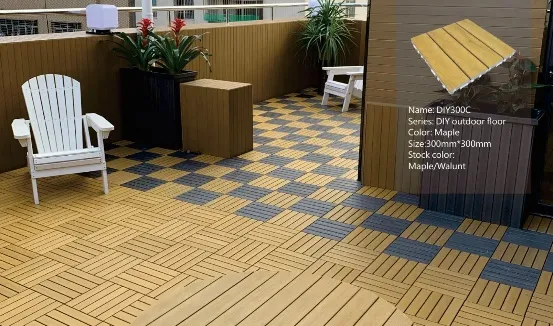
Specialized Applications (10% of Global Usage)
Healthcare Environments
Hospitals specify WPC for areas requiring stringent hygiene. Antimicrobial formulations with seamless installation inhibit pathogen growth in operating theaters and laboratories. The panels withstand repeated chemical cleaning without degradation.
Educational Facilities
Schools increasingly adopt WPC for corridor walls that endure daily abuse while maintaining appearances. Universities create inspiring learning environments with decorative 3D panels in student centers and libraries without safety concerns about splintering wood surfaces.
Marine Architecture
Waterfront restaurants and marinas specify marine-grade WPC formulations resistant to salt spray corrosion. Ferry terminals utilize panels that withstand constant vibration and moisture exposure without metal fastener corrosion issues.
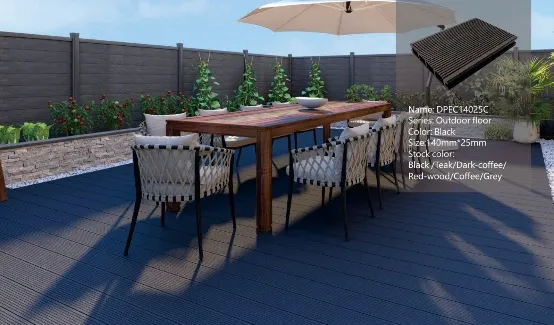
Global Implementation Case Studies
Material Innovations Expanding Applications
- Advanced Composite Formulas : Current R&D focuses on nanotechnology additives that enhance UV stability for tropical climates
- Fire-Resistant Developments : New formulations achieve Class A ratings without brominated flame retardants
- Integrated Technologies : Some manufacturers embed wiring channels within thick-profile panels for smart building integration
- Texture Reproduction : Modern texturing processes can precisely replicate rare woods, stones, and abstract patterns
- Structural Hybrids : Experimental panels combining bamboo charcoal board composites with WPC polymers show promise for structural applications
Future Market Trajectories
Industry analysts project the WPC market to exceed $9 billion globally by 2028, with architectural applications representing the fastest-growing segment. As sustainability regulations tighten worldwide, especially regarding embodied carbon in building materials, the ecological advantages of WPC will drive deeper market penetration. Developing regions particularly favor these panels for their combination of durability and low maintenance in harsh climates. The ongoing substitution of traditional materials across multiple sectors suggests we've only begun exploring the true potential of these versatile composite solutions.
The next frontier involves integrated panel systems combining multiple functions - structural support, insulation, and finished surfaces in single-component assemblies that reduce construction time and complexity. Such innovations will unlock applications in rapid-deployment emergency housing and modular construction projects.
Implementation Considerations
Climate Adaptation
Project specifications should consider appropriate formulations: UV-stabilized compositions for high-sunlight installations, moisture-resistant profiles for tropical regions, and thermal-expansion tolerant formulations for arctic deployments.
Fire Regulation Compliance
Always verify regional fire safety codes and select panels with appropriate certification. Commercial applications typically require superior performance ratings compared to residential contexts.
Maintenance Planning
While requiring minimal upkeep, project owners should establish appropriate cleaning protocols for different environments - industrial applications may require specialized cleaning solutions while restaurants benefit from stain-resistant sealants.
Conclusion
From high-end residential interiors to demanding industrial environments, WPC wall panels have demonstrated exceptional versatility across an extensive application range. Their unique combination of practical advantages and aesthetic flexibility has positioned these composites as essential solutions in modern construction. The ongoing development of specialized formulations continues to expand viable application areas, promising further innovation in building technologies worldwide.
As manufacturing efficiency improves and formulations become increasingly sophisticated, we anticipate WPC panels will transition from specialized alternative material to mainstream building solution. Their environmental benefits align perfectly with global sustainability goals, making this technological advancement not just practical, but increasingly necessary for responsible construction practices.









