
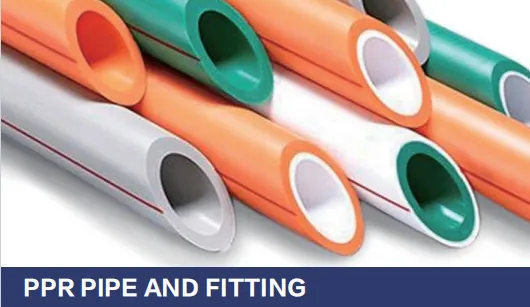
When sourcing plumbing materials for construction projects, choosing the right supplier is a decision that impacts project timelines, budgets, and long-term system reliability. For contractors, developers, and procurement managers worldwide, working with a ppr pipe and fitting supplier from China has become an increasingly strategic choice. Chinese manufacturers have invested heavily in production technology, quality control systems, and international certifications, making them competitive partners for projects of all scales. This article explores the key advantages of partnering with a Chinese PPR pipe and fitting supplier and what to look for when making your selection.
One of the most immediate advantages of sourcing from China is the significant cost savings. Chinese PPR pipe manufacturers benefit from mature domestic supply chains for raw materials, large-scale automated production lines, and a skilled workforce. These factors collectively reduce per-unit production costs, which translates into competitive pricing for international buyers.
Importantly, cost-effectiveness does not mean lower quality. Reputable Chinese suppliers adhere to international standards including GB/T 18742, ISO 9001, and often EN 15874 or ASTM F2389 depending on the target market. Many factories have obtained certifications such as CE, WRAS, and NSF, ensuring their products meet the requirements of projects in Europe, the Middle East, Southeast Asia, and beyond. For buyers, this means accessing products that meet global performance benchmarks at a fraction of the cost of European or American equivalents.
A major advantage of working with an established Chinese supplier is the breadth of product offerings. Rather than coordinating with multiple vendors for different components, a single ppr pipe and fitting supplier can provide everything from pipes and fittings to valves, flanges, and accessories. This one-stop approach simplifies procurement, reduces logistics complexity, and ensures compatibility across all components of the plumbing system.
For example, a comprehensive supplier will stock a wide range of PPR pipe diameters—from 20 mm to 160 mm—along with matching elbows, tees, couplings, reducers, end caps, and ball valves. Many also offer complementary products such as the PP-R hot/cold water pressure piping system, which is designed for both residential and commercial water supply applications. Having all these items from one source streamlines the supply chain and reduces the administrative burden on the buyer.
Modern Chinese PPR pipe factories utilize automated extrusion lines, in-line diameter and wall thickness monitoring, and robotic packaging systems. These technologies ensure consistent product quality across large production volumes.
Leading Chinese manufacturers operate under strict quality management frameworks. Raw materials—typically polypropylene random copolymer granules from suppliers like Borouge, LyondellBasell, or Sinopec—are tested upon arrival. Finished products undergo hydrostatic pressure testing, thermal cycling tests, and dimensional inspections before shipment. Many factories employ third-party inspection agencies such as SGS, Bureau Veritas, or TÜV to provide independent verification for international clients.
This level of quality assurance gives buyers confidence that the PPR pipes and fittings they receive will perform reliably in their intended applications, whether for cold water supply, hot water distribution, or industrial fluid transport.
Chinese suppliers are known for their flexibility in accommodating customer requirements. Whether you need custom pipe lengths, specific color coding for hot and cold water lines, branded packaging, or private-label products, most manufacturers can adapt their production runs to meet your specifications. This is particularly valuable for distributors and wholesalers who want to build their own brand presence in local markets.
Customization also extends to technical specifications. If your project requires pipes with enhanced UV resistance for outdoor installation, higher thermal stability for industrial heating systems, or specific pressure ratings, a capable supplier can adjust material formulations and production parameters accordingly. This level of flexibility is harder to achieve with suppliers operating on standardized, high-volume-only production models.
China's well-developed port infrastructure and logistics network support efficient global shipping. Major PPR pipe manufacturing hubs are located near key export ports such as Guangzhou, Shenzhen, Ningbo, and Shanghai, reducing inland transportation time and cost. Established suppliers have dedicated export departments that handle documentation, customs clearance, and freight coordination, making the import process smoother for international buyers.
Many Chinese suppliers also maintain buffer stocks of popular product lines, enabling them to fulfill orders with shorter lead times than manufacturers who produce only to order. This is especially beneficial for projects with tight construction schedules or unexpected additional material requirements.
Reputable building material supplier companies in China understand that sustained success in international markets depends on reliable after-sales service. They typically offer technical support covering installation guidance, troubleshooting, and product selection advice. Many provide detailed installation manuals, video tutorials, and on-site training if required.
Warranty policies are also an important consideration. Leading suppliers offer warranties on their PPR piping systems, typically covering manufacturing defects for a specified period. Having this assurance gives project owners peace of mind and demonstrates the supplier's confidence in the quality of their products.
While the advantages are clear, success depends on selecting the right partner. Here are practical steps to evaluate a Chinese PPR pipe and fitting supplier:
Partnering with a Chinese PPR pipe and fitting supplier offers a compelling combination of cost savings, product variety, manufacturing expertise, and service flexibility. As global construction demands continue to grow, the ability to source reliable plumbing materials at competitive prices is a strategic advantage for any project. By conducting thorough due diligence and selecting a supplier with proven quality credentials and international experience, buyers can build a long-term partnership that consistently delivers value across multiple projects.
Recommend Products












