
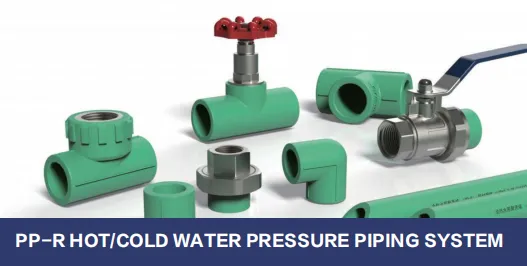
When planning a residential, commercial, or industrial plumbing system, the choice of piping material directly affects long-term performance, maintenance costs, and water quality. Among the most debated options in modern construction are PP-R hot/cold water pressure piping systems and traditional copper pipes. While copper has served the industry for decades, PP-R has emerged as a superior alternative for most applications — offering clear advantages in corrosion resistance, total cost, installation efficiency, and long-term reliability.
PP-R (Polypropylene Random Copolymer) is a thermoplastic material specifically engineered for pressurized plumbing systems. It is designed to handle both hot and cold water distribution with consistent performance. Copper, a metal pipe with a long history in plumbing, relies on soldered or press-fit connections and is known for its strength at high temperatures.
The fundamental difference lies in how these materials interact with water and the surrounding environment. PP-R is chemically inert — it does not react with water, minerals, or chemicals. Copper, being a metal, can corrode, scale, and leach ions into the water supply under certain conditions. This distinction alone drives many project managers and contractors to seek pp-r hot/cold water pressure piping system solutions as a reliable alternative.
One of the most critical advantages of PP-R piping is its complete immunity to corrosion. Unlike copper, which can pit and develop pinhole leaks when exposed to acidic or aggressive water conditions, PP-R remains unaffected by water chemistry. The inner bore of a PP-R pipe stays smooth for decades, maintaining consistent flow rates and water pressure throughout the entire service life of the system.
Copper pipes, while durable in ideal water conditions, are vulnerable to:
PP-R eliminates these concerns entirely. There is no metal to corrode, no ions to leach, and no scaling to reduce efficiency. For projects in regions with soft, acidic, or chemically treated water, this inertness is a decisive advantage.
Cost comparisons between PP-R and copper must consider the full lifecycle — not just the upfront material price. PP-R consistently delivers lower total cost across three key dimensions:
Material Cost: PP-R raw material is more affordable and price-stable. Copper, as a traded commodity, fluctuates with global metals markets, making budget planning unpredictable for large-scale projects.
Labor Cost: PP-R heat fusion installation is faster and requires less specialized training than copper soldering. A crew can complete many more joints per hour with PP-R, significantly reducing on-site labor expenses.
Maintenance Cost: Because PP-R does not corrode, scale, or develop pinhole leaks, long-term repair and replacement costs are dramatically lower than copper systems exposed to aggressive water.
For contractors and developers managing large residential or commercial builds, these savings add up quickly. When you partner with a trusted pipes fittings supplier, you gain access to PP-R systems that deliver predictable performance and stable pricing across your entire project pipeline.
PP-R piping uses heat fusion joining — the pipe end and fitting socket are heated to approximately 260°C and pushed together, creating a single homogeneous piece of material as they cool. This process offers several practical benefits:
| Installation Factor | PP-R Heat Fusion | Copper Soldering |
|---|---|---|
| Joining Speed | Seconds per joint once heated | Minutes per joint with cleaning, fluxing, heating, and cooling |
| Skill Requirement | Basic training sufficient | Certified skilled trade required |
| Fire Risk | No open flame | Open flame torch — fire watch needed |
| Joint Integrity | Homogeneous fusion — no separate leak path | Dependent on perfect solder flow — cold joints can leak |
The absence of an open flame makes PP-R particularly suitable for occupied buildings, renovation projects, and sites with combustible materials nearby. Installation crews can work faster and safer, keeping project schedules on track.
PP-R has significantly lower thermal conductivity than copper — roughly 1/200th that of metal. This means hot water stays hotter as it travels through PP-R pipes, reducing heat loss and lowering energy consumption. In cold water systems, PP-R minimizes condensation on pipe surfaces, preventing moisture damage to surrounding building materials.
For large buildings with extensive hot water distribution networks, the energy savings from reduced heat loss can be substantial over the system's lifetime. This makes PP-R an environmentally and economically sound choice for modern construction projects.
PP-R piping systems carry a 50-year design life at their rated pressure and temperature levels, matching or exceeding copper's expected lifespan in typical water conditions. The difference is in how each material reaches the end of its service life:
When installed correctly, PP-R systems run quietly and reliably for their full design life because nothing in the water attacks the pipe material.
PP-R is a food-grade material that does not leach harmful substances into drinking water. It is approved for potable water systems in countries around the world. Copper, while naturally antimicrobial, can leach copper ions into water when pH levels are low — a concern in areas with acidic water supplies.
Additionally, PP-R pipes carry no scrap value, making them unattractive to theft on construction sites. Copper theft from job sites and vacant buildings is a well-documented problem that adds insurance costs and schedule delays. By choosing PP-R, project managers eliminate this risk entirely.
To be fair, copper retains its place in specific applications:
For everyday hot and cold water distribution in residential, commercial, and institutional buildings, however, PP-R is the clear frontrunner.
The shift from copper to PP-R in modern plumbing is not a trend — it is a rational response to the material's demonstrated advantages. Lower total cost, faster installation, complete corrosion resistance, and a 50-year service life make PP-R the logical default for most water supply projects.
When sourcing PP-R piping systems, it is essential to work with a supplier that provides consistent quality, proper certifications, and reliable support. As a comprehensive building material supplier, COLORIA GROUP offers a complete range of PP-R hot and cold water pressure piping systems alongside thousands of other construction products — making it a true one-stop solution for project procurement.
Looking for reliable PP-R piping solutions for your next project?
Explore PP-R Piping SystemsPP-R hot/cold water pressure piping systems outperform copper in the categories that matter most to modern construction: corrosion resistance, total cost, installation efficiency, energy performance, and predictable long-term reliability. While copper retains niche applications in extreme high-heat environments, PP-R has become the standard choice for water distribution in residential, commercial, and industrial buildings worldwide.
For project managers, contractors, and developers seeking a dependable supply of high-quality PP-R systems and a full portfolio of building materials, COLORIA GROUP provides the expertise, product range, and global logistics support to keep your projects on time and on budget.
Recommend Products












