
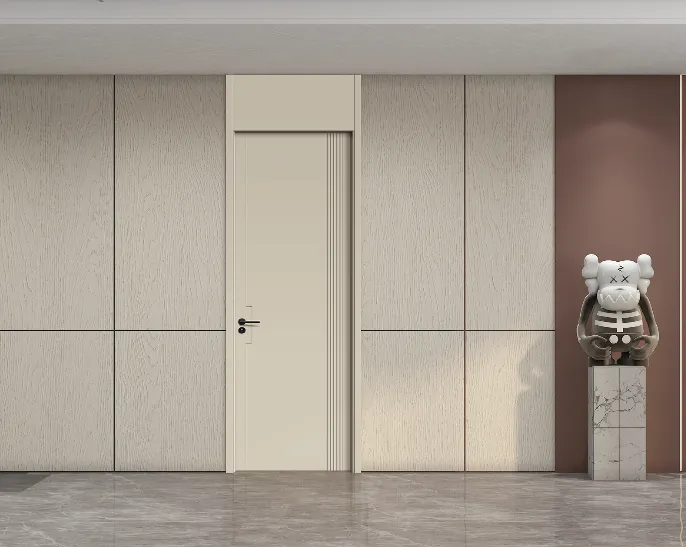
Solid wood doors are made entirely from natural timber, either hardwood or softwood, rather than from hollow frames or composite cores. Because every part of the door comes from real wood, these doors carry a warm, honest grain that other options simply cannot copy. For contractors, developers and wholesale buyers who need durable doors that suit both residential and commercial projects, it is worth knowing what defines a true solid wood door and what practical advantages it brings. This article explains both.
A solid wood door uses a stile-and-rail frame, with vertical stiles and horizontal rails holding the panels in place, and the whole unit is cut and assembled from natural wood. This is different from a hollow-core door, which has a lightweight frame around a honeycomb or foam interior, and from a solid-core composite door, which uses an engineered or composite filling under a thin veneer. A true solid wood door is wood all the way through, which gives it real weight, a deeper sound when knocked, and a surface that can be sanded and refinished many times over the years.
Manufacturers offer a range of timber choices, each with its own colour and character. Oak brings a strong, open grain and good resistance to everyday wear; mahogany offers a rich reddish tone and stable performance in damp air; teak brings natural oils that repel moisture and insects; walnut gives a deep, luxurious finish; and pine offers a lighter and more affordable option. The right species depends on where the door will be installed and the look the project needs.
Long service life. When moisture is controlled and the finish is maintained, a solid wood door can serve for decades. Hardwearing species such as oak and mahogany hold up well under daily use, and because the surface is solid it can be sanded, re-oiled or repainted instead of being thrown away after heavy wear.
Natural beauty. The grain of real timber gives a door a sense of warmth and quality that veneered or painted composite doors do not offer. A natural or slightly tinted finish makes wood the focal point of an entrance hall, bedroom or office, and that classic look suits both modern and traditional interiors.
Good sound insulation. Dense natural timber absorbs sound far better than a lightweight hollow core. In a busy home, a solid wood door reduces noise moving between a bedroom, home office or bathroom, which makes it a sensible choice wherever peace and privacy matter.
Thermal insulation. Wood is a natural insulator, so a well-sealed solid wood door helps keep indoor temperatures steady. This reduces the cold draughts that often slip past thinner doors and can help lower heating and cooling costs over time.
High level of customisation. Because the door body is solid timber, it can be crafted to a specific size, carved with detail, or given a custom stain to match the design of a room. This flexibility makes solid wood a popular choice for hotels, private villas and high-specification residential projects.
Recyclable and repairable. Natural wood can be refinished and, when its service life finally ends, it can be reused or disposed of with less environmental impact than plastic-based doors. Regular refinishing also means the door can look fresh again without being replaced.
Solid wood doors are a worthwhile investment, but they are not without a few trade-offs. The first is cost: real timber costs more than hollow or composite doors, especially when premium species such as mahogany or walnut are chosen. The second is sensitivity to moisture. If wood is exposed to repeated damp or very dry air, it can swell or shrink slightly, so the door needs a proper seal, good ventilation in the room, and a stable environment. Third, solid wood is heavier, so the frame and hinges must be strong enough to carry the weight.
These issues are easily managed with good craftsmanship and a small amount of routine care, which is why quality manufacturing and a reliable supplier matter. For exterior doors and for humid regions, choosing a moisture-resistant species and protecting the timber with a suitable finish is the key to keeping the door straight and attractive for years.
Solid wood interior doors are a popular choice for bedrooms, bathrooms, studies and hotel rooms, where their warmth, quiet and durability add value to everyday life. For entrance and exterior openings, a sturdier timber with a weather-resistant finish gives a welcoming front door that also stands up to the elements. Door systems come in several opening styles to suit the layout of a building, including classic swing doors, space-saving sliding doors and heavier configurations for large openings.
Choosing the right wood door supplier makes a real difference to cost, quality and delivery. COLORIA GROUP is a one-stop building materials supplier covering everything needed for residential and commercial projects, from walls, flooring and ceilings through sanitary ware, lighting and solar panels to furniture and appliances. Within its windows and doors range, the company supplies solid wood doors and matching door series, and it works with an established agent in Saudi Arabia backed by years of industry experience.
Because COLORIA GROUP handles the full range of building materials under one roof, contractors and developers can order solid wood doors alongside the other products a project needs, simplifying procurement and keeping the specification consistent. For bulky orders, wholesale pricing and customised sizing make it easier to fit the doors to the exact openings of each building.
Solid wood doors reward the buyer with a long service life, natural beauty, good sound and thermal insulation, and a surface that can be refinished again and again. The higher upfront cost and the need for reasonable maintenance are balanced by their durability and the value they add to a property. For buyers who need dependable supply, consistent quality and the convenience of sourcing from one partner, a one-stop building materials company with a full doors and windows range is a practical choice for the project.
Recommend Products












