
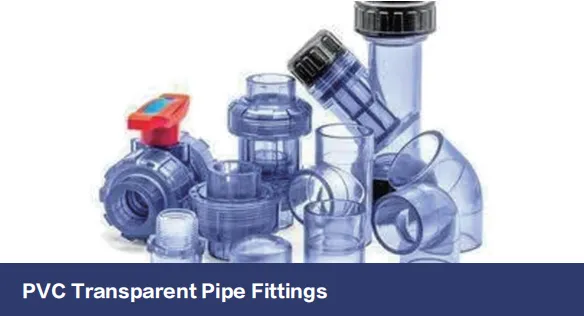
Ever wondered how brewers monitor beer flow without opening pipes? Or how scientists track chemical reactions in labs? That magic window into piping systems is made possible by PVC transparent pipe fittings - the unsung heroes of visual monitoring in fluid systems.
PVC transparent pipe fittings are like the eyewear of plumbing systems. They're specialized clear connectors made from polyvinyl chloride that let you literally see what's happening inside your pipes. Unlike standard PVC that's usually white or gray, these fittings offer crystal-clear visibility while maintaining all the strength and chemical resistance you'd expect from PVC.
These aren't just pipes - they're the entire ecosystem of connections including:
While seeing fluids move through pipes is fascinating, practical benefits make transparent fittings indispensable:
The Visual Advantage: In chemical processing plants, operators have spotted dangerous contaminations in real-time through clear fittings - avoiding equipment damage and costly shutdowns. During a recent craft brewery tour, the head brewer showed us how they monitor yeast propagation through clear PVC tees during fermentation.
Scientist Sarah M. from a biotech lab shares: "We switched to clear PVC fittings last year. The visibility helps us confirm no air bubbles are entering our sensitive culture systems. It's reduced our experimental errors by about 30%."
Craft brewery owner Tom R.: "Before clear fittings, we'd have to take apart sections just to check flow. Now we see hop particles, color changes, and flow rates in real-time. Our batch consistency improved dramatically."
Marine biologist Dr. Elena K.: "In public aquarium filtration systems, seeing debris buildup in clear elbows helps us schedule cleanings before water quality drops. The fish are definitely happier."
Clear doesn't mean one-size-fits-all. Different materials serve different needs:
| Material | Best For | Watch Out For | Real-World Cost (approx.) |
|---|---|---|---|
| Transparent PVC | Chemical resistance, affordability | UV degradation | $5-30 per fitting |
| Acrylic | Optical clarity, indoor use | Chemical sensitivity | $15-100 per fitting |
| Polycarbonate | Impact resistance, toughness | Higher cost, scratching | $20-150 per fitting |
| Glass | Perfect clarity, chemical inertness | Fragility, installation difficulty | $50-300+ per fitting |
From delicate lab setups to industrial processes, transparent PVC fittings come in every size you need:
After seeing hundreds of installations, I can't stress this enough - how you install transparent fittings determines whether they stay transparent:
The Cloudy Pipe Horror Story: A food processing plant used standard PVC cement instead of clear formula on their new transparent system. The result? Milky, opaque joints that defeated the whole purpose. They learned the $10,000 lesson about using the right cement - the hard way.
Three common maintenance pitfalls I've seen ruin transparent systems:
A brewery intern once used abrasive pads to clean hard water stains. The result? Permanently fogged pipes where you couldn't monitor yeast activity. Stick to soft cloths and approved cleaners only.
A chemical plant used solvent cleaners incompatible with PVC. The fittings clouded and became brittle within months. Always check chemical compatibility - it's non-negotiable.
An outdoor aquarium system turned opaque yellow after just one summer. For any outdoor exposure, you must use UV-protected fittings or coatings - no exceptions.
The right fitting does more than connect pipes - it solves problems:
The Ball Valve Breakthrough: Craft distiller Mia T. struggled with opaque brass valves hiding contamination. After switching to clear PVC ball valves, she could spot particles instantly: "We reduced spirit rejection rates by 40% immediately because we could see the problem."
What I'm seeing emerge in transparent piping technology:
Prototypes with embedded sensors that track flow rates, temperature, and even composition while remaining transparent. One biomedical startup is testing units that detect pH changes by color shifts.
Nanocoatings being developed that prevent mineral buildup using photocatalytic technology. Early lab tests show 80% reduction in cleaning frequency.
New polymer blends offering the clarity of glass with the chemical resistance of PVDF. Still expensive, but game-changing for pharmaceutical applications.
Recommend Products












