
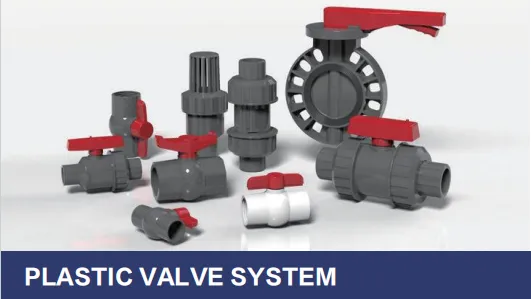
Imagine standing on a bustling construction site—crane cables crisscross the sky, workers coordinate to lift steel beams, and the outline of a future building takes shape. Behind every wall, beneath every floor, and within every ceiling, there's a silent network keeping the structure functional: plumbing and fluid management systems. At the heart of these systems lie valves—small but mighty components that control the flow of water, gas, and other fluids. In recent decades, plastic valve systems have emerged as a game-changer in construction, offering durability, versatility, and cost-effectiveness that traditional metal valves often can't match. For construction professionals, understanding these solutions isn't just about choosing parts; it's about building projects that stand the test of time. Let's dive into what plastic valve system solutions are, why they matter, and how to leverage them for success.
At their core, plastic valve system solutions are comprehensive packages designed to regulate, direct, and control fluid flow in plumbing, drainage, and industrial systems. They encompass not just individual valves but also the pipes, fittings, and technical support needed to integrate them into a cohesive, functional network. Unlike standalone valves, these solutions are tailored to specific project needs—whether you're building a residential high-rise, a commercial mall, or a hospital. A plastic valve system supplier typically acts as a partner, offering expertise in material selection, system design, and compliance with industry standards to ensure the solution works seamlessly from installation to long-term use.
Think of it this way: If a construction project's plumbing system is a symphony, plastic valve systems are the conductors. They ensure water flows where it's needed (like to faucets and showers) and away from where it isn't (like through drains). Without reliable valves, you risk leaks, pressure imbalances, and even system failures—issues that can delay timelines, inflate costs, and compromise safety. That's why modern construction relies so heavily on plastic valve system solutions : they're engineered to be robust, adaptable, and easy to integrate, making them a cornerstone of efficient building.
Plastic valve systems owe their popularity to the diverse, high-performance materials used to craft them. Unlike metal valves, which are often heavy and prone to corrosion, plastic valves leverage polymers that balance strength, flexibility, and resistance. Here are the most common materials you'll encounter, and why they matter:
PVC is the backbone of many residential and commercial drainage systems, and for good reason. It's rigid, affordable, and highly resistant to chemicals and abrasion. In valve systems, PVC is often used for drain, waste, and vent (DWV) applications—think sinks, showers, and toilets. If you've ever worked on a project where efficient waste removal was critical, you've likely partnered with a PVC DWV pipe supplier to source compatible pipes and valves. PVC valves are ideal for low-pressure systems, making them a staple in bathrooms, kitchens, and laundry rooms.
UPVC takes PVC's durability a step further by removing plasticizers, resulting in a stiffer, more heat-resistant material. It's the go-to for high-pressure applications like main water lines, irrigation systems, and industrial piping. An UPVC pipe supplier will often highlight its resistance to corrosion and UV rays, making it suitable for both indoor and outdoor use. UPVC valves are known for their tight seals and long service life, which is why they're a favorite in commercial projects like office buildings and shopping centers.
When it comes to hot water systems—whether in residential boilers or commercial kitchens—PPR reigns supreme. This material can withstand temperatures up to 95°C (203°F) without warping, making it perfect for transporting hot water safely. A PPR pipe and fitting supplier will emphasize its flexibility, which reduces the need for joints (and thus leak points), and its resistance to scale buildup. PPR valves are often used in radiant heating systems, hospitals, and schools, where consistent hot water flow is non-negotiable.
PEX is the rebel of the plastic family: flexible, bendable, and easy to install in tight corners. Unlike rigid PVC or UPVC, PEX can snake through walls and floors without the need for multiple elbows or joints, saving time and labor. While PEX is more commonly used for pipes than valves, it pairs seamlessly with plastic valves in residential plumbing systems, especially in retrofits where access is limited. Its resistance to freezing (it can expand without bursting) also makes it a top choice in colder climates.
| Material | Key Properties | Typical Applications | Why It Stands Out |
|---|---|---|---|
| PVC | Rigid, chemical-resistant, affordable | Drainage (sinks, showers), low-pressure systems | Cost-effective for high-volume projects |
| UPVC | Stiff, heat-resistant, corrosion-proof | Main water lines, irrigation, industrial piping | Durable in harsh environments |
| PPR | Heat-resistant (up to 95°C), flexible, scale-resistant | Hot water systems, hospitals, schools | Safe for potable water and high-temperature use |
| PEX | Flexible, freeze-resistant, easy to install | Residential plumbing, retrofits, radiant heating | Reduces labor time in tight spaces |
Not all valves are created equal. Each type is designed to solve specific flow control challenges, from isolating sections of a pipe to preventing backflow. Here's a breakdown of the most common plastic valves you'll encounter, and when to use them:
Ball valves are the workhorses of quick, full-flow control. They use a hollow, perforated ball (the "plug") that rotates 90 degrees to open or close the flow. Turn the handle a quarter-turn, and the valve is either fully open (allowing maximum flow) or fully closed (blocking flow entirely). This simplicity makes them ideal for applications where precise control isn't needed—like shutting off water to a toilet during repairs. Plastic ball valves are lightweight and corrosion-resistant, often made from PVC or UPVC for use in residential and light commercial systems.
Gate valves use a vertical "gate" (a flat or wedge-shaped disc) that lowers into the pipe to block flow. Unlike ball valves, they're designed for gradual control—you can partially open them to reduce flow, making them useful for systems where pressure needs adjustment (like irrigation lines). However, they're not ideal for frequent use: the gate can wear down over time, leading to leaks. Plastic gate valves are often made from UPVC and used in low-pressure, infrequent-operation scenarios, such as main water shutoffs in commercial buildings.
Check valves are the unsung heroes of preventing reverse flow. They allow fluid to move in one direction only, using a flap, ball, or piston that closes if flow tries to reverse. Think of them as one-way doors: water can flow forward, but if it tries to backtrack (say, due to a pressure drop), the valve slams shut. This is critical in systems like sump pumps (to prevent flooded basements) or hot water lines (to stop cold water from mixing with hot). Plastic check valves are lightweight and affordable, often made from PVC or PPR for residential and commercial use.
Butterfly valves use a circular "disc" (shaped like a butterfly's wing) that rotates to regulate flow. They're compact, lightweight, and quick to operate, making them ideal for tight spaces or large-diameter pipes (up to 12 inches or more). While they don't offer the same precision as gate valves, they're great for applications where you need to throttle flow (like in HVAC systems or industrial cooling lines). Plastic butterfly valves, often made from PVC or UPVC, are a cost-effective alternative to metal versions in low-to-medium pressure systems.
Plastic valve systems aren't one-size-fits-all—they're adaptable to nearly every construction sector, from cozy homes to sprawling industrial complexes. Here's how they're making an impact:
In homes, plastic valve systems are everywhere, though you might not see them. They control the water flow to your kitchen faucet, the drainage from your shower, and the hot water to your washing machine. Contractors often rely on PVC DWV pipe suppliers to source drain pipes that pair with plastic check valves and ball valves, ensuring waste water flows smoothly out of the house. UPVC valves are common in main water lines, while PPR valves handle hot water systems. The goal? To keep daily life running without a hitch—no leaks, no pressure drops, just reliable performance.
Commercial projects (think office towers, malls, and hotels) demand systems that can handle high volumes of users. Plastic valve systems rise to the challenge by offering lightweight, easy-to-install components that reduce labor costs. For example, a hotel with 200 rooms needs a plumbing network that can supply hot water to every shower simultaneously. Here, PPR valves (sourced from a PPR pipe and fitting supplier ) ensure consistent flow and temperature, while UPVC gate valves allow maintenance crews to isolate sections of the system without shutting down the entire building. Plastic valves also resist corrosion from chemicals in cleaning products, a must in high-traffic commercial spaces.
Factories, warehouses, and manufacturing plants put valve systems through their paces—exposing them to harsh chemicals, high temperatures, and constant use. Plastic valves (often made from UPVC or reinforced PVC) hold their own here, resisting corrosion from acids, alkalis, and solvents that would eat away at metal. They're used in cooling systems, chemical processing lines, and wastewater treatment, where reliability is non-negotiable. A plastic valve system supplier specializing in industrial solutions will often customize valves with thicker walls or specialized liners to meet these tough demands.
Hospitals, schools, and government buildings prioritize safety and hygiene, and plastic valve systems deliver. For example, hospitals need hot water systems that prevent bacterial growth (like Legionella), so PPR valves (which resist scaling and maintain consistent temperatures) are a staple. Schools, meanwhile, benefit from PVC DWV systems that handle high volumes of waste without clogging. Plastic valves are also lead-free and non-toxic, ensuring they don't leach harmful substances into water—critical for spaces where health is paramount.
If metal valves have been around for centuries, why switch to plastic? The answer lies in modern construction's demands for efficiency, cost-savings, and longevity. Here's how plastic valves stack up:
Metal valves are heavy—imagine carrying a cast-iron gate valve up a flight of stairs. Plastic valves, by contrast, are lightweight, reducing strain on workers and simplifying installation in tight spaces (like between floor joists or inside walls). This cuts down on labor time: what might take two workers to install a metal valve can often be done by one with a plastic valve. For large projects, this translates to significant cost savings.
Metal valves, especially iron and steel, are prone to rust when exposed to water or chemicals. Over time, rust can clog pipes, weaken the valve, or even contaminate water. Plastic valves? They're immune to corrosion. PVC, UPVC, and PPR resist rust, rot, and chemical damage, even in harsh environments like coastal areas (where saltwater eats metal) or industrial facilities (where chemicals are present). This longevity means fewer replacements and lower maintenance costs over the life of a building.
Plastic valves are often cheaper to manufacture than metal ones, making them more affordable upfront. But their true value lies in long-term savings: they require less maintenance (no painting or rust treatment), are easier to repair (replacement parts are often inexpensive), and last longer in corrosive environments. For example, a plastic ball valve might cost half as much as a brass one and last twice as long in a saltwater irrigation system. When paired with pipes from a trusted UPVC pipe supplier or PPR pipe and fitting supplier , the total system cost drops even further.
Metal pipes and valves often have rough interior surfaces that trap debris, leading to clogs. Plastic, by contrast, has a smooth, non-porous surface that allows fluid to flow freely. This is especially important in drainage systems (think hair, soap scum, and food particles) and industrial lines (where sediment can damage equipment). Less clogging means fewer plumber calls and happier building occupants.
Not all plastic valve system suppliers are created equal. To ensure your project's success, you need a partner that offers more than just products—they should provide expertise, reliability, and support. Here's what to prioritize:
A good supplier should offer a full suite of valves, pipes, and fittings—all designed to work together. For example, if you're using UPVC pipes from a trusted UPVC pipe supplier , your valve supplier should have UPVC valves that fit those pipes perfectly. Mismatched components can lead to leaks, pressure issues, or system failures. Look for suppliers that partner with other specialists (like PPR pipe and fitting suppliers ) to offer one-stop solutions.
Plastic valves must meet industry standards to ensure safety and performance. In the U.S., this means compliance with NSF/ANSI standards (for potable water) or ASTM International (for material strength). In Europe, look for CE marking. A reputable supplier will readily share certification documents and test reports—if they hesitate, walk away. Non-compliant valves can fail unexpectedly, putting your project at risk.
Even seasoned contractors run into questions: What valve type is best for a high-temperature system? How do I install PPR valves in a tight space? A great supplier offers technical support—whether through phone, email, or on-site consultations. They should have knowledgeable staff who understand construction challenges and can recommend solutions tailored to your project. Some suppliers even provide training for installers, ensuring your team knows how to get the most out of the products.
Construction timelines wait for no one. A supplier with inconsistent stock or delayed shipments can derail your project. Look for suppliers with a track record of on-time deliveries and large inventories, especially for common components like PVC ball valves or UPVC gate valves. If your project needs custom valves (like large-diameter butterfly valves), ensure the supplier has the manufacturing capacity to deliver on schedule.
Even the best plastic valve system won't perform well if installed or maintained poorly. Here are pro tips to ensure your valves stand the test of time:
The construction industry is always evolving, and plastic valve systems are keeping pace. Here's what to watch for in the coming years:
As green building practices take center stage, suppliers are developing plastic valves made from recycled materials or biodegradable polymers. These "green valves" reduce reliance on fossil fuels and minimize waste, aligning with LEED and other sustainability certifications. Some plastic valve system suppliers are even offering take-back programs for old valves, ensuring they're recycled instead of ending up in landfills.
Imagine a valve that sends alerts to your phone if it detects a leak, or adjusts flow automatically based on water usage. That's the future of smart plastic valves. Equipped with sensors and IoT (Internet of Things) connectivity, these valves can monitor pressure, temperature, and flow in real time, helping contractors and building managers spot issues before they escalate. While still in early stages, smart valves are poised to revolutionize maintenance—saving time, money, and water.
Researchers are developing new polymers that push the limits of plastic valve performance. For example, some formulations can now withstand temperatures up to 120°C (248°F), making them suitable for industrial high-heat applications once reserved for metal. Others are reinforced with fibers (like glass or carbon) to boost strength without adding weight, opening doors for use in high-pressure systems.
Plastic valve system solutions have transformed construction by offering a winning combination of durability, affordability, and versatility. From residential homes to commercial skyscrapers, they play a critical role in keeping buildings functional, safe, and efficient. By understanding their materials, types, and applications—and partnering with reliable suppliers like plastic valve system suppliers , PVC DWV pipe suppliers , and UPVC pipe suppliers —construction professionals can ensure their projects stand the test of time.
As the industry moves toward sustainability and smart technology, plastic valve systems will only grow more integral. They're not just a trend; they're a fundamental shift in how we build—one that prioritizes efficiency, safety, and long-term value. So the next time you're on a construction site, take a moment to appreciate the silent conductors behind the scenes: the plastic valves that make it all work.
Recommend Products












