


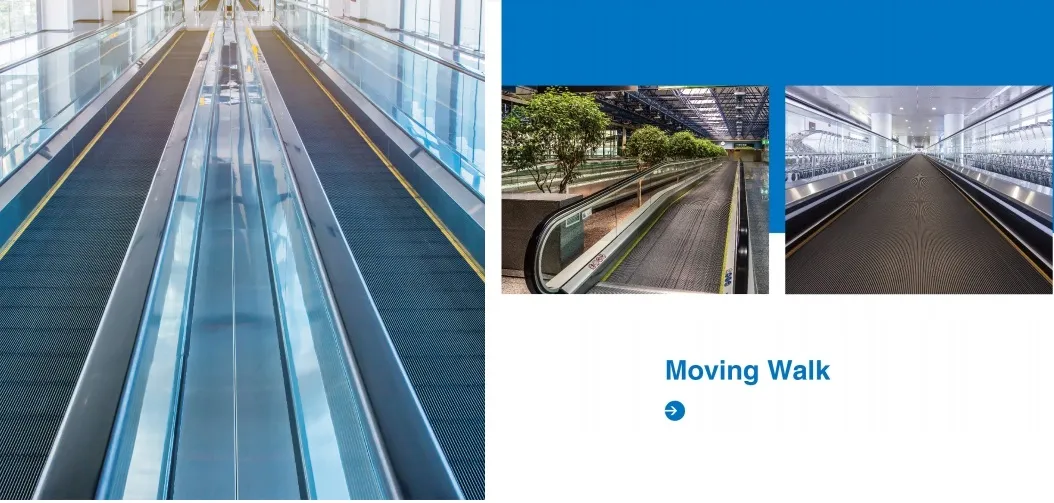
ou're rushing through a busy airport, luggage in tow, when suddenly the floor starts moving beneath your feet. Welcome to the world of moving walkways – those ingenious conveyor belts for people! But airports are just the tip of the iceberg. These engineering marvels quietly transform how we navigate massive spaces while impacting everything from commercial flooring choices to public space design.
Where Moving Walkways Supercharge Human Movement
Airport Accelerators
Terminal connectors helping travelers cover football-field distances between gates. Studies show they increase passenger flow by 60% during peak times.
Shopping Mall Momentum
Multi-level complexes use them vertically between floors, creating natural customer circulation paths past storefronts.
Healthcare Highways
Massive medical campuses move patients/staff between wings without exhausting wheelchair users or those with mobility challenges.
Hidden Benefit Most People Miss
Moving walkways actually reduce crowd congestion. By providing predictable movement lanes, they prevent the "human traffic jams" that happen when people stop abruptly in open spaces.
The Anatomy of an Auto-Sidewalk
| Component | Material & Technology | Purpose |
|---|---|---|
| Walking Surface | Heavy-duty rubber composites or specialized flooring solutions | Slip-resistant texture with embedded traction grooves |
| Drive System | Industrial electric motors ( electrical equipment ) | Precision speed control (typically 1-2 mph) |
| Frame Structure | Steel alloy framework using building materials for commercial projects | Supports 20,000+ lbs dynamic load capacity |
| Safety Features | Pressure sensors, emergency brakes, comb-plate teeth | Prevents entrapment & auto-stops when obstructed |
Manufacturers like KONE and Otis constantly innovate with lighter yet stronger composites – key for modern building materials efficiency.
Fun Fact:
The world's longest moving walkway stretches 1.7 miles in the Paris Metro! Meanwhile, Singapore's Changi Airport features a slide integrated into theirs.
Beyond Convenience: Why Cities Keep Installing Them
Time Savings & Accessibility
- Airports: Save travelers 8-12 minutes between distant gates
- Disabled Access: Provide dignity for wheelchair users who can self-board
- Urban Planning: Connect transit hubs to downtown districts
️ Commercial & Architectural Impact
- Foot Traffic Control: Direct shoppers strategically in malls
- Space Optimization: replace stairwells in skyscraper cores
- Energy Efficiency: Cut shuttle bus emissions in mega-facilities
"Moving walkways aren't just about speed – they reshape how architects design human flow in structures over 500,000 sq ft. They become literal circulation arteries."
- Commercial Architects Collective (CAC) ReportMaintenance Matters: Preserving Your People-Mover
Daily operation demands careful upkeep with specialized materials:
Weekly surface cleaning with non-corrosive solutions
Monthly gear alignment checks (misalignment causes 75% of breakdowns)
Annual flooring replacement on high-traffic units
Pro tip: New modular designs allow replacing worn sections without full shutdowns – saving thousands in lost transit time!
Future Innovations: What's Next for Moving Walkways
Modular "Plug-and-Walk" Systems
Prefabricated segments that snap together like LEGO for faster installation.
Smartphone Integration
Speed adjusts automatically based on real-time user density detected by sensors.
♿ AI-Assisted Accessibility
Computer vision detects wheelchairs/strollers and deploys boarding ramps.
Solar-Powered Units
Integrated panels reduce grid dependence in transit hubs.
The Quiet Revolution
While they lack the drama of elevators or escalators, moving walkways fundamentally alter our relationship with large spaces. From commercial flooring advancements to crowd-flow science, they're solving urban mobility puzzles one rolling step at a time. Next time you glide along one, appreciate the invisible engineering moving you forward!










