
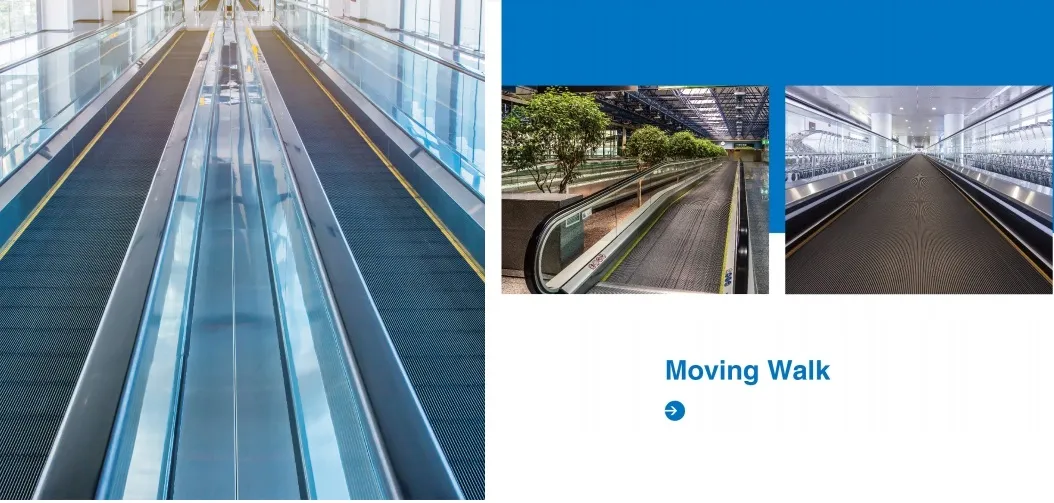
Picture yourself at a bustling international airport with luggage in hand. Between check-in counters and distant departure gates stretches what feels like miles of terminal. But instead of trudging along endless corridors, you step onto a gliding ribbon of metal – that’s your moving walkway, or travelator, giving your feet a welcome break while zipping you toward your destination.
These unassuming people-movers are engineering marvels hiding in plain sight. While escalators get vertical fame, moving walkways master the horizontal hustle in crowded hubs worldwide.
At its core, a moving walkway is basically a flat conveyor belt for humans. It's got three essential components working together:
The Muscle (Electrical Equipment & Motors)
Tucked away underneath, heavy-duty motors generate the power. These aren't your average household appliances – we're talking industrial-strength beasts engineered for 24/7 operation. The electrical equipment includes frequency converters allowing variable speeds, because you can't have elderly passengers stumbling onto high velocity.
The Backbone (Structure & Frame)
A rigid steel skeleton supports everything. This framework attaches securely to the terminal's concrete structure, handling thousands of footsteps daily without missing a beat. The truss design matters too – getting vibrations just right avoids that annoying "bouncy walkway" feeling.
The Skin (Flooring Material)
This is where your shoes actually meet the machine. Surface materials need to balance traction with durability – skid-resistant grooves prevent falls while withstanding luggage wheels and high heels. Heavy-duty SPC flooring often gets the nod here for its ruggedness. You don't want surface deterioration creating tripping hazards.
The Nervous System (Sensors & Controls)
Infrared sensors detect passenger flow while safety edges stop the belt if something gets jammed. Control panels constantly monitor performance with feedback loops to maintain steady speed and efficient energy use.
Without these systems, we'd have utter chaos in large terminals. Imagine Heathrow Terminal 5's quarter-mile connector tunnels sans walkways – it'd be pure pedestrian gridlock.
Four big reasons they're essential:
The real unsung hero? When boarding gates get relocated last-minute. I've witnessed dozens of near-panicked sprinters saved by these rolling pathways during gate changes at Atlanta's massive airport.
Not all walkways get engineered equal. Heavy passenger traffic demands military-grade specs:
| Parameter | Standard Range | Critical Factors | High Traffic Notes |
|---|---|---|---|
| Speed | 0.5 - 0.75 m/s | Passenger safety during boarding/exiting | Never exceed 0.9 m/s per ISO regulations |
| Dimensions |
Width: 1.0-1.4m
Length: 30-150m |
Terminal space constraints | Include safety buffer zones at ends |
| Load Capacity | 7000-9000 kg | Simultaneous passenger density | Peak load testing at 150% capacity required |
| Electrical System | 15-30 kW motors | Voltage stability & surge protection | Redundant power systems mandatory |
| Safety Systems | 5+ independent failsafes | Combination of mechanical + digital | Emergency stop activation <0.5 seconds |
| Flooring | SPC or rubberized | Slip resistance + durability | Grooved surfaces for all-weather traction |
I once watched a project manager panic when realizing too late that his installation used residential-grade motors instead of commercial grade – they burned out within three months under airport loads.
Commercial terminals aren't buying off-the-shelf solutions. These installations require bespoke engineering:
Standard walkways vs Commercial projects:
| Aspect | Retail Installations | Transport Terminals |
| Usage Hours | 10-12 hours/day | 18-24 hours/day |
| Surface Material | Standard vinyl | Industrial SPC flooring |
| Safety Systems | Basic sensors | Laser scanners + pressure edges |
| Maintenance Cycles | Quarterly | Daily diagnostics + weekly maintenance |
| Component Lifespan | 5-7 years | 15+ years with refurbishment |
For terminal designers, it's not just about moving people – it's about choreographing crowd flow. Curved walkways help navigate architectural constraints, while accelerator strips at entry points prevent bottlenecks. The best installations become invisible infrastructure – you use them without noticing.
Where are moving walkways headed? Expect three transformative shifts:
Material Advancements
Self-healing polymer composites might revolutionize flooring systems. Imagine surfaces that automatically repair scratches from luggage wheels overnight. For cladding systems, we're seeing aerogel-enhanced panels providing superior insulation and noise dampening.
Smart Infrastructure
Integration with airport apps is coming. Step on and your gate ETA appears on your phone. AI-driven predictive maintenance could detect motor bearing wear weeks before failure. Built-in scales might even calculate passenger distribution for dynamic speed adjustments.
Sustainable Engineering
Regenerative braking systems – like those in electric cars – could feed power back to the terminal grid during deceleration. Solar panels integrated into canopies above outdoor walkway sections would reduce grid dependency. Cable suppliers already offer eco-sustainable conductive materials.
Modular Construction
Expect pre-fabricated walkway "cartridges" with integrated electrical equipment that snap into place during terminal upgrades. This plug-and-play approach minimizes disruptive construction downtime.
Retrofitting moving walkways into live airports resembles open-heart surgery on a marathon runner. It demands precision:
Coordination is everything:
Denver International Airport's massive walkway installation involved 300 workers completing sections between midnight and 4 AM shifts – talk about pressure.
These aren't just moving pathways – they're revenue generators:
Passenger Experience
Comfortable travelers spend more. Dubai Airport credits their seamless connections for increasing retail spending per passenger by 18%. Reducing perceived distance shrinks complaints about terminal layouts too.
Operational Savings
Efficient passenger flow reduces staffing needs. Automated systems handling 4,000 people/hour would require dozens of personnel if managed manually. The energy-efficient designs using modern electrical equipment also cut power bills dramatically.
Major hubs now view moving walkways as strategic assets. Frankfurt Airport actually re-routed theirs to pass duty-free shops strategically – the additional dwell time increased purchases by 27%. Now that's smart infrastructure paying dividends.
Next time you're gliding effortlessly through an airport terminal, appreciate the engineering beneath your feet. That moving walkway represents countless design hours solving physics puzzles while balancing safety demands. They transform exhausting treks into relaxed transitions.
As terminal designs evolve, moving walkways will remain indispensable arteries in transportation megastructures. Thanks to continuous innovation in electrical equipment, durable flooring materials, and sophisticated control systems, what feels like simple convenience is actually world-class technology in everyday disguise.
Recommend Products












