Picture this: you glance at a mirror first thing in the morning - checking your hair, maybe fixing your collar. But that simple reflective surface holds way more power than just showing your sleepy face. From ancient civilizations to futuristic technology, mirrors have been revolutionizing how we see the world (and how the world sees us).
We interact with mirrors dozens of times daily without realizing their full potential. That bathroom mirror in your home, your car's rear-view mirror, the tinted glass at your favorite restaurant - they're all playing different roles in our lives. The journey of mirrors began over 8,000 years ago when people used polished obsidian volcanic glass, evolving through bronze and silver to today's high-tech versions.
Ever walked into a small cafe that felt huge? Thank mirrored walls. Interior designers use them to create illusions of depth and light. That decorative mirror above your mantel isn't just pretty - it's strategically bouncing light around your living room, making everything brighter and airier. Properly placed mirrors can make cramped apartments feel like spacious lofts.
Your car's rear-view and side mirrors prevent collisions. Security mirrors in store corners stop shoplifting. Traffic mirrors at blind intersections prevent accidents. Even bicycle mirrors help cyclists stay aware. Mirrors serve as silent guardians in dangerous situations - from firefighting equipment to hazardous industrial settings.
Modern technology leans heavily on mirrors:
- Telescopes capture cosmic light using curved mirrors
- Medical endoscopes illuminate our insides
- Solar furnaces concentrate solar energy
- Digital projectors redirect light beams
- Periscopes extend underwater vision
- Barcode scanners identify reflections
Van Gogh's self-portraits only existed because of mirrors. Psychologists use mirrors for body image therapy. Dancers perfect their form through mirrored studios. Funhouse mirrors make us laugh at distorted reflections. Even smartphone "selfie mode" is essentially a digital mirror. This continuous self-reflection shapes our personal identities.
Remember struggling with wonky eyeliner? Precision makeup mirrors with magnification and lighting changed everything. Shower steam-resistant mirrors revolutionized bathroom routines. Full-length dressing room mirrors transformed fashion shopping. Salon mirror walls let stylists create symmetrical cuts. Even your dentist's light reflector is a specialized oral mirror.
Contemporary buildings are taking mirrors to spectacular new levels: The Palais Garnier opera house uses hall-of-mirrors design principles in interior decoration. Infinity mirrors create breathtaking optical illusions in installations. Smart mirrors now display weather and news while you brush your teeth. Some luxury bathrooms even integrate waterproof televisions into mirror surfaces.
Precision mirrors guide lasers in manufacturing. Microscopic mirrors in digital projectors create images. Photolithography uses ultra-flat mirrors to make computer chips. Fiber optics rely on internal reflection to transmit data. Satellite mirrors measure atmospheric changes. Scientists even use mirror-based interferometers to detect gravitational waves.
Not all mirrors are created equal! Consider:
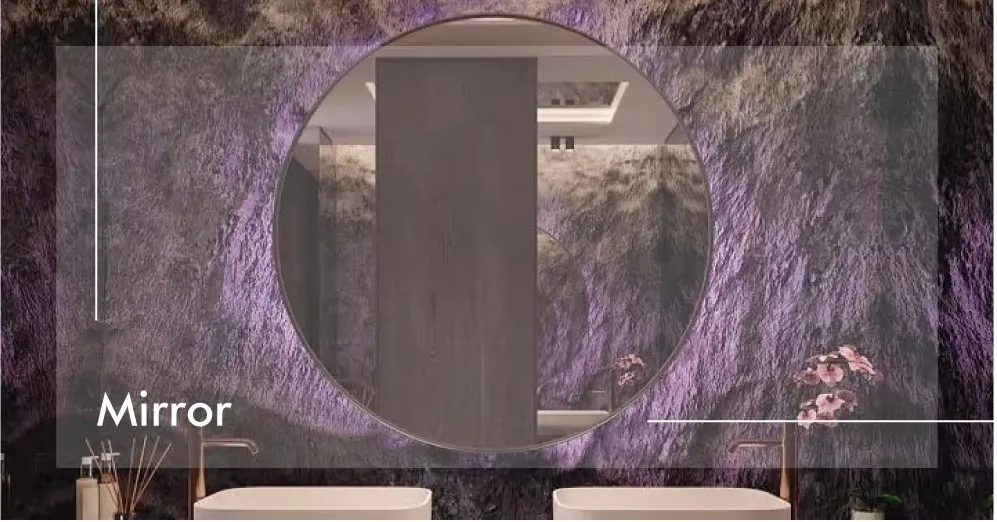
Bathroom mirrors: Need fog-resistant coatings and proper lighting integration. Frameless designs with LED lighting have become particularly popular in modern homes, as they offer both functionality and aesthetic appeal.
Decorative mirrors: Complement your interior style from ornate vintage frames to minimalist circles
Safety mirrors: Require shatterproof materials and wide-angle distortion
Technical mirrors: Demand surface precision within nanometers
Beyond practical uses, mirrors influence psychology: They make rooms feel safer by eliminating blind spots. Mirrored ceilings create romantic ambiance. Fitness center walls motivate exercisers. Retail stores position mirrors near products to encourage purchases. The reflection principle even inspired "mirror therapy" for stroke rehabilitation.
Pro tip: Place a mirror opposite a window to double natural light in dark rooms - an interior designer trick that saves electricity!
What's next for mirror technology? We're seeing:
- Interactive smart mirrors with touchscreen interfaces
- Augmented reality mirrors that project digital overlays
- Self-cleaning nano-coatings that repel water and dust
- Flexible mirror films for curved surfaces
- Energy-generating solar mirrors
- Mood-detecting mirrors that track health metrics
The journey from polished stones to these innovations proves mirrors remain essential tools that constantly reinvent our relationship with light, space, and self-image.
Recommend Products