
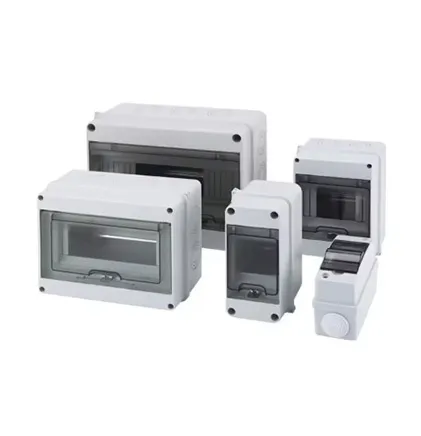
Ever wondered how the sturdy distribution boxes controlling electricity in buildings, factories, or even outdoor solar installations hold their shape so reliably? The answer lies beneath the surface - in the powerful art of welding. At its core, welding is about creating connections that don't just hold but become stronger than the materials themselves. It's not just melting metal; it's a delicate dance of heat, chemistry, and craftsmanship that builds critical infrastructure piece by piece.
Imagine standing in a busy workshop: sparks flying like fireworks as glowing orange joints melt into perfect seams. The air hums with heat, but what's really happening is a fascinating molecular transformation. The secret isn't just the flame or electricity - it's the moment when separate pieces of metal start thinking as one. They stop being individual components and become a single, unbreakable entity. That's welding's magic trick for making distribution boxes durable enough to weather decades of service.
Behind every welded distribution box is a person who understands metals like friends. Seasoned welders read the metal's "mood" - a hiss that's off-pitch or a color shift speaks volumes. It's this intuitive relationship that transforms technical processes into reliable safety shields for electrical systems. They know when to coax molten metal like honey or attack it with focused intensity. Their masks hide faces of pure concentration where milliseconds make the difference between a secure connection and a compromised one.
Not all welds are created equal. Distribution boxes demand specific approaches depending on location, environment, and precision requirements.
When distribution boxes need slim, precision work in tight spaces, TIG (Tungsten Inert Gas) welding becomes indispensable. Picture an artist wielding a torch like a paintbrush with one hand while feeding filler wire with the other. The shielding gas creates a protective bubble allowing contamination-free joints - critical for electrical safety.
For larger distribution boxes requiring extended runs, MIG (Metal Inert Gas) delivers efficiency. Its continuous wire feed feels like coaxing metal to knit itself together - perfect for joining cabinet panels or frame components where thousands of enclosures must roll off production lines.
Flux-core MIG variants thrive in windy conditions for outdoor solar installations where electrical boxes battle elements. Just remember: that satisfying sizzling sound requires careful gas mixture calibration!
Notice those tiny circular marks on service panel doors? That's resistance spot welding - applying pressure and current to fuse metal at precise points without compromising paint. Each "spot" is a silent strength guardian preventing vibration damage.
The invisible joint architecture determines whether a distribution box survives storms or fails prematurely.
These unsung heroes hide where two panels meet at 90 degrees. Done properly, they resist twisting forces trying to wrench enclosures out of square - a constant threat in industrial settings. Picture busbars vibrating inside; robust corners absorb that energy silently.
Ever see interior baffles crossing inside large distribution panels? Cruciform joints tie these structural supports together. Their double-T shape disperses load evenly, like distributing the weight of a ladder leaning against a box during maintenance.
No matter how perfect the weld, oxidation whispers destruction promises. Water vapor follows conduit paths. Road salt mist penetrates outdoor boxes. Industrial pollutants become acids. Once corrosion takes root in distribution cabinets, electrical resistance increases, heating builds, and safety fails.
A galvanized steel box installed near marine air might seem intact after five years... until a wrench blow makes a rusty hole. That's why anti-corrosion strategies aren't optional - they're lifelines protecting entire systems.
Picture zinc bathing welded steel boxes in sacrificial protection. Hot-dip galvanizing is the go-to defense for outdoor distribution enclosures.
Pre-galvanized materials help, but box seams require post-welding dipping. Smart fabricators design drain holes to prevent trapped immersion solutions that become corrosion starters.
For indoor electrical panels needing visual refinement, powder coating delivers. Unlike traditional paints, this electrostatic process bakes polymer particles into a seamless skin. The results?
High-quality powder coating starts before application - meticulous metal cleaning removes welding residues and oils. Any shortcut here dooms the finish despite proper curing protocols.
Different regions demand specific combinations:
| Environment | Welding Standard | Anti-Corrosion Standard | Typical Box Application |
|---|---|---|---|
| Industrial | ISO 9606 (Fitness Qualifications) | ISO 12944 C4 | Factory Motor Control Centers |
| Coastal/Marine | ASME IX (Pressure Vessel Code) | ISO 12944 C5-M | Harbor Power Distribution |
| General Outdoor | ISO 15614 (Procedure Qualification) | ASTM D7091 (Galvanizing) | Street Lighting Cabinets |
Independent inspectors scrutinize weld quality using ultrasonics, hydrotesting, and destructive sampling. Certification is only the starting point - consistent production quality determines long-term reliability.
While robotic welding brings consistency to distribution box production, human oversight remains irreplaceable. Master welders detect subtle flaws automation misses - the barely visible porosity in a weld bead or microscopic overheating that weakens metal. Their experienced eyes spot what even sensors overlook.
Meanwhile, coating technicians develop an instinct for flow patterns during galvanizing dips. They "feel" when immersion times need adjustment based on tank temperatures and metal thickness variations.
Consider German-made distribution cabinets known to survive 50+ years. Their secret lies in obsessive joint preparation and multi-layer coating processes documented like family heirlooms. Every worker takes personal pride in protecting future technicians they'll never meet.
New frontiers promise game changers for electrical enclosure manufacturing:
Emerging "cold spraying" deposits anti-corrosion alloys without heat distortion. Imagine coating switchgear interiors where thermal sensitivity rules.
That humble distribution box protecting your home's electricity? It represents generations of metalworking wisdom and passionate human oversight. Its welds bear generations of knowledge; its coatings hold decades of protection promises. Through sparks and chemistry, we build guardians securing our electrified world.
Whether you spot them in outdoor solar installations or industrial complexes, properly constructed distribution cabinets don't just contain electricity - they contain thousands of stories about technicians who cared enough to make joints perfect and coatings last. That's welding's ultimate legacy.
Recommend Products












