
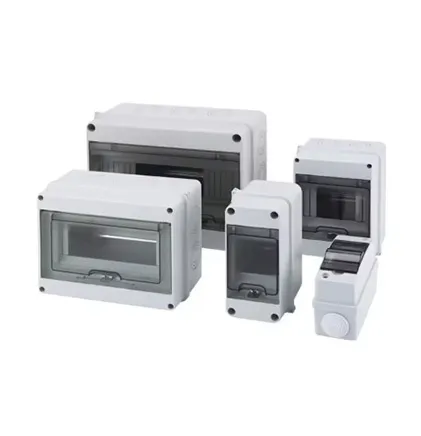
Imagine stepping into a commercial tower in Riyadh on a July afternoon. The air conditioning hums softly, powering everything from the elevators whisking guests to the 20th floor to the POS systems ringing up sales in the ground-floor mall. Now, picture what happens if that invisible "nervous system"—the building's electrical setup—suddenly falters. Lights flicker, escalators grind to a halt, and in the worst cases, safety systems like fire alarms might fail. In the Middle East, where summer temperatures regularly soar past 50°C (122°F), where sandstorms rage with enough force to strip paint, and where coastal humidity can creep into even the tightest corners, the culprit often traces back to one critical component: the distribution box.
As a trusted building material supplier with decades of boots-on-the-ground experience in Saudi Arabia, we've seen it all. A standard distribution box, fresh off the production line in a temperate climate, might last years in Europe or North America. But here? Exposed to relentless UV rays that degrade plastic casings, fine sand particles that sneak into every crevice, and sudden humidity spikes along the Persian Gulf, it can start malfunctioning in months. That's why, at Coloria, we don't just supply electrical fixtures—we engineer solutions that breathe the same harsh air as the buildings they protect.
Let's break down the enemies facing your building's electrical heart. In Saudi Arabia, where our regional hub has been operating for over 30 years, the climate throws a triple punch:
For residential buildings, this means frustrated homeowners dealing with tripped breakers and flickering lights. For commercial projects—hospitals, hotels, shopping malls—it means lost revenue, damaged reputations, and even safety risks. A hotel in Riyadh once shared with us that a failed distribution box during peak tourist season cost them over $50,000 in refunds and emergency repairs. "We thought we'd bought 'heavy-duty' equipment," their facilities manager told us. "Turns out, 'heavy-duty' in Germany isn't the same as 'survivor-grade' in Saudi."
Here's the truth: In the Middle East, a "waterproof" distribution box isn't a luxury—it's the bare minimum. But not all waterproof boxes are created equal. At Coloria, we've learned that true reliability comes from designing for the specific cruelties of this region. Let's walk through what makes our distribution boxes stand out:
| Feature | What It Means for You | Our Standard | Industry Average |
|---|---|---|---|
| Ingress Protection (IP) Rating | Measures resistance to dust and water. Higher numbers = better protection. | IP66/IP67 (dust-tight, withstands powerful water jets) | IP54 (limited dust protection, splashing water only) |
| Material Composition | Determines heat resistance and durability. | Glass-fiber reinforced polyester (GRP) or 316 stainless steel (coastal areas) | ABS plastic or 304 stainless steel (prone to UV degradation) |
| Operating Temperature Range | Ensures functionality in extreme heat/cold. | -30°C to +80°C (-22°F to 176°F) | -20°C to +60°C (-4°F to 140°F) |
| Sealing Technology | Prevents sand and moisture from entering critical components. | Dual-layer silicone gaskets with pressure-equalizing valves | Single rubber gasket (dries out and cracks over time) |
Take our best-selling GRP distribution box, for example. The glass-fiber reinforced polyester shell doesn't just resist heat—it thrives in it. We've tested it in our Riyadh lab, leaving it in direct sunlight for 12-hour stretches, and the internal temperature never exceeded 45°C, even when the external temperature hit 52°C. That's a game-changer for sensitive components like circuit breakers, which start to degrade above 60°C.
For coastal projects, like the luxury resorts we've supplied in Jeddah, we recommend 316 stainless steel. Unlike the more common 304 stainless, which can rust in salty air, 316 contains molybdenum, creating a barrier against corrosion. One client, a hotel chain, recently told us their 316 boxes, installed in 2018, still look brand-new—no pitting, no discoloration, despite being just meters from the beach.
Whether you're building a residential complex in Riyadh, a hospital in Dammam, or a shopping mall in Jeddah, the right distribution box isn't a one-size-fits-all choice. Here's how we tailor solutions to different project types:
Homeowners don't want to worry about electrical issues—they want to come home, switch on the AC, and relax. Our compact IP66 GRP boxes fit neatly into utility rooms or external walls, protecting against dust and the occasional rainstorm. We've even added cable management features to keep electricians happy during installation—because a quick, clean install means lower labor costs for you.
Downtime is money lost. For high-traffic areas, we offer smart distribution boxes with built-in temperature sensors and remote monitoring. Imagine getting an alert on your phone that a box in the mall's food court is running 10°C hotter than normal—you can dispatch a technician before it causes a blackout. One shopping center in Riyadh used this feature to catch a loose connection last year, avoiding an estimated 12-hour shutdown.
Hospitals and factories can't afford any interruptions. Our IP67 stainless steel boxes here are paired with flame-retardant internal components and emergency backup power integration. A hospital in Riyadh's King Saud Medical City told us their Coloria boxes have maintained power to critical life-support systems through three major sandstorms—proof that reliability can literally save lives.
Sure, we make tough distribution boxes. But what truly sets us apart as a one-stop architectural solution provider in Saudi Arabia is how we wrap those boxes in support. Here's what makes working with us different:
"We've built over 20 residential towers in Jeddah, and switching to Coloria's distribution boxes was the best decision we made. Before, we were replacing boxes every 2-3 years. Now, the first ones we installed in 2019 are still going strong. Plus, their local team responds faster than any international supplier we've worked with."
Saudi Arabia's 2030 Vision isn't just about skyscrapers and megaprojects—it's about building a nation that thrives, even in challenging conditions. As a saudi arabia building materials supplier, we see our role clearly: to provide the backbone that makes these visions possible. Whether it's a residential complex in NEOM, a hospital in Makkah, or a commercial hub in Riyadh, every building deserves electrical systems that stand as strong as the people who use them.
So, the next time you walk into a building in the Middle East and flip a light switch, take a moment to appreciate the quiet hero behind that action. A distribution box that's been baked in the sun, sandblasted, and humidity-tested—because in a region where the climate doesn't compromise, neither should your building materials.
At Coloria, we don't just sell products—we build trust, one weatherproof box at a time. Because when the sandstorm hits and the mercury rises, you need more than a supplier. You need a partner who understands exactly what you're up against.
Recommend Products












