
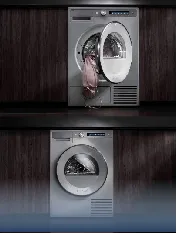
Finding the perfect washing machine shouldn't feel like rocket science, but let's be real—it can be overwhelming with all the options out there! Whether you're moving into your first apartment, upgrading your laundry setup, or just fed up with your current washer's performance, I'm here to guide you through the process like a friend who's been through it before.
Let me paint a picture: you're standing in an appliance store, surrounded by gleaming machines with flashing lights and fancy buttons. Salespeople throw terms like "spiral drum" and "steam sanitize" at you while you're just thinking: "Will it clean my kid's muddy soccer uniform?" That familiar feeling in your gut? I get it. But relax—by the time we're done here, you'll be choosing your dream washer with confidence.
The big debate: do you want a front-door or top-door washer? Here's the real deal without the sales fluff.
These sleek machines lie flat against your wall, giving your laundry room that modern, streamlined look. Why might you love them?
But here's the truth: they cost more upfront, and if you're under 5'5", you might need a step stool to grab those last socks from the bottom. And yes—that rubber seal around the door? It needs regular cleaning to prevent mildew buildup.
The classic design your grandma probably had. But today's versions have some impressive upgrades:
Downsides? That center agitator in older models can be rough on clothes and they guzzle more water. The new agitator-free models fix this but add to the price tag.
Real Talk: If you've got space constraints and value water efficiency, go front-loader. If you're washing large comforters frequently or want simpler operation, top-loader is your friend.
Those shiny buttons aren't just for show—some features genuinely make life easier. Let's cut through the jargon:
That cubic footage number (like 4.5 cu ft) tells you what? Here's the translation:
Protip: Measure your largest item (king comforter? dog bed?) before buying. There's nothing worse than trying to stuff a quilt into a too-small drum!
You'll see RPMs (rotations per minute) ranging from 800 to 1,600. Higher speeds extract more water—meaning shorter dryer time and energy savings. But:
Look for models with adjustable spin speeds so you can customize per load.
Forget the 30 specialty cycles you'll never use. These are the real MVPs:
Before your shiny new washer arrives, do these four things:
Measure more than just the machine footprint! Front-loaders need swing space for the door, while top-loaders need clearance above. Remember to plan for durable waterproof flooring beneath to protect against leaks—vinyl or tile works best.
Don't be caught off guard on installation day:
Newer smart models might need Wi-Fi access near your laundry space too.
For $100-150, letting pros install means:
But if you're handy with YouTube tutorials, DIY can work—just triple-check connections.
Shopping brands isn't about loyalty—it's about matching features to your laundry lifestyle.
The tech-lover's dream (like their WF53BB8700AVUS). The app alerts you when laundry's done and auto-doses detergent. But watch for repair horror stories about electronic panels failing after 3 years.
Models like WM4200HWA are library-quiet. Their "TurboWash" means faster cycles without sacrificing cleaning. Drawback? Finding repair technicians can be tough in rural areas.
That classic American reliability. Their Pet Pro series (MFW7020RF) has hair-trapping filters and deep-fill options for heavy soil. Less fancy tech but they just... keep... going.
Great balance of price and performance. The removable agitator in their top-loaders handles king comforters with ease. Just don't expect luxury features at this price.
Truth Bomb: All brands have occasional lemons. Check model-specific reviews on Consumer Reports—don't trust brand reputation alone.
Prices range from $500 entry models to $1,800 luxury units. Where to focus your cash:
Skip extended warranties—repair costs rarely exceed warranty prices. Instead, invest in quality brands known for longevity.
Score deals during:
Don't forget to calculate energy savings—Energy Star models cut utility bills by 25%!
Good for Earth and your wallet? Yes please!
Modern machines use as little as 13 gallons per load versus 40 gallons in older units. Front-loaders win here, but High-Efficiency (HE) top-loaders are catching up.
Look beyond the sticker. The real savings come from:
Pro Tip: Use HE detergent even if you don't have an HE machine—it rinses cleaner and prevents buildup.
Never have buyer's remorse again. Ask yourself:
Monthly deep cleans keep mildew away. Run an empty hot cycle with washing machine cleaner or DIY mix (2 cups vinegar + 1/4 cup baking soda). Wipe the rubber seal weekly!
Space-savers but compromise on performance. Drying takes forever and they struggle with large loads. Only consider if space is extremely tight.
That mildew smell means trapped moisture. Always leave door OPEN after cycles. Run monthly cleaning cycles. If it's new, the plastic smell should fade in 2-3 weeks.
Choosing your next washing machine isn't about finding the flashiest model—it's about matching technology to YOUR reality. Think about the basketball uniforms, the pet blankets, the delicate sweaters that make up your world.
The right washer becomes an invisible hero—quietly restoring order to the chaos of daily life. It should handle your messes without complaint and last through years of muddy seasons. Invest time in research now, and you'll thank yourself every laundry day for years to come.
Now go conquer that appliance store with confidence. You've got this!
Recommend Products












