


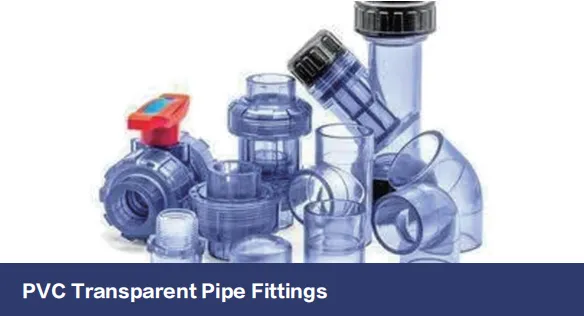
Hey there! If you're working on plumbing projects, chemical handling systems, or lab setups, you've probably faced the "SCH 40 or SCH 80?" dilemma. It's like choosing between regular and extra-sturdy work boots – both have their place, but picking wrong can lead to leaks or wasted money. Let's cut through the technical jargon and talk real-world differences between these PVC pipe fittings.
PVC 101: More Than Just Plastic Pipes
Ever wonder why PVC became the go-to material for so many applications? It's not magic – it's chemistry and clever engineering. PVC (polyvinyl chloride) has this cool combo of durability, chemical resistance, and affordability that makes it superstar material. And when we make it transparent? That's when things get really useful for monitoring flow or spotting contamination.
Thickness Throwdown: SCH 40 vs SCH 80
Wall Thickness & Weight
Picture two drinking straws – one regular, one extra thick for milkshakes. That's essentially the difference. For a standard 2" pipe:
- SCH 40 : About 0.154" wall thickness – your reliable daily driver
- SCH 80 : Roughly 0.218" thick – the heavy-duty option for tougher jobs
That extra material makes SCH 80 feel noticeably heavier in your hands. If you're doing overhead installations, your arms will definitely notice!
Pressure Performance
Imagine a garden hose versus a firehose. SCH 40 typically handles around 150-180 PSI at room temperature – perfect for most residential and light commercial work. SCH 80? It laughs at 300+ PSI. That's why you'll see it in factories where high-pressure steam or aggressive chemicals are flowing.
Hot tip: Temperature affects pressure ratings dramatically. That 300 PSI drops to about 75 PSI at 140°F!
Cost Considerations
Let's be real – budget matters. SCH 80 costs about 50-70% more than SCH 40 for the same size. For long runs, that difference adds up fast. Ask yourself: Do I need the extra strength, or am I overengineering this?
Where Each Schedule Shines
SCH 40's Natural Habitat
- Residential Plumbing : Drain lines, vent stacks, irrigation systems – where pressures stay low and temps are mild
- Aquariums & Hydroponics : Perfect for chilled water circulation systems
- DIY Projects : Furniture prototyping, craft installations – easy to cut and assemble
- Laboratory Drainage : Handling non-corrosive fluids at room temperature
When SCH 80 Earns Its Keep
- Industrial Process Lines : Handling acids, solvents, or high-pressure steam (its chemical resistance is slightly better too!)
- Compressed Air Systems : Machine shops love it for safety at 100+ PSI
- Marine Environments : Bilge pumps, deck washdowns – resists UV and physical impacts
- Ground Burial : Less vulnerable to rocks shifting underground
Real-World Example: Brewery Application
Take craft breweries – they use both schedules smartly. SCH 40 handles room-temperature wort transfer between tanks, while SCH 80 manages the steam-cleaning systems. Using thinner pipes for steam would be like using a soda can to hold boiling water – just asking for trouble.
Working with PVC: Tips & Tricks
Cutting & Joining
Ever had a PVC cut turn jagged? SCH 80's thicker walls need sharp blades and patience. Pro move: Rotate the pipe as you cut for cleaner edges. And when cementing – both schedules need clean surfaces, but SCH 80's thicker walls give you slightly longer working time before the cement sets.
Transparency Maintenance
That see-through quality is awesome for monitoring, but scratches or chemical haze can obscure your view. Avoid abrasive cleaners – warm soapy water works best. And remember: Repeated sterilization cycles (like with harsh chemicals) will cloud transparent PVC over time.
Safety Matters
Let's get serious for a moment. Never exceed rated pressures. For chemical applications, always check compatibility charts – PVC doesn't play well with ketones or aromatic hydrocarbons. And for SCH 80 installed outdoors, UV protective coatings (or using gray schedule 80) prevent embrittlement.
What's Next for PVC Pipe?
PVC keeps evolving. Manufacturers are tweaking formulations for better impact resistance at thinner gauges. And transparent conductive PVC? That could revolutionize applications like touchsensitive lab equipment or anti-static environments when working with a building material supplier who keeps up with these innovations.
Wrapping It Up
At the end of the day, choosing between SCH 40 and SCH 80 transparent PVC fittings comes down to understanding your project's real demands. Is it a low-pressure water feature? SCH 40's your friend. Handling volatile chemicals at high temps? SCH 80's worth every penny. And remember – transparent pipes are the ultimate diagnostic tool.
Next time you're specifying pipes, ask yourself: What's actually flowing through these? How angry would I be if they failed? Your answers will point you to the right schedule.










