
In the world of construction, every project—whether it's a small home renovation or a sprawling commercial complex—relies on one critical foundation: the materials that hold it all together. Among these, pipes might not be the most glamorous, but they're the unsung heroes keeping water flowing, waste draining, and buildings functional. And when it comes to pipes, UPVC (unplasticized polyvinyl chloride) has become a go-to choice for its durability, affordability, and resistance to corrosion. But here's a question that often trips up even seasoned contractors and builders: What's the difference between a UPVC pipe supplier and a distributor? Is one better than the other? Let's pull back the curtain on the supply chain and break this down—because getting this right could save you time, money, and a whole lot of headaches.
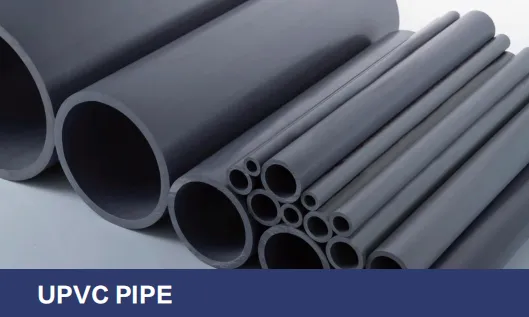
Before we dive into suppliers and distributors, let's take a quick detour to appreciate why UPVC pipes are so widely used. Unlike regular PVC pipes, which are plasticized (made flexible with additives), UPVC is rigid, making it ideal for high-pressure applications like water supply, drainage, and even industrial systems. It's lightweight, easy to install, and resistant to chemicals—no wonder it's a staple in everything from residential plumbing to large-scale infrastructure projects. And when we talk about "upvc pipe solutions," we're referring to the full range of products and support that help projects run smoothly: from standard pipes and fittings to custom lengths, technical advice, and after-sales service. But to get these solutions, you need to know who you're buying from.
Let's start with the source. A UPVC pipe supplier is typically the starting point of the supply chain. Think of them as the manufacturers or the direct partners of manufacturers. These are the companies that produce the pipes themselves or work closely with factories to bring them to market. When you work with a supplier, you're getting as close to the production line as possible—and that comes with some unique advantages.
For example, an upvc pipe supplier might specialize in producing specific types of pipes, like the rigid, pressure-resistant ones used in municipal water systems, or the thinner, more flexible variants for residential drainage (which, by the way, are often called PVC DWV pipes—short for drainage, waste, and vent). Some suppliers even branch out into related products, acting as a one-stop shop: imagine a supplier that not only offers UPVC pipes but also "ppr pipe and fitting supplier" services, providing polypropylene random copolymer pipes for hot water systems. This kind of breadth means you can source multiple materials from a single partner, streamlining your procurement process.
Suppliers also tend to excel at customization. Need UPVC pipes in non-standard lengths for a unique commercial project? Or pipes with special coatings to resist extreme temperatures? A supplier can often adjust their production runs to meet these needs, whereas other players in the chain might not have that flexibility. And because they're closer to production, they can offer technical support that's second to none—engineers on staff who can help you choose the right pipe thickness for a high-rise building or troubleshoot installation issues.
But it's not all about big orders and custom jobs. Many suppliers also offer "upvc pipe solutions" tailored to smaller projects, though they often have minimum order quantities (MOQs) to make production cost-effective. For example, a supplier might require you to order at least 500 meters of pipe for a standard size, which works for large contractors but could be a barrier for a homeowner fixing a leaky drain.
If suppliers are the (yuántóu—source, in Mandarin), distributors are the bridge between suppliers and the people who actually use the pipes. Think of them as the local hardware store's supplier, or the company that stocks pipes in warehouses across a region so contractors can pick up what they need without waiting for a factory to ship. Distributors don't manufacture pipes themselves; instead, they buy in bulk from suppliers (or sometimes other distributors) and resell to smaller businesses, contractors, or even individual consumers.
What's the appeal of working with a distributor? Let's start with convenience. Suppose you're a small-scale builder working on a residential renovation. You need 20 meters of UPVC pipe, a few PVC DWV elbows, and maybe some PPR fittings for a bathroom upgrade. A supplier might turn you away because your order is too small, but a distributor? They'll have those items in stock, ready for you to pick up the same day. No MOQs, no waiting weeks for production—just walk in, pay, and go.
Distributors also shine when it comes to variety. Since they work with multiple suppliers, they can offer a wider range of products than any single manufacturer. Need UPVC pipes from Brand A, PPR fittings from Brand B, and maybe even some copper valves for a mixed-material system? A distributor is likely to have all of that under one roof. This is especially helpful for projects that require a hodgepodge of materials—like a restaurant renovation where the kitchen needs heat-resistant PPR pipes and the restrooms need standard UPVC drainage.
But there's a trade-off: price. Because distributors add a markup to cover their warehousing, staffing, and transportation costs, their prices are almost always higher than a supplier's. For a small order, that markup might be negligible—paying $2 more per meter for 20 meters is manageable. But for a large project, say a hospital needing 10,000 meters of pipe, that extra $2 per meter adds up to $20,000—money that could have been saved by buying directly from a supplier.
Another thing to note: distributors rarely offer customization. They stock what's popular, so if you need a pipe with a unique diameter or a special color, you'll probably have to go back to the supplier. And while some larger distributors have technical staff, they're not as specialized as a supplier's engineering team. If you're unsure whether a UPVC pipe can handle the water pressure in a high-rise, a distributor might give you a general guideline, but a supplier can run pressure tests or provide detailed material specs.
Still confused? Let's put this into a table to clear things up. Here's how suppliers and distributors stack up across the factors that matter most to contractors, builders, and project managers:
| Factor | UPVC Pipe Supplier | UPVC Pipe Distributor |
|---|---|---|
| Core Role | Manufactures or sources directly from factories; sells to distributors, large contractors, or businesses. | Buys from suppliers/distributors; sells to small contractors, retailers, or individual buyers. |
| Inventory | Focuses on high-volume, standard products; may offer custom runs. | Stocks a wide range of products from multiple brands; prioritizes quick availability. |
| Pricing | Lower per-unit cost (bulk pricing). | Higher per-unit cost (includes markup for warehousing/transport). |
| Minimum Order Quantity (MOQ) | High (often 500+ meters for standard products). | Low or none (can sell single pipes/fittings). |
| Lead Time | Longer (may require production time; 2–4 weeks). | Shorter (in-stock items available same-day or next-day). |
| Customization | Yes (can adjust sizes, materials, or coatings). | No (limited to stock items). |
| Technical Support | Specialized (engineers on staff; can provide material specs, pressure ratings). | Basic (general product knowledge; may refer to supplier for details). |
| Best For | Large projects (commercial buildings, infrastructure); custom needs; bulk orders. | Small projects (residential renovations); emergency repairs; mixed-material orders. |
There's no "better" option here—only the right option for your specific needs. Let's walk through a few scenarios to illustrate:
Imagine you're the lead contractor on a 10-story shopping mall. You need kilometers of UPVC pipes for water supply, miles of PVC DWV pipes for drainage, and thousands of PPR fittings for restrooms and food courts. This is where a supplier shines. By ordering in bulk, you'll qualify for their lowest pricing, and you can work with their engineers to ensure the pipes meet the mall's strict pressure and fire safety standards. Plus, if you need custom-length pipes to fit the mall's unique layout, the supplier can adjust their production line to accommodate you. Sure, you'll wait a few weeks for delivery, but with a project timeline of 18 months, that's a small price to pay for cost savings and peace of mind.
Now, picture this: You wake up to a flooded basement, and the plumber tells you a 2-meter section of your PVC DWV pipe needs replacing. You don't have time to wait 4 weeks for a supplier to ship a bulk order, and you certainly don't need 500 meters of pipe. A distributor is your best bet. Head to the local plumbing supply store (which is likely supplied by a distributor), grab the exact length you need, and have the plumber fix it that afternoon. The per-meter price might be higher, but for a small job, convenience trumps cost.
Let's say you run a contracting business that handles 5–10 residential renovations at a time. Each project needs 50–100 meters of UPVC pipe, plus assorted fittings. Ordering from a supplier for each project would mean hitting their MOQ by combining orders (e.g., ordering 500 meters to cover 5 projects), which could save money—but you'd need space to store the extra pipes. Alternatively, you could work with a distributor who offers contractor discounts for repeat business. Many distributors have loyalty programs: spend $10,000 a year, and you get 5% off. For mid-size contractors, this balance of convenience and cost can be the sweet spot.
Even seasoned pros sometimes mix up suppliers and distributors, so let's clear up a few myths:
Myth #1: "Suppliers are always cheaper." Not if your order is small. If you need 20 meters of pipe, a distributor might charge $10/meter ($200 total), while a supplier would make you buy 500 meters at $8/meter ($4,000 total). In that case, the distributor is cheaper—by a lot.
Myth #2: "Distributors don't offer technical support." While they're not as specialized as suppliers, many large distributors employ former contractors or engineers who can help with basic questions. For example, if you're unsure whether UPVC or PPR is better for hot water, a distributor might walk you through the pros and cons based on their experience.
Myth #3: "You can only buy from one or the other." Many contractors use both: suppliers for bulk, long-lead items (like the main water line for a housing development) and distributors for last-minute needs (like a replacement valve when a pipe bursts mid-project).
At the end of the day, the "supplier vs distributor" debate isn't about which is better—it's about which fits your project. Are you working on a large-scale commercial build with months of lead time? Lean on a supplier for cost savings and customization. Need a quick fix or a small order? A distributor will get you what you need, when you need it. And if you're somewhere in the middle? Don't be afraid to mix and match.
Understanding the difference also helps you ask smarter questions. When you call a company, ask: "Do you manufacture your own pipes, or do you distribute?" That one question can save you hours of back-and-forth. And remember: whether you're an upvc pipe supplier, a distributor, or a contractor, we're all part of the same ecosystem—building the structures that make communities thrive. So next time you're staring at a stack of pipes, take a second to appreciate the supply chain that got them there. It's not glamorous, but it's the backbone of every successful project.
Recommend Products












