
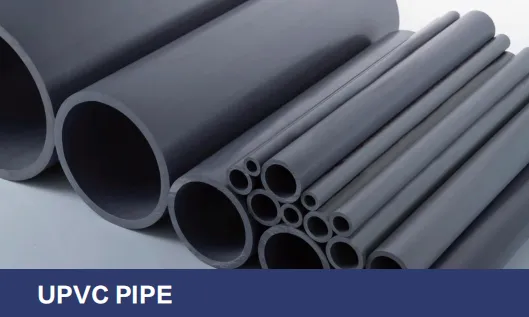
When you turn on the tap at home, flush a toilet in a hospital, or walk through a commercial building without stepping over puddles, you're experiencing the silent work of UPVC pipes. These unassuming tubes are the circulatory system of modern construction, carrying water, waste, and essential fluids through residential complexes, schools, and skyscrapers alike. But behind every reliable UPVC pipe is a supplier who prioritizes quality—and that quality is never accidental. It's certified. For anyone in the construction industry, from contractors to project managers, knowing how to verify a supplier's certifications isn't just due diligence; it's the key to avoiding costly failures, ensuring safety, and building structures that stand the test of time. In this guide, we'll break down why certifications matter, which ones to look for, and how to separate genuine quality from empty promises—whether you're sourcing from a local Saudi Arabia building materials supplier or a global one-stop architectural solution provider.
Before diving into certifications, let's clarify what makes UPVC pipes so indispensable. UPVC, or unplasticized polyvinyl chloride, is a rigid, durable material that's resistant to corrosion, chemicals, and UV rays—qualities that make it ideal for plumbing, drainage, and ventilation systems. Unlike regular PVC, which contains plasticizers that can leach over time, UPVC retains its shape and strength for decades, even in harsh environments. This is why you'll find UPVC pipes in everything from residential bathrooms (think drain lines) to industrial factories (carrying acids and solvents).
But not all UPVC pipes are created equal. A pvc dwv pipe supplier, for example, specializes in "Drain, Waste, and Vent" pipes, which need to handle gravity-fed wastewater and resist clogs. A supplier focused on potable water systems, on the other hand, must ensure their pipes don't leach harmful chemicals into drinking water. Even within the same category, factors like wall thickness (measured by "schedules," such as Schedule 40 or 80), diameter, and material purity can vary dramatically. This is where certifications step in: they set the baseline for performance, ensuring that a pipe labeled "UPVC" actually meets the standards required for its intended use.
Imagine installing a new plumbing system in a residential building, only to discover six months later that the UPVC pipes are cracking under normal water pressure. The result? Leaks in walls, mold growth, damaged furniture, and angry homeowners demanding repairs. Or worse: in a hospital, where sterile conditions are critical, a faulty pipe could contaminate water supplies, putting patients at risk. These aren't hypothetical scenarios—they're real consequences of choosing uncertified or low-quality pipes.
Certifications act as a shield against these risks. They're not just pieces of paper; they're proof that a supplier's products have been tested, audited, and verified by independent third parties. For instance, a pipe certified to ASTM D1785 (a key standard for UPVC) has undergone rigorous testing for dimensions, impact resistance, and pressure tolerance. Without such certification, you're essentially gambling on the supplier's word—and in construction, gambling is a luxury no one can afford.
Legal and regulatory risks add another layer of importance. In many countries, including Saudi Arabia, building codes mandate that plumbing materials meet specific standards. Using uncertified pipes could result in project delays, fines, or even the need to redo entire systems to comply with local laws. For a saudi arabia building materials supplier, adherence to local certifications like SASO (Saudi Arabian Standards Organization) isn't optional—it's a legal requirement to operate in the market.
Not all certifications are created equal. Some focus on general quality management, while others target specific product performance or safety. Below are the most critical ones to verify when evaluating a supplier:
ISO 9001 is the gold standard for quality management systems (QMS). It applies to any industry, including UPVC pipe manufacturing, and ensures that a supplier has consistent processes for everything from raw material sourcing to production, testing, and customer service. For example, an ISO 9001-certified supplier will have documented procedures for inspecting incoming PVC resin (the raw material for UPVC pipes) to ensure it meets purity standards. They'll also track production batches, so if a defect is found, they can trace it back to the source and fix the issue quickly.
When verifying ISO 9001, don't just ask for a certificate—check the scope. The certificate should explicitly mention "manufacture of UPVC pipes" or similar wording. A supplier who claims ISO 9001 certification but whose scope only covers "distribution" or "sales" isn't guaranteeing quality in production. This is especially important if you're working with a one-stop architectural solution provider that offers multiple products (like UPVC pipes, PPR fittings, and DWV systems); each product line should ideally fall under the certified scope.
ASTM International (formerly the American Society for Testing and Materials) develops standards for materials, products, and systems across industries. For UPVC pipes, the most relevant standard is ASTM D1785 , which covers "Polyvinyl Chloride (PVC) Plastic Pipe, Schedules 40, 80, and 120." This standard specifies requirements for dimensions (like outer diameter and wall thickness), tensile strength, and pressure ratings. For example, a Schedule 40 pipe certified to ASTM D1785 must withstand a minimum hydrostatic pressure of 160 psi at 73°F (23°C)—critical for ensuring it doesn't burst under normal water supply conditions.
Another key ASTM standard is ASTM D2665 , which applies to UPVC pipes used for drain, waste, and vent (DWV) systems. Unlike pressure pipes, DWV pipes don't carry pressurized water, but they need to resist chemical corrosion from wastewater and maintain structural integrity. A pvc dwv pipe supplier should be able to provide certification to ASTM D2665, confirming their pipes meet the required standards for drainage applications.
For projects in Europe, the Middle East, or Africa, DIN standards (developed by the German Institute for Standardization) are often required. DIN 8062 is the primary standard for UPVC pipes used in water supply and drainage. It specifies dimensions, pressure ratings, and testing methods, with a focus on compatibility with European plumbing systems. For example, DIN 8062 Class E pipes are designed for cold water supply, with pressure ratings up to 10 bar (145 psi), making them suitable for commercial buildings with high water demand.
If your project is in Saudi Arabia, a saudi arabia building materials supplier should also comply with SASO 1470 , the local standard for UPVC pipes. SASO 1470 aligns with international standards like DIN 8062 but includes additional requirements for durability in the region's hot, arid climate—such as resistance to UV radiation, which can degrade plastic over time.
If the UPVC pipes will carry drinking water, NSF/ANSI 61 certification is non-negotiable. This standard ensures that the pipe material does not leach harmful contaminants (like lead or phthalates) into water, even after prolonged use. For residential buildings, hospitals, or schools, this certification is critical to protecting public health. A supplier claiming their pipes are safe for drinking water should provide an NSF/ANSI 61 certificate, which includes testing data on extractables and leachables.
In addition to global standards, many regions have their own certifications. For example, in the Middle East, the Emirates Authority for Standardization and Metrology (ESMA) issues certifications for building materials sold in the UAE. In Saudi Arabia, as mentioned, SASO certification is mandatory. These certifications ensure that products are tailored to local conditions—whether it's extreme temperatures, specific plumbing codes, or cultural requirements. A saudi arabia building materials supplier that's been in the market for years will likely have these local certifications in place, making them a more reliable partner than an international supplier unfamiliar with regional standards.
| Certification | Issuing Body | Key Focus | Relevant Applications | Example Standard |
|---|---|---|---|---|
| ISO 9001 | ISO (International Organization for Standardization) | Quality management systems; consistent processes | All UPVC pipe production | ISO 9001:2015 |
| ASTM D1785 | ASTM International | Pressure ratings, dimensions, impact resistance | Potable water, irrigation, industrial pressure systems | ASTM D1785-21 |
| DIN 8062 | DIN (German Institute for Standardization) | Pressure and drainage systems; European compatibility | Water supply, DWV in Europe/Middle East | DIN 8062:2013 |
| NSF/ANSI 61 | NSF International | Contaminant leaching; safety for drinking water | Potable water systems (residential, hospitals, schools) | NSF/ANSI 61:2022 |
| SASO | SASO (Saudi Arabian Standards Organization) | Compliance with Saudi building codes and climate | All construction projects in Saudi Arabia | SASO 1470:2018 |
Certifications are a starting point, but they're not the only factor to consider when choosing a UPVC pipe supplier. Here's what else to investigate:
A certified supplier should be transparent about their production process. Ask for details on raw material sourcing: Do they use high-quality PVC resin from reputable suppliers? How do they control for impurities? What testing do they perform in-house before shipping? For example, some suppliers conduct "burst testing" on random samples from each batch, ensuring pipes can withstand pressures well above their rated capacity. Others use automated systems to check for wall thickness variations, which can weaken pipes. If possible, request a factory tour—seeing the production line in action can reveal a lot about a supplier's commitment to quality.
Certifications are issued after initial testing, but ongoing compliance is equally important. Ask the supplier for recent third-party test reports (ideally from the last 6–12 months) for the specific product you're buying. These reports should include results for key metrics like pressure testing, impact strength, and chemical resistance. For example, if you're purchasing UPVC pipes for a hospital, you might also ask about certifications related to hygiene, such as low bacterial growth rates—similar to how a class a fireproof cpl inorganic board for hospital and school supplier would emphasize fire safety and sanitization.
Many construction projects require more than just UPVC pipes—they need fittings, valves, and related systems. A one-stop architectural solution provider that offers complementary products (like PPR pipes for hot water systems or DWV fittings) can simplify sourcing and ensure compatibility between components. For example, a supplier that also offers ppr pipe and fitting solutions will understand how UPVC and PPR systems work together, reducing the risk of installation errors. When evaluating such suppliers, verify that their entire product range meets the same high certification standards as their UPVC pipes.
A supplier's reputation speaks volumes. Ask for references from past clients, especially those in similar industries (e.g., residential, commercial, industrial). Reach out to these clients to ask about their experience: Were the pipes delivered on time? Did they perform as expected? How responsive was the supplier to questions or issues? Online reviews and industry awards can also provide insights—look for suppliers with a history of long-term partnerships and repeat business.
Even with certifications, some suppliers may cut corners. Watch out for these warning signs:
Choosing a UPVC pipe supplier is about more than comparing prices—it's about building a partnership based on trust. Certifications are the foundation of that trust, providing objective proof that a supplier's products meet the highest standards for performance, safety, and reliability. Whether you're working on a residential project in Riyadh or a commercial complex in Jeddah, taking the time to verify certifications like ISO 9001, ASTM D1785, and SASO can save you from costly mistakes down the line.
Remember, the best suppliers don't just sell pipes—they sell peace of mind. They'll happily share their certifications, walk you through their testing processes, and stand behind their products long after delivery. So the next time you're evaluating a saudi arabia building materials supplier or a one-stop architectural solution provider, ask to see their certifications. It's the first step toward ensuring your project's plumbing system is built to last.
Recommend Products












