
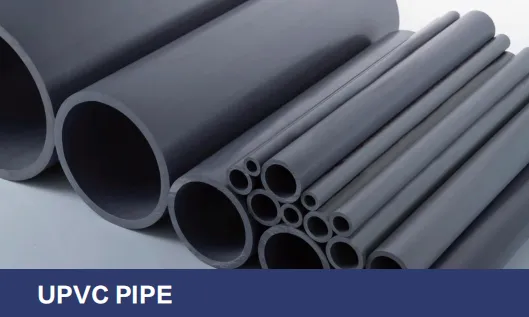
Behind every leak-free kitchen, every smoothly draining bathroom, and every reliable industrial facility lies a silent hero: the pipes that carry water, waste, and essential fluids through our buildings. Yet, not all pipes are created equal. For homeowners, contractors, and developers, choosing the right pipes—and the right supplier—can mean the difference between decades of trouble-free use and costly, stressful repairs. As an upvc pipe supplier with years of experience, we've seen firsthand how rigorous material testing transforms ordinary pipes into long-lasting infrastructure. In this article, we'll pull back the curtain on what really goes into ensuring UPVC pipes stand the test of time, why testing matters for every project, and how to spot a supplier who prioritizes quality over shortcuts.
UPVC (Unplasticized Polyvinyl Chloride) pipes have become a cornerstone of modern construction for good reason. Unlike their plasticized PVC counterparts, UPVC is rigid, strong, and resistant to corrosion, chemicals, and temperature fluctuations—qualities that make it ideal for everything from residential water supply lines to commercial drainage systems. Walk into any home built in the last 30 years, and chances are the pipes behind the walls or under the floors are UPVC. They're lightweight enough to simplify installation, yet durable enough to handle the daily grind of carrying water, waste, and even mild acids from cleaning products.
But here's the thing: UPVC's reputation for reliability isn't automatic. A pipe is only as good as the materials it's made from and the standards it's held to. Imagine a scenario many homeowners dread: You're hosting a holiday dinner, the kitchen is bustling, and suddenly there's a puddle spreading across the floor. You call a plumber, who cuts into the wall and finds a cracked UPVC pipe. "Cheap material," they say. "It couldn't handle the pressure." That's the difference between a pipe that's been tested to withstand the demands of real life and one that's been rushed through production to cut costs. For an upvc pipe supplier committed to quality, preventing that scenario isn't just a goal—it's a responsibility.
In a market flooded with options, how do you separate a reliable upvc pipe supplier from one that's just in it for the quick sale? The answer lies in their approach to material testing. While every supplier claims to sell "high-quality" pipes, only the best invest in rigorous, third-party verified testing protocols. This isn't just about checking a box—it's about building trust. A reputable supplier will happily share test reports, certifications, and details about their quality control processes. They'll talk about tensile strength, impact resistance, and chemical compatibility like it matters because it does.
Consider this: A pvc dwv pipe supplier (DWV stands for Drain, Waste, Vent) knows their pipes will be handling everything from soapy water to food scraps and even the occasional hair clog. These pipes don't just need to be strong—they need to resist the corrosive effects of detergents and the temperature swings of hot showers followed by cold winters. A supplier who skips testing for chemical resistance might save a few dollars upfront, but their pipes could degrade over time, leading to leaks, odors, and expensive repairs. On the flip side, a supplier who tests their DWV pipes with harsh chemical solutions at varying temperatures ensures their products will hold up, even in the busiest households or commercial kitchens.
The same logic applies to other pipe types. Take ppr pipe and fitting supplier offerings, for example. PPR (Polypropylene Random Copolymer) pipes are often used for hot water systems because of their heat resistance. But without testing, how can you be sure a PPR pipe won't warp or crack after years of carrying 60°C water? A trustworthy supplier will subject their PPR pipes to long-term heat stability tests, simulating decades of use in a matter of weeks, to prove they can handle the heat.
So, what exactly does "rigorous testing" entail for a UPVC pipe? Let's break down the key tests that every reputable upvc pipe supplier should perform before their products ever leave the factory.
Tensile strength is all about how much pulling force a pipe can withstand before breaking. Think of it like a tug-of-war between the pipe and the forces of nature—ground movement, temperature expansion, or even accidental tugs during installation. A UPVC pipe with poor tensile strength might snap under minimal stress, leading to leaks. During testing, samples are clamped at both ends and pulled until they stretch or break. The results are measured in megapascals (MPa), with high-quality UPVC pipes typically exceeding 40 MPa. For context, that's stronger than many types of wood! A supplier who skips this test is gambling with your project's integrity.
Pipes don't live in a bubble. During transportation, installation, or even routine maintenance, they can get dropped, bumped, or hit. Impact resistance testing ensures a pipe can take a beating without shattering. The most common method is the "Charpy impact test," where a weighted pendulum swings down and strikes a notched pipe sample. The energy absorbed during the impact tells us how tough the material is. For example, a pipe that absorbs 10 kJ/m² at 0°C is far more likely to survive a cold-weather installation than one that absorbs only 5 kJ/m². This is especially critical for pvc dwv pipe supplier products, which are often installed in tight spaces where accidental impacts are common.
What good is a pipe if it can't hold water? Hydrostatic pressure testing is the ultimate proof of a pipe's ability to contain fluids under stress. Pipes are filled with water, sealed, and subjected to pressure higher than their rated capacity for an extended period—often hours or even days. For example, a UPVC pipe rated for 10 bar (145 psi) might be tested at 15 bar for 1000 hours. If it holds, you can trust it to handle the typical 2-5 bar pressures of a residential water system. This test isn't just about leaks, either; it checks for deformation. A pipe that bulges or warps under pressure is a ticking time bomb.
Water isn't the only thing flowing through pipes. Drainage pipes handle cleaning chemicals, oils, and even mild acids. Water supply pipes might carry chlorinated water, which can degrade inferior materials over time. Chemical resistance testing involves exposing pipe samples to common substances—like bleach, drain cleaner, or chlorinated water—for weeks, then checking for signs of degradation: discoloration, cracking, or loss of strength. A UPVC pipe that retains its properties after exposure is a pipe that will last in real-world conditions. This is a non-negotiable test for any pipes fittings supplier serious about quality.
Imagine ordering 100m of 110mm diameter UPVC pipe, only to find that half of them are 108mm and the other half are 112mm. Fittings won't seal, installation will be a nightmare, and leaks are inevitable. Dimensional accuracy testing ensures every pipe meets strict standards for diameter, wall thickness, and length. Calipers, micrometers, and laser scanners are used to measure samples, with tolerances as tight as ±0.5mm. A supplier who nails this test shows attention to detail—something that pays off in smooth installations and reliable performance.
Not all UPVC pipes are designed for the same job, and their testing should reflect that. A pipe meant for carrying drinking water (pressure pipes) has different needs than one meant for draining wastewater (DWV pipes). Let's take a closer look at how testing varies by application.
Pressure pipes—used in water supply systems, irrigation, and industrial fluid transport—need to handle constant internal pressure. That's why hydrostatic pressure testing is their bread and butter. But they also undergo creep testing, which simulates long-term pressure over months (accelerated using heat) to predict how the pipe will perform over 50+ years. A reputable upvc pipe supplier will provide creep rupture data, showing that their pipes can maintain their strength even under sustained pressure.
DWV pipes (Drain, Waste, Vent) don't face the same internal pressure as water supply pipes, but they have their own challenges: gravity flow, solid waste, and odor containment. For pvc dwv pipe supplier products, testing focuses on flow capacity (ensuring waste moves freely), chemical resistance (to toilet bowl cleaner, soap scum, etc.), and ventilation performance (preventing siphoning and odors). Some suppliers even test for noise reduction—because no one wants to hear every flush from the bathroom above!
In factories, chemical plants, or mining operations, UPVC pipes might carry acids, alkalis, or high-temperature fluids. These pipes undergo specialized testing: resistance to aggressive chemicals at elevated temperatures, UV stability (if used outdoors), and even flame retardancy. For example, a pipe used in a chemical plant might be tested with 50% sulfuric acid at 60°C for 1000 hours to ensure it doesn't corrode. This level of testing goes beyond basic standards, but it's what separates a supplier who caters to industrial clients from one who offers a one-size-fits-all product.
UPVC isn't the only player in the pipe game. PPR (Polypropylene Random Copolymer), PEX (Cross-Linked Polyethylene), and even traditional metal pipes are all options. So, why choose UPVC? Let's compare these materials across key testing metrics to see where UPVC shines—and where other materials might have an edge.
| Material | Key Application | Tensile Strength (MPa) | Impact Resistance (kJ/m² at 23°C) | Max Temperature Resistance | Chemical Resistance |
|---|---|---|---|---|---|
| UPVC | Water supply, DWV, irrigation | 40-50 | 10-15 | 60°C (short-term); 45°C (continuous) | Excellent (resists acids, alkalis, salts) |
| PPR | Hot water systems, heating | 30-35 | 8-12 | 95°C (continuous) | Good (resists most household chemicals) |
| PEX | Residential hot/cold water, radiant heating | 20-25 | 20-30 (high flexibility) | 95°C (continuous) | Good (but sensitive to UV light) |
| PVC DWV | Drainage, waste, vent | 35-40 | 8-10 | 60°C (short-term) | Excellent (resists detergents, sewage) |
As the table shows, UPVC excels in tensile strength, chemical resistance, and cost-effectiveness, making it a top choice for most general-purpose applications. PPR and PEX, on the other hand, handle higher temperatures better, which is why a ppr pipe and fitting supplier might target projects like hotels or hospitals with constant hot water needs. The key takeaway? There's no "best" material—only the best material for the job. A knowledgeable supplier will help you choose based on your project's specific demands, backed by testing data.
To truly understand the importance of material testing, let's look at what happens when it's ignored. These aren't hypothetical scenarios—they're real stories from the field.
A developer in a growing city wanted to cut costs on a new apartment complex, so they chose a budget upvc pipe supplier for the water supply lines. The supplier provided no test reports, claiming "our pipes are just as good as the expensive ones." Six months after move-in, residents started complaining about low water pressure. Then, a pipe burst in the ceiling of the third floor, flooding two units below. An investigation revealed the pipes had failed a hydrostatic pressure test (though the supplier had never conducted one). The material was brittle, with weak welds between sections. The developer ended up paying over $200,000 in repairs and compensation—far more than the savings from choosing a cheap supplier.
A popular restaurant renovated its kitchen, using DWV pipes from a pvc dwv pipe supplier that skipped chemical resistance testing. Within a year, patrons started noticing foul odors near the dining area. The plumber discovered the pipes had corroded from the restaurant's heavy use of industrial-strength degreasers. The corroded sections were leaking sewage gas into the walls, requiring the kitchen to close for a week while the pipes were replaced. The restaurant lost revenue, and its reputation took a hit—all because the supplier didn't test for chemical resistance.
On the flip side, a children's hospital in Riyadh chose a ppr pipe and fitting supplier who provided detailed test reports for their hot water system pipes. The reports included data on heat stability (proving the pipes could handle 95°C water for 50 years) and pressure resistance. Five years later, the hospital's maintenance team conducted an inspection and found the pipes in perfect condition—no leaks, no corrosion, no degradation. The investment in tested pipes paid off in uninterrupted care for patients and zero unexpected repair costs.
Now that you know what to look for, how do you ensure you're choosing a supplier who prioritizes testing? Here are some key questions to ask—and red flags to avoid.
At the end of the day, choosing a UPVC pipe isn't just about buying a product—it's about investing in the longevity of your project. Whether you're building a home, a hospital, or a skyscraper, the pipes hidden behind the walls or under the ground are the circulatory system that keeps everything running smoothly. A reputable upvc pipe supplier understands this and treats material testing as non-negotiable. They don't just sell pipes; they sell peace of mind.
So, the next time you're in the market for pipes, remember: the cheapest option might save you money today, but it could cost you far more tomorrow. Ask for the test reports. Demand to know what goes into ensuring the pipes can handle the job. And when you find a supplier who's proud to share their testing process—hold onto them. They're the ones who will help your project stand the test of time.
Recommend Products












