
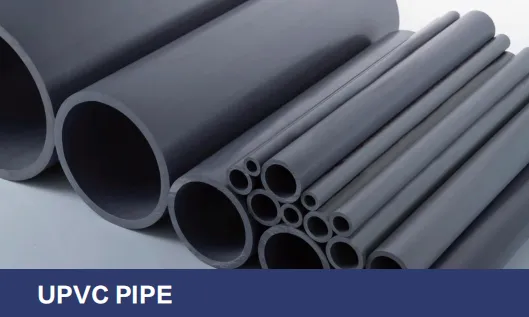
Navigating the world of water distribution requires more than just pipes—it demands reliability, durability, and a partner who understands your project's unique needs. Let's explore how UPVC pipes stand out, what to look for in a supplier, and actionable tips to maximize efficiency.
Water distribution is the silent infrastructure that keeps communities, businesses, and industries thriving. From residential neighborhoods to commercial complexes, the efficiency of this network hinges on one critical component: the pipes that carry water from source to tap. In recent decades, UPVC (Unplasticized Polyvinyl Chloride) has emerged as a game-changer in this space, replacing older materials like galvanized steel and copper in many applications. But what makes UPVC the go-to choice for engineers, contractors, and facility managers?
First, durability. Unlike metal pipes, UPVC is resistant to corrosion, rust, and chemical degradation—essential traits in water systems where mineral deposits or aggressive soil conditions can shorten lifespans. This resistance translates to a longer service life, often exceeding 50 years with proper installation. Second, cost-effectiveness. UPVC pipes are lightweight, reducing transportation and labor costs during installation. They also require minimal maintenance, cutting long-term expenses. Third, hydraulic efficiency: their smooth inner surface minimizes friction, allowing water to flow freely with less pressure loss compared to rough-surfaced alternatives.
But the true value of UPVC lies in its versatility. Whether you're designing a small residential water line or a large-scale commercial distribution system, UPVC pipes come in various sizes, pressure ratings, and configurations to meet specific needs. And to unlock this potential, partnering with the right upvc pipe supplier is non-negotiable. A supplier that offers more than just products—comprehensive upvc pipe solutions—can turn a standard installation into an efficient, future-proof system.
Choosing a supplier is one of the most impactful decisions in any water distribution project. The wrong partner can lead to delayed timelines, subpar materials, and costly rework. So, what should you prioritize when evaluating potential upvc pipe suppliers? Let's break it down.
| Supplier Attribute | Key Consideration | Impact on Project Efficiency |
|---|---|---|
| Product Quality & Certifications | ISO 9001, ASTM, or local standards compliance; third-party test reports for pressure/impact resistance | Reduces risk of leaks, failures, and premature replacements |
| Range of Solutions | Availability of pipes, fittings, valves, and custom lengths; compatibility with existing systems | Streamlines procurement and ensures system integrity |
| Technical Support | In-house engineers for sizing, installation guidance, and troubleshooting | Avoids design errors and speeds up installation |
| Delivery Reliability | On-time delivery rates; flexible scheduling for large orders | Prevents project delays and keeps labor costs in check |
Certifications are non-negotiable. A reputable supplier will readily provide documents proving their UPVC pipes meet industry standards—for example, compliance with ASTM D1785 for pressure piping or ISO 1452 for water supply. These certifications ensure the product can withstand the intended pressure, temperature, and environmental conditions.
Equally important is the supplier's ability to offer tailored solutions. Water distribution systems are rarely one-size-fits-all. A school might need smaller-diameter pipes with fire-resistant properties, while an industrial plant requires large-diameter, high-pressure pipes. A supplier with a diverse portfolio—including options like pvc-u sch40 pressure piping system for standard applications or specialized fittings—can adapt to these unique demands.
Technical support is often the unsung hero of efficient projects. Imagine a scenario where your team is unsure about the optimal pipe size for a high-rise building's water pressure. A supplier with in-house engineers can run hydraulic calculations, recommend the right diameter, and even suggest installation techniques to minimize pressure loss. This level of support turns a transactional relationship into a partnership.
Even the highest-quality UPVC pipes won't deliver peak efficiency if they're not paired with smart design, installation, and maintenance practices. Here are actionable tips to ensure your water distribution system runs at its best for years to come.
One common mistake is oversizing pipes to "play it safe," but this wastes material and increases costs. Conversely, undersizing leads to high pressure loss and reduced flow. The key is to calculate the required flow rate based on the number of fixtures (taps, showers, appliances) and their peak demand. For example, a residential building with 50 units might need a 100mm diameter main line, while a small office with 10 staff could use 50mm. Your supplier's technical team can help with these calculations, ensuring the pipe diameter matches the system's actual needs.
UPVC pipes are easy to install, but precision matters. Start by preparing the work area: clear debris, measure twice, and mark cut lines with a pencil. Use a fine-tooth saw or pipe cutter for clean edges—rough cuts can weaken joints. When joining pipes and fittings, apply primer to both surfaces, then solvent cement, and hold the joint firmly for 30 seconds to ensure a tight bond. Avoid over-tightening threaded fittings, as this can crack the material.
Support is another critical factor. Use pipe hangers or brackets every 1.5–2 meters for horizontal runs and every 0.5 meters for vertical runs to prevent sagging. Sagging pipes can lead to water pooling, which accelerates corrosion (even in UPVC) and creates noise during flow. For outdoor installations, insulate pipes in cold climates to prevent freezing and cracking—UPVC is durable, but extreme temperatures can still cause damage.
UPVC systems require minimal maintenance, but proactive checks can extend their life and prevent minor issues from becoming major problems. Schedule quarterly inspections to look for leaks at joints, cracks in pipes, or signs of movement (like shifted brackets). Flush the system annually to remove sediment buildup, which can restrict flow over time. In commercial settings, consider installing pressure gauges at key points to monitor for sudden drops, which may indicate a hidden leak.
For systems carrying potable water, avoid using harsh chemicals for cleaning—mild detergents or vinegar solutions work best. And if you do encounter a leak, act fast: small cracks can be repaired with epoxy putty, while larger damage may require replacing the affected section. Your supplier should offer replacement parts and guidance for quick fixes.
Not all UPVC pipes are created equal. The two most common grades are SCH40 and SCH80. SCH40 is suitable for standard pressure applications (up to 160 psi at 73°F), making it ideal for residential water lines or low-pressure commercial systems. SCH80, with its thicker walls, handles higher pressures (up to 280 psi at 73°F) and is better for industrial settings or areas with fluctuating pressure. A reputable pvc-u sch40 pressure piping system supplier can help you select the right grade based on your project's pressure requirements and local building codes.
Efficiency isn't just about the pipes—it's about the entire system. Invest in high-quality fittings from your upvc pipe supplier, such as ball valves for easy shutoff, check valves to prevent backflow, and pressure regulators to stabilize flow. For large systems, consider adding flow meters to monitor usage and identify inefficiencies. These accessories might add upfront cost, but they pay off in better control and reduced waste over time.
UPVC isn't the only plastic pipe material on the market. PPR (Polypropylene Random Copolymer) and PEX (Cross-Linked Polyethylene) are also popular choices. How do they stack up against UPVC in water distribution systems? Let's compare.
| Feature | UPVC | PPR | PEX |
|---|---|---|---|
| Temperature Resistance | Best for cold water (up to 140°F) | Good for hot water (up to 200°F) | Excellent for hot water (up to 200°F) |
| Cost | Lowest | Moderate | Highest |
| Installation | Solvent cement; requires dry, clean surfaces | Heat fusion; specialized tools needed | Crimp or clamp; flexible, easy to bend |
| Lifespan | 50+ years | 40–50 years | 40–50 years |
| Best For | Cold water distribution, drainage, low-cost projects | Hot/cold water in residential/commercial | Retrofits, tight spaces, radiant heating |
For cold water distribution systems—like those in apartment buildings, schools, or offices—UPVC is the clear winner. Its low cost, long lifespan, and ease of installation make it unbeatable. PPR and PEX excel in hot water applications, but they come with higher material and labor costs. If your project involves both hot and cold water, consider a hybrid approach: UPVC for cold lines and PPR/PEX for hot lines. Your supplier can help design this mix for optimal efficiency.
In Riyadh, a construction firm was tasked with building a 200-unit residential complex. The original plan called for galvanized steel pipes, but concerns about corrosion in the region's high-saline soil and rising labor costs led the team to reconsider. They partnered with a local saudi arabia building materials supplier specializing in UPVC solutions, and the results were transformative.
The supplier conducted a site assessment, recommended pvc-u sch40 pressure piping system for the main lines, and provided technical support to size pipes based on peak water demand. Installation took 30% less time than steel, thanks to UPVC's lightweight design and easy jointing. Post-construction, the complex saw zero leaks in the first year—a stark contrast to the 5–7 leaks typical with steel systems in the area. Maintenance costs dropped by 45%, and residents reported better water pressure due to the smooth inner walls of the UPVC pipes.
"Switching to UPVC was a no-brainer," said the project manager. "The supplier didn't just sell us pipes—they gave us a complete solution that fit our timeline, budget, and long-term goals."
Water distribution systems are the lifelines of our built environment, and UPVC pipes have proven to be a reliable, cost-effective choice for these critical networks. But their true potential is unlocked only when paired with a supplier who offers more than products—one who delivers expertise, tailored solutions, and ongoing support. By prioritizing quality, technical guidance, and proactive maintenance, you can ensure your UPVC system operates efficiently for decades, saving time, money, and resources.
Whether you're building a new complex or upgrading an existing system, remember: the right upvc pipe supplier isn't just a vendor—they're a partner in your project's success. Choose wisely, and let your water distribution system flow smoothly, reliably, and efficiently.
Recommend Products












