
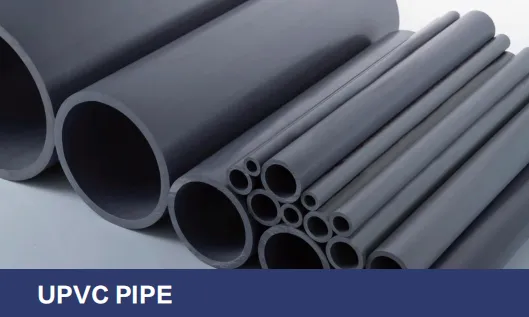
Irrigation is the silent backbone of agriculture, landscaping, and even urban green spaces. Whether you're a small-scale farmer tending to crops, a golf course manager maintaining lush fairways, or a municipal planner ensuring public parks stay vibrant, the efficiency of your irrigation system hinges on one critical component: the pipes that carry water from source to soil. Among the many piping materials available, UPVC (Unplasticized Polyvinyl Chloride) has emerged as a top choice for irrigation. Its durability, corrosion resistance, and cost-effectiveness make it ideal for withstanding the demands of daily water flow, varying pressures, and exposure to the elements. But here's the thing: even the best material can fail if sourced from the wrong supplier. Choosing a reliable upvc pipe supplier isn't just about buying a product—it's about investing in a partnership that ensures your irrigation system runs smoothly for years. In this guide, we'll walk you through everything you need to know to pick a supplier that delivers quality, reliability, and peace of mind.
Before diving into supplier selection, let's take a moment to understand why UPVC has become the gold standard for irrigation. Unlike metal pipes, UPVC doesn't rust or corrode—critical in regions where water may contain minerals or fertilizers that can eat away at other materials. It's also lightweight, making installation easier and reducing labor costs. UPVC pipes are resistant to UV rays, so they won't degrade when exposed to sunlight, a common issue with cheaper plastic alternatives. Plus, their smooth inner surface minimizes friction, allowing water to flow freely with less pressure loss—meaning your pumps work more efficiently, and your water bills stay lower. Simply put, UPVC pipes are built to last, but only if they're manufactured to the highest standards. And that's where your choice of supplier comes in.
Selecting a upvc pipe supplier is about more than comparing price tags. It's about evaluating a range of factors that directly impact the performance and longevity of your irrigation system. Let's break down the most important ones.
Quality should be your non-negotiable starting point. A low-quality UPVC pipe might save you money upfront, but it could lead to leaks, cracks, or even system failure down the line—costing you far more in repairs, water waste, and crop loss. So, what defines quality in UPVC pipes? Start with the raw materials. Reputable suppliers use virgin PVC resin (not recycled plastic), which ensures consistent strength and chemical resistance. Recycled materials can introduce impurities that weaken the pipe or make it prone to brittleness. Next, check the manufacturing process. Look for suppliers that use state-of-the-art extrusion technology, which produces pipes with uniform wall thickness—a must for handling irrigation pressures without bursting. Ask to see samples: a high-quality UPVC pipe should feel rigid but not brittle, with smooth inner and outer surfaces (no bumps or unevenness). If a supplier hesitates to provide samples or technical specs, that's a red flag.
In the world of construction and irrigation, certifications are your best defense against subpar products. A trustworthy upvc pipe supplier will have their products tested and certified by recognized industry bodies. For irrigation systems, key certifications to look for include ISO 9001 (quality management), ASTM D1785 (standard specification for UPVC pipes), and NSF/ANSI 61 (certifying that the pipes are safe for contact with drinking water—important if your irrigation system might double as a backup for potable use). In regions like Saudi Arabia, additional local certifications (such as SASO) may be required to ensure compliance with national safety standards. Don't just take the supplier's word for it—ask for copies of these certifications. A reputable supplier will happily share them, while a less scrupulous one might dodge the question or provide vague assurances.
Irrigation systems are complex networks, and pipes are just one piece of the puzzle. A top-tier supplier won't just sell you pipes; they'll offer a full suite of upvc pipe solutions , including the fittings and accessories you need to build a cohesive system. This includes elbows, tees, couplings, valves, and end caps—all designed to work seamlessly with their pipes. Why does this matter? Mismatched fittings (even from reputable brands) can lead to leaks at the joints, a common source of water waste. By choosing a supplier that offers both pipes and fittings, you ensure compatibility and reduce the risk of installation errors. Look for a pipes fittings supplier that carries a range of sizes (from 20mm for drip irrigation lines to 315mm for main water supply lines) and pressure ratings (PN10, PN16, etc.) to meet the specific needs of your project. A supplier with a limited product range might force you to source fittings elsewhere, complicating your workflow and increasing the chance of mismatched parts.
No two irrigation systems are the same. Maybe you need extra-long pipes to minimize joints in a large field, or color-coded pipes to differentiate between potable and non-potable water lines. A flexible supplier will work with you to customize products to your specifications. For example, some suppliers offer pipes in custom lengths (up to 6 meters or more) to reduce the number of connections, or they can add UV stabilizers tailored to your region's sunlight intensity. If you're working on a specialized project—like a greenhouse with tight spaces or a vineyard with sloped terrain—ask if the supplier can provide technical support to recommend the right pipe sizes and fittings. Customization isn't just about convenience; it's about ensuring your irrigation system is optimized for your unique environment.
A great supplier doesn't disappear once the sale is made. Imagine this: six months after installation, you notice a leak in a hard-to-reach section of your irrigation line. You call the supplier, and they're slow to respond, or worse, blame the issue on "improper installation." That's a nightmare scenario. Instead, look for a supplier that offers robust after-sales support, including a clear warranty (at least 5–10 years for UPVC pipes), technical assistance, and quick access to replacement parts. Some suppliers even send teams to inspect installations or train your crew on proper maintenance. After-sales support is a sign that the supplier stands behind their products—and that's invaluable when things go wrong.
Not all UPVC pipes are created equal, and understanding the specs will help you avoid overpaying for features you don't need or, worse, buying underperforming pipes. Here are the key terms to discuss with your supplier:
| Specification | What It Means | Why It Matters for Irrigation |
|---|---|---|
| Pressure Rating (PN) | Measured in bars (PN10 = 10 bar, PN16 = 16 bar). Indicates the maximum pressure the pipe can withstand. | Higher pressure ratings (PN16) are needed for sprinkler systems or hilly terrain, where water pressure is higher. PN10 is sufficient for low-pressure drip irrigation. |
| Wall Thickness | Thicker walls = higher strength. Measured in millimeters or using schedule ratings (e.g., SCH40). | Thicker walls resist damage from soil movement or accidental impacts (common in agricultural settings). |
| Material Grade | PVC-U (unplasticized) is standard for irrigation. Avoid "modified" PVC, which may contain plasticizers that reduce durability. | PVC-U ensures rigidity and chemical resistance, critical for long-term performance. |
| UV Stabilization | Additives that protect pipes from sun damage. | Essential for above-ground installations (e.g., garden sprinklers) to prevent cracking or discoloration. |
| Chemical Resistance | Ability to withstand fertilizers, pesticides, or mineral-rich water. | Important if your irrigation water contains harsh chemicals that could degrade the pipe over time. |
Don't be afraid to ask for test reports or product datasheets. A reputable supplier will have no problem sharing details like burst pressure tests, impact resistance results, or long-term durability studies. If a supplier seems evasive when you ask for specs, it's a sign they might be cutting corners.
Even with high-quality UPVC pipes, irrigation systems face unique challenges. The right supplier will anticipate these issues and offer solutions that save you time, money, and frustration. Let's look at a few common problems and how a proactive supplier can help:
Drip irrigation is efficient, but small-diameter pipes and emitters are prone to clogging from sediment or algae. A good upvc pipe supplier will offer pipes with smooth inner surfaces (reducing sediment buildup) and may even recommend add-ons like inline filters or self-cleaning emitters. Some suppliers also provide pipes fittings solutions like flush valves that make it easy to clear clogs without digging up the entire line.
In sprawling farms or golf courses, water has to travel long distances, leading to pressure drops. A knowledgeable supplier will help you calculate the right pipe diameter and pressure rating to minimize friction loss. For example, they might suggest upsizing pipes in high-flow areas or adding booster pumps at strategic points. They'll also ensure fittings like elbows and tees are designed to reduce turbulence, keeping water flowing smoothly.
Freezing temperatures can cause water in pipes to expand and burst, while scorching heat can warp lower-quality plastics. A supplier familiar with local climate conditions will recommend pipes with temperature-resistant additives. For cold regions, they might suggest burying pipes below the frost line or offering insulation sleeves. In hot, sunny areas, UV-stabilized pipes are a must to prevent brittleness.
Now that you know what to look for, let's talk about what to avoid. Here are some warning signs that a upvc pipe supplier might not have your best interests in mind:
Let's put this all into perspective with a real-world example. Meet Raj, a farmer in central India with a 50-acre mango orchard. For years, he used cheap PVC pipes from a local supplier, but he was constantly dealing with leaks, especially during the monsoon season. The leaks wasted water and caused some trees to get overwatered, while others dried out. His energy bills spiked because his pumps were working overtime to compensate for pressure loss. Frustrated, Raj started researching upvc pipe solutions and found a supplier that specialized in agricultural irrigation. The new supplier sent a technical team to assess his orchard, recommended PN16 UPVC pipes (to handle the high pressure of his sprinkler system), and provided pipes fittings solutions like pressure-reducing valves and anti-siphon devices to prevent backflow. They even trained Raj's crew on proper installation. Today, two years later, Raj's leaks have disappeared, his water usage is down by 30%, and his mango yield has increased. "It wasn't just about buying pipes," he says. "It was about partnering with someone who understood my needs."
Choosing a upvc pipe supplier for your irrigation system is one of the most important decisions you'll make as a grower, landscaper, or project manager. It's a choice that impacts your bottom line, your daily operations, and the long-term health of your plants or green spaces. By prioritizing quality, certifications, product range, customization, and after-sales support, you'll find a supplier that doesn't just sell you pipes—they become a partner in your success. Remember, the best suppliers are transparent, responsive, and passionate about helping you build a system that works. So take your time, ask questions, and don't settle for anything less than the best. Your irrigation system (and your crops) will thank you.
Recommend Products












