
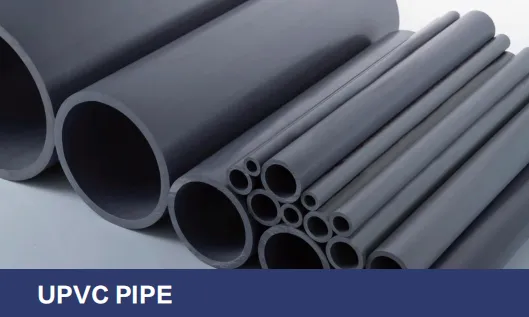
Agriculture has always been the backbone of communities, feeding nations and sustaining livelihoods. Yet, for all its importance, the sector faces a silent challenge that often goes unnoticed: the efficiency of irrigation systems. Imagine a farmer in the heart of a rural landscape, watching their crops wilt not from lack of rain, but from water that never reaches the roots—lost to leaky pipes, rusted joints, or inefficient distribution. This is not just a story of wasted water; it's a story of wasted potential. For decades, farmers have relied on traditional materials like metal, concrete, or low-grade plastic for their irrigation networks, only to be let down by frequent breakdowns, high maintenance costs, and shortened lifespans. Today, there's a shift happening. More and more agricultural projects are turning to UPVC pipes, and behind this shift is the role of a trusted upvc pipe supplier—one that doesn't just sell products, but delivers upvc pipe solutions tailored to the unique needs of farming.
To understand why UPVC pipes are becoming the go-to choice, we first need to acknowledge the true cost of outdated irrigation systems. Let's start with water loss. A single pinhole leak in a metal pipe can waste hundreds of liters of water daily—a critical loss in regions where water scarcity is already a pressing issue. Over time, these leaks multiply, leading to uneven moisture distribution across fields. Some crops drown in standing water, while others wither just meters away. The result? Reduced yields, stunted growth, and crops that are more vulnerable to pests and diseases.
Then there's maintenance. Traditional metal pipes corrode quickly, especially when exposed to fertilizers, pesticides, or even naturally acidic soil. Farmers end up spending weekends digging up sections of their fields to replace rusted segments, diverting time and resources from actual farming. Concrete pipes, while durable, are heavy and cumbersome to install, requiring heavy machinery and increasing labor costs. Low-quality PVC pipes, often confused with UPVC, lack the structural integrity to withstand the pressure of large-scale irrigation, leading to cracks and bursts during peak usage.
The emotional toll is equally significant. A farmer's livelihood depends on predictability—predictable water flow, predictable costs, predictable yields. When irrigation systems fail, that predictability crumbles. Stress mounts as bills pile up for repairs, and uncertainty creeps in about whether the next harvest will be enough to feed the family or pay the bills. It's a cycle that traps many in a loop of reactive fixes instead of proactive growth.
Enter UPVC—unplasticized polyvinyl chloride—a material that's redefining what irrigation systems can achieve. Unlike regular PVC, which contains plasticizers that make it flexible but less durable, UPVC is rigid, strong, and built to last. But what makes it so ideal for agriculture? Let's break it down.
Durability That Stands the Test of Time : UPVC pipes are resistant to corrosion, chemicals, and UV radiation—three enemies of traditional irrigation materials. Fertilizers and pesticides, which can eat away at metal pipes, slide harmlessly through UPVC, ensuring the system remains intact for decades. In fact, most UPVC pipes come with a lifespan of 50+ years, outlasting metal (15-20 years) and concrete (25-30 years) by a significant margin. For a farmer planning for the future, this isn't just a purchase; it's an investment.
Lightweight and Easy to Install : One of the biggest advantages of UPVC is its weight. Unlike concrete or metal, which require cranes and teams of workers to maneuver, UPVC pipes can be carried by hand, making installation faster and more cost-effective. This is a game-changer for remote agricultural projects, where heavy machinery may not be accessible. Even better, UPVC pipes are designed with simple, leak-proof joints, reducing the need for specialized labor. A small team can lay kilometers of pipe in a fraction of the time it would take with traditional materials.
Smooth Flow, Maximum Efficiency : The inner surface of UPVC pipes is incredibly smooth, minimizing friction as water travels through. This means less energy is needed to pump water, reducing electricity costs for farmers. It also ensures a consistent flow rate, so water reaches every corner of the field evenly. For drip irrigation systems, which rely on precise water distribution, this smoothness is critical—no clogs, no blockages, just steady, reliable moisture for every plant.
Cost-Effective in the Long Run : While UPVC pipes may have a slightly higher upfront cost than low-grade plastic, their long-term savings are undeniable. With minimal maintenance required (no painting, no rust treatment, no frequent replacements), the total cost of ownership plummets. Farmers report saving up to 30% on irrigation-related expenses within the first five years of switching to UPVC. It's a classic case of "pay a little more now, save a lot later."
To put these benefits into perspective, let's compare UPVC with other common irrigation materials. The table below highlights key factors that matter most to farmers: durability, installation ease, cost, and water efficiency.
| Material | Typical Lifespan | Resistance to Corrosion/Fertilizers | Installation Complexity | Maintenance Cost (Annual) | Water Flow Efficiency |
|---|---|---|---|---|---|
| UPVC | 50+ years | Excellent (resistant to most chemicals) | Low (lightweight, simple joints) | ~$50-$100/acre | High (smooth inner surface, minimal friction) |
| Galvanized Steel | 15-20 years | Poor (prone to rust in moist/acidic soil) | High (heavy, requires welding) | ~$300-$500/acre | Medium (rough surface causes friction loss) |
| Concrete | 25-30 years | Good (but porous, can crack over time) | Very High (requires machinery, specialized labor) | ~$200-$400/acre | Medium-Low (rough texture reduces flow) |
| Low-Grade PVC | 10-15 years | Fair (softens in high temperatures) | Low (lightweight but weak joints) | ~$150-$250/acre | Medium (prone to narrowing due to wear) |
The data speaks for itself. UPVC outperforms traditional materials in almost every category that matters to agricultural projects. It's not just about pipes—it's about peace of mind. When a farmer chooses UPVC, they're choosing a system that works as hard as they do.
A irrigation system is only as strong as its weakest link—and more often than not, that link is the fittings. Elbows, tees, valves, and couplings may seem like small components, but they're critical to ensuring water flows where it needs to, without leaks or pressure loss. This is where a reliable pipes fittings supplier becomes indispensable. A great upvc pipe supplier doesn't stop at pipes; they offer a full range of compatible fittings designed to work seamlessly with their UPVC products.
Why does compatibility matter? Mismatched fittings—say, a generic plastic elbow paired with a high-quality UPVC pipe—can lead to leaks, even if the pipe itself is flawless. Over time, these leaks worsen, undoing all the benefits of the UPVC system. A trusted pipes fittings supplier understands this, which is why they engineer fittings to the same rigorous standards as their pipes. They offer options for every scenario: from simple couplings for straight runs to complex manifolds for distributing water to multiple fields. Many even provide custom fittings for unique project layouts, ensuring no two farms are forced into a one-size-fits-all solution.
Take, for example, a farmer in a hilly region. Their fields are spread across slopes, requiring pipes to navigate sharp angles and varying elevations. A standard elbow might crack under the pressure of water flowing downhill, but a reinforced UPVC elbow from a quality pipes fittings supplier? It can handle the stress, ensuring water reaches the lower fields without a drop wasted. Similarly, in greenhouses where space is tight, specialized valves allow for precise control over water flow, letting farmers adjust moisture levels for delicate crops like tomatoes or lettuce.
The best suppliers also offer technical support. Installing a large-scale irrigation system isn't just about laying pipes; it's about calculating pressure ratings, determining the right diameter for each section, and ensuring the system can handle peak demand during the dry season. A knowledgeable supplier provides more than a catalog—they provide guidance. They send engineers to survey the land, answer questions about soil conditions, and even help design layouts that maximize water efficiency. For farmers who may not have formal training in hydraulics, this support is invaluable.
Let's step away from theory and into real life. Consider the case of a cooperative of small-scale farmers in a semi-arid region. For years, they relied on a patchwork system of concrete and metal pipes, spending over 20% of their annual income on repairs. Their yields were inconsistent, and during droughts, they were forced to prioritize certain fields over others, leaving some crops to fail. Then, they partnered with a local upvc pipe supplier who conducted a full audit of their existing system. The supplier recommended replacing the old pipes with UPVC, along with a set of pressure-regulating valves and drip irrigation fittings. Within six months, the cooperative saw a 15% increase in crop yields. Water usage dropped by 25%, and maintenance costs plummeted. Today, they're expanding their fields, confident their irrigation system can keep up.
Another example comes from a large commercial farm growing citrus fruits. They'd struggled with metal pipes corroding due to the acidic fertilizers used to boost fruit growth. The corrosion led to leaks that stained the soil, harming the trees' roots. After switching to UPVC pipes and fittings, the leaks stopped. The smooth inner surface of the pipes also reduced the risk of fertilizer buildup, ensuring nutrients were delivered directly to the roots, not wasted in the pipes. Within a year, the farm reported larger, sweeter fruits and a 10% increase in marketable produce.
These stories aren't anomalies—they're the norm for farms that invest in quality UPVC pipe solutions. They highlight a simple truth: irrigation isn't just about water; it's about empowerment. When farmers no longer have to worry about their pipes failing, they can focus on what they do best: growing food, innovating, and building sustainable livelihoods for their families and communities.
As the world faces growing population pressures and climate change, the demand for efficient irrigation will only increase. UPVC pipes are poised to play a central role in this future, thanks to ongoing innovations. Suppliers are developing thinner, stronger UPVC blends that reduce material usage without sacrificing durability. Some are even integrating smart technology: pipes with built-in sensors that monitor water flow and detect leaks in real time, sending alerts to farmers' phones before a small issue becomes a major problem. Imagine a farmer receiving a text message that reads, "Leak detected in Section C—flow rate reduced by 5%." They can address the issue immediately, saving water and avoiding crop damage.
Sustainability is also a key focus. UPVC is inherently recyclable, and many suppliers are now using recycled materials in their production processes, reducing their environmental footprint. Additionally, the long lifespan of UPVC pipes means less waste over time—unlike metal or concrete, which need to be replaced every decade or two, creating mountains of construction debris.
Perhaps most importantly, UPVC makes advanced irrigation techniques more accessible. Drip irrigation, precision sprinklers, and fertigation (the process of delivering fertilizers through irrigation water) all require reliable, clog-free pipes. With UPVC, these technologies are no longer limited to large industrial farms; smallholder farmers can now adopt them, too, leveling the playing field and increasing global food security.
So, how do you find a supplier that delivers more than just pipes? Start with certifications. Look for suppliers who adhere to international standards like ISO 9001 for quality management or ASTM D1785, which specifies requirements for UPVC pipes used in pressure applications. These certifications are more than just logos—they're proof that the supplier prioritizes quality and consistency.
Next, evaluate their product range. A good supplier offers pipes in multiple diameters (from 20mm for small gardens to 315mm for large fields) and pressure ratings (PN10, PN16, etc.), ensuring you get the right pipe for the job. They should also stock a variety of fittings, from basic to specialized, so you don't have to source components from multiple vendors.
Customer service is another critical factor. Do they respond quickly to inquiries? Are they willing to visit your farm for a site assessment? Do they offer after-sales support, like warranty coverage or help with repairs? A supplier that invests in long-term relationships will go the extra mile to ensure your satisfaction.
Finally, consider their track record. Ask for references from other agricultural projects. Talk to farmers who have used their products for several years. Did the pipes hold up during extreme weather? Were the fittings reliable? Real-world feedback is often the best indicator of a supplier's quality.
At the end of the day, agriculture is about growth—growth of crops, growth of communities, growth of hope. An efficient irrigation system is the foundation of that growth, and UPVC pipes are the building blocks. They're not just a material choice; they're a commitment to sustainability, reliability, and progress. Behind every successful UPVC system is an upvc pipe supplier that understands this—one that sees itself as a partner in the farmer's journey, not just a vendor.
So, to the farmers, the project managers, and the dreamers building the future of agriculture: choose your irrigation system wisely. Choose durability. Choose efficiency. Choose UPVC. And when you do, choose a supplier who will stand beside you, from the first pipe laid to the last harvest reaped. Together, we can turn every drop of water into a bountiful crop—and every farm into a thriving community.
Recommend Products












