
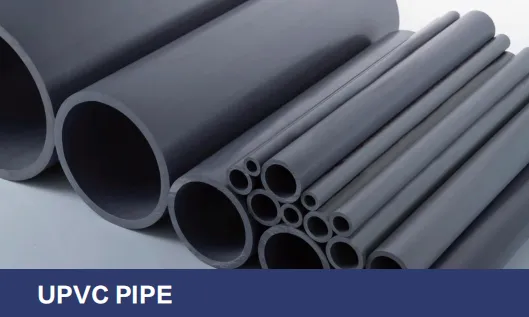
In the world of construction, every project tells a unique story—one of blueprints, deadlines, and the quiet confidence that comes from knowing the materials holding it all together are built to last. For contractors, architects, and homeowners alike, the choice of building materials can make or break a project. When it comes to plumbing and piping systems, this decision carries even more weight: a single faulty pipe can lead to water damage, costly repairs, and delays that throw entire timelines off track. That's where partnering with a reliable UPVC pipe supplier isn't just a transaction—it's a cornerstone of success.
At its core, a building is more than steel and concrete; it's a living, breathing space where people live, work, and thrive. The pipes running through its walls and under its floors might be out of sight, but they're never out of mind. They carry clean water into homes, remove waste efficiently, and ensure industrial processes run smoothly. In a market flooded with generic options, the difference between a good project and a great one often lies in the details—like pipes that are customized to fit unique layouts, withstand specific environmental conditions, and align with a client's long-term vision.
This article dives into the world of UPVC pipes, exploring why they've become a go-to choice for modern construction, how customization elevates their utility, and why partnering with a supplier that understands your project's unique needs is non-negotiable. Whether you're renovating a small home, building a hospital, or constructing a commercial complex, the right piping solutions can turn challenges into opportunities—and transform a vision into reality.
Walk into any hardware store, and you'll find shelves lined with pipes of all materials—copper, galvanized steel, PEX, and more. But in recent years, UPVC (unplasticized polyvinyl chloride) has emerged as a standout, and for good reason. Unlike its plastic counterparts, UPVC is rigid, durable, and free from the plasticizers that can weaken other vinyl products over time. This makes it resistant to corrosion, chemical degradation, and the wear and tear of daily use—qualities that have made it a favorite among professionals in Saudi Arabia and beyond.
"I used to swear by copper pipes," says Ahmed, a contractor with 15 years of experience in Riyadh. "But after a hospital project where copper corroded within five years due to high mineral content in the water, I switched to UPVC. Ten years later, those pipes are still going strong—no leaks, no rust, and barely any maintenance. It was a game-changer for my business." Ahmed's story isn't unique. UPVC's rise to popularity stems from its ability to address the most common pain points in plumbing:
But what truly sets UPVC apart is its versatility. Whether you're laying pipes for a residential bathroom, a commercial kitchen, or an industrial wastewater system, UPVC can be adapted to fit the job. And when paired with customization—tailored sizes, fittings, and configurations—it becomes a solution that doesn't just meet standards, but exceeds expectations.
No two projects are the same. A 10-story apartment building in Jeddah has different piping needs than a boutique hotel in Riyadh, just as a school laboratory requires different specifications than a home renovation. This is where generic, off-the-shelf pipes fall short. A one-size-fits-all approach often leads to compromises: pipes that are too long, fittings that don't align, or materials that can't handle the project's unique demands.
As a leading UPVC pipe supplier , we've learned that the best solutions start with listening. "Every client comes to us with a problem," says Maria, our project consultant with a background in civil engineering. "Maybe it's a tight space where standard pipe lengths won't fit, or a hospital that needs fire-resistant materials. Our job isn't to sell them a product—it's to understand their challenge and build a solution around it."
Customization in UPVC piping goes beyond cutting pipes to length. It involves a collaborative process where clients work alongside our team to design solutions that fit their project's exact specifications. Here are just a few ways we tailor our products:
Standard pipes often come in fixed lengths (e.g., 3m or 6m), but many projects require non-standard sizes. For example, a high-rise building with limited elevator access might need shorter pipes to fit in the lift, while a residential renovation with narrow crawl spaces could benefit from longer lengths to reduce the number of joints (and potential leak points). Our in-house cutting and fabrication facilities allow us to produce pipes in lengths from 1m to 12m, ensuring a perfect fit for any space.
Water pressure, flow rate, and environmental conditions all dictate the ideal pipe diameter and wall thickness. A small home might only need 20mm pipes for its water supply, but a commercial complex with hundreds of occupants could require 110mm or larger. Similarly, pipes used in underground drainage systems need thicker walls to withstand soil pressure, while those in above-ground applications might prioritize lightweight design. We work with clients to calculate exact pressure requirements and fabricate pipes with custom thicknesses, ensuring optimal performance and safety.
Piping systems are only as strong as their weakest link—and that link is often a poorly fitting joint. Standard fittings (elbows, tees, reducers) might not align with a project's unique layout, leading to awkward angles, increased friction, or leaks. Our customization services include designing and manufacturing bespoke fittings, from 45-degree elbows for tight corners to custom reducers for transitioning between pipe sizes. For complex projects, we even provide 3D models of the piping layout to ensure every fitting works seamlessly with the pipes.
While most pipes are hidden behind walls, some projects—like modern offices or boutique hotels—feature exposed piping as part of their design aesthetic. In these cases, color customization can turn a functional element into a design feature. We offer UPVC pipes in a range of colors, from classic white to bold blacks and earth tones, allowing clients to match their brand identity or interior design scheme.
Certain environments demand extra protection. For example, pipes used in coastal areas need UV resistance to prevent degradation from sunlight, while those in hospitals might require antimicrobial coatings to inhibit bacterial growth. We can add specialized additives to UPVC formulations, such as fire retardants (for Class A fireproof applications) or impact modifiers for areas prone to physical damage.
While UPVC is a versatile workhorse, some projects require specialized materials. That's why we don't limit ourselves to a single product—instead, we offer a range of piping solutions to meet every need. From PVC DWV pipe solutions for drainage systems to PPR pipe and fitting solutions for hot water applications, our portfolio is designed to cover the full spectrum of construction requirements. Here's a closer look at some of our most sought-after offerings:
| Product | Key Features | Applications | Customization Options |
|---|---|---|---|
| UPVC Pipes | Rigid, corrosion-resistant, cost-effective, ideal for cold water and drainage | Residential water supply, commercial drainage, industrial chemical transport | Length, diameter, wall thickness, color, UV-resistant coatings |
| PVC DWV Pipes | Designed for Drainage, Waste, and Vent systems; smooth inner surface for fast water flow | Residential and commercial plumbing, hospital waste systems, school drainage | Noise-reducing insulation, fire-retardant additives, custom fittings |
| PPR Pipes & Fittings | Flexible, heat-resistant (up to 95°C), suitable for hot and cold water | Home hot water systems, hotel kitchens, hospital laundry facilities | Length, diameter, thermal resistance ratings, color-coded for hot/cold systems |
"We recently worked on a hospital project in Dammam where they needed both UPVC and PPR pipes," says Maria. "The cold water supply used UPVC for its durability, while the hot water lines required PPR for its heat resistance. By offering both, we could provide a single-source solution, simplifying the supply chain and ensuring all pipes worked together seamlessly."
UPVC and its customized variants aren't just for plumbing—they're versatile enough to excel in a wide range of projects. Here are some of the sectors where our solutions have made the biggest impact:
From small apartments to luxury villas, residential projects demand reliable, cost-effective piping. UPVC's affordability and low maintenance make it ideal for water supply and drainage systems, while customization options like shorter lengths and color matching appeal to homeowners and contractors alike. For example, a family in Jeddah recently renovated their home and opted for custom 2m UPVC pipes to fit through their narrow attic space, reducing installation time by 30%.
Offices, shopping malls, and hotels have unique demands: high water pressure, large volumes of waste, and strict safety codes. Our PVC DWV pipe solutions are designed to handle the heavy drainage needs of these spaces, with noise-reducing insulation to keep interiors quiet. In Riyadh's newest shopping center, we supplied custom 160mm DWV pipes with fire-retardant additives, ensuring compliance with local fire safety regulations and peace of mind for developers.
Hospitals and schools require piping that prioritizes hygiene, safety, and durability. UPVC's smooth surface resists bacterial growth, making it ideal for medical facilities, while fire-resistant additives (like those in our Class A fireproof solutions) ensure compliance with strict safety standards. A school in Medina recently installed our PPR pipes in science labs, where heat-resistant properties protect against hot water and chemical spills, keeping students and staff safe.
Factories, power plants, and infrastructure projects (like water treatment plants) need pipes that can withstand harsh chemicals, high pressure, and extreme temperatures. Our customized UPVC pipes, with thick walls and chemical-resistant coatings, are built for these environments. A chemical plant in Jubail uses our 200mm UPVC pipes to transport corrosive fluids, and after five years, the pipes show no signs of degradation—a testament to their durability.
Customization means nothing if the final product doesn't meet the highest quality standards. At our core, we're committed to delivering pipes that are not just tailored to your needs, but also built to last. Here's how we ensure quality at every step:
"Quality isn't just a buzzword for us," says Ali, our quality control manager. "It's the reason clients keep coming back. Last year, a client in Jeddah had a batch of pipes that didn't meet their exact length requirements—even though they were within industry tolerances. We replaced them immediately, no questions asked. That's the level of commitment we bring to every project."
In a market filled with generic pipe suppliers, choosing one that offers customization might seem like an extra expense—but in reality, it's an investment in your project's success. Here's why partnering with a tailored solutions provider matters:
At the end of the day, construction is about more than bricks and mortar—it's about building spaces that stand the test of time. Whether you're a contractor racing to meet a deadline, an architect designing the next iconic building, or a homeowner creating a space to call your own, the right piping solutions can turn your vision into a reality.
In the fast-paced world of construction, where every decision impacts timelines, budgets, and safety, choosing the right UPVC pipe supplier is more than a business choice—it's a partnership. At our core, we believe that great solutions start with listening: to your challenges, your goals, and your vision for the project. Whether you need standard UPVC pipes for a home renovation, custom PVC DWV pipe solutions for a commercial complex, or specialized PPR fittings for a hospital, we're here to turn your needs into solutions.
So, the next time you're planning a project, remember: the pipes beneath the surface are just as important as the walls above. Choose a supplier that doesn't just sell products, but builds relationships. Choose customization. Choose quality. Choose a partner who's invested in your success.
After all, every great building starts with a strong foundation—and in plumbing, that foundation is the right pipe, tailored to fit.
Recommend Products












