
Picture this: A residential complex in Riyadh, built in a hurry to meet a tight deadline. The contractor, eager to save costs, opts for budget-friendly plumbing materials from an unknown vendor. Six months after occupancy, residents start complaining about leaky pipes, mold growth in walls, and recurring water damage. An inspection reveals the culprit: substandard pipes that couldn't withstand the city's water pressure regulations. The result? Tens of thousands of dollars in repairs, angry homeowners, and a damaged reputation for everyone involved. This scenario isn't fictional—it's a cautionary tale that underscores a critical truth: when it comes to building materials, especially something as foundational as pipes, compliance with building codes isn't just a box to check. It's the backbone of safety, durability, and long-term project success.
For contractors, architects, and project managers, choosing the right upvc pipe supplier is about more than comparing prices or delivery timelines. It's about partnering with a provider who understands the intricate web of building codes, standards, and regulations that govern construction projects—from local Saudi Arabian mandates to international benchmarks. In this guide, we'll unpack why compliance matters, what key codes apply to UPVC pipes, and how a reputable supplier ensures your projects meet (and exceed) these requirements. Whether you're working on a small residential renovation or a large-scale commercial development, understanding these essentials will help you avoid costly mistakes and build with confidence.
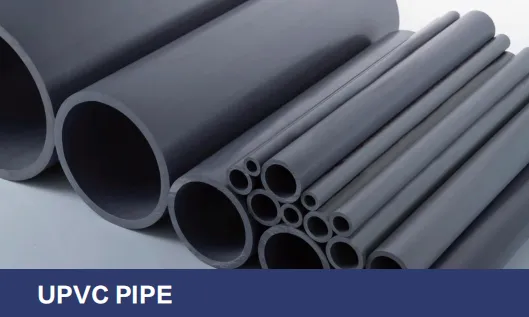
Before diving into codes, let's start with the basics: What makes UPVC (Unplasticized Polyvinyl Chloride) pipes so popular in construction? Unlike regular PVC pipes, which contain plasticizers to make them flexible, UPVC is rigid, strong, and highly resistant to corrosion, chemicals, and temperature fluctuations. These properties make it ideal for a wide range of applications, from carrying drinking water to managing wastewater and even handling industrial fluids. Homeowners appreciate it for its low maintenance—no rust, no scaling—and builders love its lightweight design, which cuts down on installation time and labor costs.
But UPVC's versatility is where it truly shines. Walk into any modern home, and you'll likely find upvc pipe solutions hard at work: in the drain-waste-vent (DWV) system that carries away sewage and gray water, in the supply lines that deliver clean water to kitchens and bathrooms, and even in irrigation systems for gardens. Commercial projects, too, rely heavily on UPVC. Hospitals use it for non-toxic medical gas lines, schools for durable plumbing that can withstand heavy use, and factories for chemical-resistant piping in manufacturing processes. It's no wonder that pvc dwv pipe supplier services are in such high demand—DWV systems are the unsung heroes of indoor sanitation, and UPVC's ability to handle high flow rates without clogging makes it the material of choice.
Yet, for all its benefits, UPVC's performance hinges on one critical factor: quality. A poorly manufactured UPVC pipe might look the part, but it could crack under pressure, leach harmful chemicals, or fail prematurely. That's where building codes come in. They set the minimum standards for material composition, strength, durability, and safety—ensuring that the pipes you install do more than just fit into a wall. They protect the people who use the buildings, the environment, and your bottom line.
Building codes are often described as "the minimum standards for safe construction," but they're more than that. They're a collective agreement between regulators, engineers, and industry experts about what constitutes responsible building practice. For UPVC pipes, these codes cover everything from the raw materials used in manufacturing to the pipe's dimensions, pressure ratings, and even how it's installed. Let's break down the key codes and standards you need to know.
In North America, the gold standard for UPVC pipes is set by ASTM International (formerly the American Society for Testing and Materials). ASTM D1785, specifically, outlines the requirements for unplasticized polyvinyl chloride (PVC) pipe, schedules 40, 80, and 120, for pressure applications. This standard dictates critical factors like wall thickness, impact resistance, and hydrostatic pressure testing—ensuring that pipes can handle the water pressure they'll face in real-world use. For example, a Schedule 40 UPVC pipe under ASTM D1785 must withstand a minimum hydrostatic pressure of 1,000 psi at 73.4°F (23°C) for 100 hours without failing. That's a rigorous test, and it's why contractors trust ASTM-certified pipes for high-pressure applications.
Across the Atlantic, the Deutsches Institut für Normung (DIN) sets standards widely used in Europe, the Middle East, and parts of Asia. For instance, pvc/pipe fitting (din standard pn10) refers to PVC pipes and fittings designed to handle a nominal pressure of 10 bar (145 psi) at 20°C. This standard is common in regions like Saudi Arabia, where many construction projects adopt DIN specifications alongside local codes. A reputable pipes fittings supplier will offer products certified to both ASTM and DIN standards, giving you flexibility to meet project requirements, whether they align with North American or European benchmarks.
International standards are important, but they're just the starting point. Every country—and often every city—has its own set of regulations tailored to local conditions. In Saudi Arabia, for example, the Saudi Arabian Standards Organization (SASO) issues mandatory standards for construction materials, including UPVC pipes. These standards may adapt international benchmarks (like ASTM or DIN) to account for local factors such as extreme temperatures (summer highs often exceed 45°C in Riyadh), water quality, and seismic activity. For instance, SASO's SASO 1130 standard specifies requirements for PVC pipes used in water supply systems, including chemical resistance tests to ensure pipes don't leach harmful substances into drinking water.
Ignoring local codes can have severe consequences. In some cases, non-compliant materials can lead to project delays, as inspectors may refuse to sign off on work until issues are corrected. In the worst cases, they can result in fines or even legal action. That's why working with a saudi arabia building materials supplier who specializes in UPVC pipes is a smart move—they'll have firsthand knowledge of SASO standards, as well as local municipal codes in cities like Jeddah, Dammam, and Riyadh.
| Standard | Scope | Key Requirements | Common Applications |
|---|---|---|---|
| ASTM D1785 | UPVC pipes for pressure applications (schedules 40, 80, 120) | Hydrostatic pressure testing (1,000 psi for 100 hours), impact resistance at 0°C | Residential/commercial water supply, industrial fluid transport |
| DIN PN10 | PVC pipes/fittings for water and gas with nominal pressure 10 bar | Pressure testing at 10 bar (20°C), dimensional accuracy, chemical resistance | Drinking water systems, irrigation, low-pressure industrial lines |
| SASO 1130 | PVC pipes for water supply in Saudi Arabia | Compliance with ASTM D1785, additional tests for lead content, UV resistance | Residential, commercial, and municipal water supply projects in KSA |
| ISO 1452-2 | Plastics pipes for water supply—PVC-U pipes | Long-term hydrostatic strength, creep resistance, dimensional stability | International projects requiring global standard alignment |
So, what separates a reliable upvc pipe supplier from a fly-by-night vendor? It's simple: a commitment to compliance at every stage of the process. From sourcing raw materials to manufacturing, testing, and delivery, a reputable supplier treats compliance as a core value, not an afterthought. Let's look at the steps they take to ensure their products meet the highest standards.
First and foremost, a compliant supplier will have the certifications to back up their claims. Look for products certified by third-party organizations like the International Organization for Standardization (ISO), ASTM International, or SASO. These certifications aren't easy to obtain—they require regular audits, testing, and documentation. For example, ISO 9001 certification (quality management) ensures the supplier has a systematic approach to quality control, from raw material inspection to final product testing. Similarly, ASTM certification means their pipes have been tested in accredited labs and meet the exacting standards of ASTM D1785 or D2665 (for DWV pipes).
Don't be afraid to ask for copies of these certifications. A trustworthy supplier will happily provide them, along with test reports for specific batches if needed. If a supplier hesitates or claims "we meet ASTM standards but don't have the certificate," that's a red flag. Certifications are non-negotiable when compliance is on the line.
Even with certifications, the best suppliers go the extra mile with in-house testing. Imagine a supplier that produces thousands of UPVC pipes daily—how do they ensure each one meets standards? The answer lies in rigorous quality control processes. Many top suppliers have dedicated labs where they conduct random sampling of pipes and fittings. Tests include hydrostatic pressure testing (to check for leaks under stress), impact testing (to ensure pipes don't shatter in cold temperatures), and dimensional checks (to verify wall thickness and diameter). For example, a pvc dwv pipe supplier might test their pipes for flow capacity, ensuring they can handle the volume of wastewater specified in DWV system designs without clogging or backup.
This level of testing is especially critical for specialized applications. Take pvc dwv pipe solutions for high-rise buildings: these pipes must not only be durable but also fire-resistant and sound-insulating. A supplier focused on compliance will offer DWV pipes with added features like firestopping collars or acoustic insulation, all tested to meet local fire codes. It's this attention to detail that turns a supplier into a partner.
Building codes aren't static. They evolve as new technologies emerge, safety concerns arise, and environmental priorities shift. For example, in recent years, many regions have updated their plumbing codes to require lead-free pipes in drinking water systems—a response to growing awareness of lead's health risks. A proactive upvc pipe supplier doesn't wait for these changes to take effect; they anticipate them. They invest in research and development to reformulate products, update manufacturing processes, and train their teams on new requirements. This agility ensures that when a code change happens, you won't be left scrambling to find compliant materials.
In Saudi Arabia, for instance, SASO regularly updates its standards to align with global best practices. A local saudi arabia building materials supplier with strong ties to regulatory bodies will be among the first to know about these updates, giving you a head start on adjusting your project plans. This kind of foresight is invaluable, especially for long-term projects that span multiple years.
Even with the best intentions, navigating compliance can be tricky. Let's explore some of the most common challenges contractors face and how partnering with the right supplier helps you overcome them.
The construction industry is rife with counterfeit materials, and UPVC pipes are no exception. Unscrupulous vendors often sell pipes that look like the real thing but are made with recycled or low-quality plastic, skimping on wall thickness or additives that enhance durability. These pipes may pass a quick visual inspection but will fail under stress, leading to leaks, bursts, or premature wear. The problem is so widespread that the World Bank estimates counterfeit building materials cost the global economy over $40 billion annually.
The solution? Choose a supplier with a proven track record and transparent sourcing practices. Reputable suppliers will gladly share information about their manufacturing facilities, raw material suppliers, and quality control processes. Some even offer product tracing, allowing you to track a pipe's journey from the factory to your site using a serial number. When in doubt, ask for references—other contractors or project managers who have used their products and can vouch for their quality.
If you work on projects in multiple regions, you've likely encountered conflicting standards. A project in Riyadh might require DIN PN10 pipes, while a project in Dubai specifies ASTM D1785. Keeping track of these variations can be overwhelming, especially when deadlines are tight. A versatile pipes fittings supplier simplifies this by offering a wide range of products certified to multiple standards. They'll also have knowledgeable sales teams who can help you navigate the differences—explaining, for example, that a DIN PN10 pipe is suitable for lower-pressure applications than an ASTM Schedule 40 pipe, or vice versa. This expertise saves you time and ensures you're never second-guessing whether a product meets the project's unique requirements.
It's no secret: compliant materials often come with a higher upfront cost than non-compliant alternatives. This can be tempting to overlook, especially when budgets are tight. But here's the reality: non-compliant pipes almost always cost more in the long run. Consider the earlier example of the Riyadh residential complex: the initial savings from using cheap pipes were wiped out by repair costs, legal fees, and reputational damage. On the flip side, investing in compliant upvc pipe solutions reduces the risk of failures, lowers maintenance costs, and ensures your project passes inspections on the first try. A good supplier will help you find cost-effective options without compromising on compliance—whether that means recommending a specific pipe schedule for your pressure needs or offering bulk pricing for large orders.
To put these concepts into perspective, let's look at a real-world example. In 2023, a construction firm was tasked with building a 15-story office complex in Jeddah, Saudi Arabia. The project included a state-of-the-art plumbing system designed to serve over 500 employees, with high-pressure water lines, DWV systems, and specialized piping for HVAC and fire suppression. The contractor initially considered a low-cost upvc pipe supplier recommended by a subcontractor, drawn in by quotes that were 20% lower than competitors.
Before finalizing the order, however, the project manager requested certifications. The low-cost supplier was unable to provide SASO certification, claiming their products "met DIN standards, which are 'good enough' for Saudi Arabia." Alarmed, the contractor reached out to a reputable saudi arabia building materials supplier with a track record in commercial projects. This supplier provided not only SASO and ASTM certifications but also test reports showing their UPVC pipes could withstand Jeddah's high water pressure (which often exceeds 8 bar) and extreme summer temperatures without deforming.
The upfront cost was higher, but the decision paid off. During inspections, the Jeddah Municipality praised the plumbing system for its compliance with local codes, and the project passed with zero delays. Today, the office complex has been operational for over a year, with no reported pipe issues. The contractor estimates that choosing compliant materials saved them at least $50,000 in potential rework and inspection fees. As the project manager put it: "You don't realize how valuable peace of mind is until you've seen what happens when corners are cut."
At the end of the day, building codes exist to protect people—and that includes everyone who uses the structures we build. From homeowners to office workers to hospital patients, we all rely on the integrity of the materials that go into construction. When you choose a compliant upvc pipe supplier , you're not just following the rules—you're making a commitment to safety, quality, and accountability.
So, what should you look for in a supplier? Start with certifications: ASTM, DIN, SASO, and ISO are non-negotiable. Ask about their testing processes and quality control measures. Inquire about their knowledge of local codes, especially if you're working in regions like Saudi Arabia. And don't underestimate the value of a supplier who acts as a partner—one who takes the time to understand your project's unique needs and helps you navigate challenges.
Whether you're in the market for upvc pipe solutions , pvc dwv pipe solutions , or fittings from a trusted pipes fittings supplier , remember this: compliance isn't just about avoiding penalties. It's about building projects that stand the test of time, earn the trust of clients, and contribute to safer, more resilient communities. In the world of construction, that's the ultimate measure of success.
Recommend Products












