
Beneath the surface of every construction site, a silent network of pipes forms the circulatory system of modern infrastructure. Whether it's carrying clean water to homes, channeling wastewater away from commercial buildings, or supporting industrial operations, the choice of underground pipe material is far more than a technicality—it's a decision that shapes project timelines, maintenance costs, and long-term reliability. For contractors, engineers, and project managers, two materials often rise to the top of the consideration list: UPVC (Unplasticized Polyvinyl Chloride) and HDPE (High-Density Polyethylene). Both have earned reputations as workhorses in the industry, but their strengths, weaknesses, and ideal use cases differ significantly. In this guide, we'll dive into the nuances of upvc pipe solutions , explore subsets like pvc dwv pipe solutions , and compare them to HDPE to help you make the most informed choice for your next underground project.
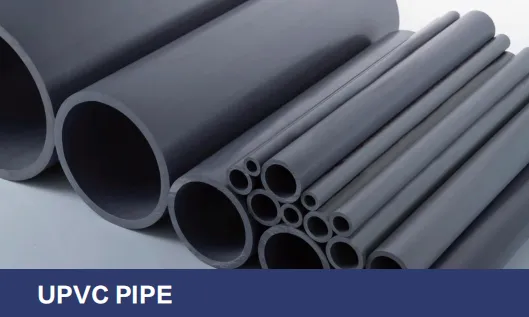
Before weighing their pros and cons, let's start with the fundamentals. UPVC pipes are made from polyvinyl chloride (PVC) without the addition of plasticizers—chemicals that make materials more flexible. This "unplasticized" composition gives UPVC its signature rigidity, strength, and resistance to corrosion. It's a material that's been trusted for decades in applications ranging from residential plumbing to large-scale municipal projects. When contractors refer to upvc pipe solutions , they're often talking about a range of products designed for pressure and non-pressure systems, including everything from water distribution lines to drain, waste, and vent (DWV) systems—the latter of which falls under pvc dwv pipe solutions , tailored specifically for removing wastewater and sewage.
HDPE, on the other hand, is a thermoplastic polymer known for its high strength-to-density ratio and flexibility. Unlike UPVC, HDPE is malleable, able to bend without cracking, and is joined using heat fusion rather than adhesives. Its molecular structure makes it resistant to impact, even in cold temperatures, and its smooth inner surface minimizes friction, allowing for efficient fluid flow. HDPE has gained popularity in recent years for its durability in harsh environments, from earthquake-prone regions to areas with frequent soil movement.
The most striking difference between UPVC and HDPE lies in their physical properties—and it all starts with their composition. UPVC's rigidity is both a strength and a limitation. Its stiff structure means it can withstand high internal pressure, making it ideal for applications like water mains or fire sprinkler systems. However, this rigidity also makes it less forgiving of ground shifts. In areas where soil settles, freezes, or heaves, UPVC pipes may crack or develop leaks at the joints if not properly supported.
HDPE, by contrast, is a "flexible" material. It can bend up to 20 degrees per linear meter without sustaining damage, allowing it to absorb ground movement caused by frost, earthquakes, or construction activity. This flexibility is a game-changer in regions with unstable terrain. For example, in coastal areas where soil erosion is common, HDPE pipes can shift with the landscape rather than breaking. "We once worked on a project in a flood-prone zone where HDPE's flexibility saved us from a disaster," recalls Maria Gonzalez, a civil engineer with 15 years of experience in infrastructure development. "A sudden storm caused the ground to shift nearly six inches, but the HDPE water line we installed didn't so much as leak. If we'd used UPVC, we'd have been looking at a costly repair."
That said, UPVC's rigidity has its own advantages. In vertical applications, such as risers in multi-story buildings, UPVC pipes stand straight without sagging, reducing the need for additional supports. They also maintain their shape under heavy external loads, like the weight of vehicles passing over buried utility lines. For pvc dwv pipe solutions , which are often installed in tight spaces like wall cavities or under floors, this rigidity ensures proper alignment, preventing clogs that can occur when pipes sag or bend.
Underground pipes face a host of threats: corrosive soils, fluctuating temperatures, and exposure to chemicals. Here's how UPVC and HDPE stack up:
Chemical Resistance: UPVC is highly resistant to most acids, alkalis, and organic solvents, making it a top choice for industrial wastewater systems or environments where soil contains high levels of minerals. This resistance is why pvc dwv pipe solutions are widely used in commercial kitchens and laboratories, where wastewater may contain oils, detergents, or mild chemicals. HDPE, while generally chemical-resistant, can be vulnerable to certain hydrocarbons and strong oxidizing agents. For example, prolonged exposure to concentrated sulfuric acid may degrade HDPE over time, whereas UPVC would hold up.
Temperature Performance: UPVC's performance can decline in extreme heat. While it handles cold temperatures well (it won't crack in freezing conditions if properly insulated), temperatures above 60°C (140°F) can cause it to soften, reducing its pressure-bearing capacity. This limits its use in hot water systems or industrial applications with high-temperature fluids. HDPE, by contrast, remains stable in a wider temperature range, from -40°C (-40°F) to 60°C (140°F) for standard grades, and even higher for specialized formulations. This makes it suitable for both cold and hot water distribution, as well as geothermal applications.
Longevity: Both materials are designed to last, but their lifespans depend on the application. UPVC pipes typically have a service life of 50–70 years when used in non-corrosive environments and properly installed. HDPE, however, often exceeds that, with some manufacturers warranting their products for 100 years or more. The key here is HDPE's resistance to degradation from UV light (though underground, UV exposure is minimal for both) and its ability to withstand impact without weakening over time. "We've dug up HDPE pipes that were installed in the 1980s, and they looked almost new inside," notes James Wilson, a senior project manager at a national construction firm. "UPVC can last just as long, but it's more dependent on avoiding physical stress."
The installation process can make or break a project's budget and timeline, and here, UPVC and HDPE diverge significantly.
Handling and Transportation: UPVC pipes are rigid and can be heavy, especially in larger diameters. A 6-inch UPVC pipe, for example, weighs roughly 15 pounds per foot, requiring equipment like cranes or forklifts to move on-site. Their rigidity also means they're more prone to cracking during transportation if not properly secured. HDPE pipes, by contrast, are lightweight—about 30% lighter than UPVC of the same diameter—and flexible, allowing them to be coiled for transport. A 6-inch HDPE coil can weigh as little as 8 pounds per foot and be unrolled by hand, reducing the need for heavy machinery. "On remote job sites where truck access is limited, HDPE is a lifesaver," says Carlos Mendez, a contractor specializing in rural infrastructure. "We can carry coils in the back of a pickup truck and install them with a small crew, whereas UPVC would require a flatbed and extra labor."
Joining Methods: UPVC pipes are typically joined using solvent cement, a chemical adhesive that fuses the pipe and fitting together. While effective, this process requires precision: the pipe ends must be clean, dry, and cut straight, and the cement must be applied evenly. It also requires curing time—usually 24 hours—before the system can be tested. For pvc dwv pipe solutions , which often involve multiple turns and fittings, this can slow down installation. HDPE, on the other hand, uses heat fusion, a process where the pipe ends are heated and pressed together to form a seamless joint. Fusion takes minutes, and the joint is often stronger than the pipe itself. This speed is a major advantage for tight deadlines. "On a recent municipal project, we installed 500 feet of HDPE in a day with just three workers," Mendez adds. "With UPVC, that same job would have taken two days, minimum."
Labor Costs: While UPVC pipes may have a lower upfront material cost, their installation often requires more labor. Solvent cement application is labor-intensive, and the need for precise alignment means crews must work slowly to avoid mistakes. HDPE's faster fusion process and lighter weight reduce labor hours, offsetting its higher initial material cost. For large-scale projects, this can translate to significant savings. A 2022 study by the American Society of Civil Engineers found that HDPE installation costs were 15–20% lower than UPVC for projects exceeding 1,000 feet of pipe.
When comparing UPVC and HDPE, it's critical to look beyond the initial price tag. UPVC pipes are generally cheaper to purchase per foot—sometimes by as much as 30% compared to HDPE. For small projects with tight budgets, this upfront savings can be appealing. However, lifecycle cost tells a different story. HDPE's durability and low maintenance needs often make it the more cost-effective choice over time.
Consider a 20-year lifecycle for a 10,000-foot underground water line. UPVC might cost $50,000 upfront, while HDPE costs $70,000. But if UPVC requires repairs every 5 years (due to cracks or joint failures) at $10,000 per repair, the total cost rises to $90,000. HDPE, with fewer repairs (perhaps one major repair in 20 years at $5,000), totals $75,000. "Clients often focus on the initial bid, but we always encourage them to think long-term," says Gonzalez. "A slightly higher upfront cost for HDPE can save them tens of thousands in maintenance down the line."
For pvc dwv pipe solutions , the calculus may shift. DWV systems operate at low pressure, so the risk of failure is lower, and repairs are often easier (since they're installed in accessible areas like basements or crawl spaces). In these cases, UPVC's lower upfront cost may make it the more practical choice. "For a residential development with 50 homes, using pvc dwv pipe solutions instead of HDPE can save $20,000–$30,000 upfront, and the maintenance needs are minimal," notes Wilson. "It's all about matching the material to the application."
The best pipe material depends on the specific demands of your project. Here's a breakdown of where UPVC and HDPE excel:
UPVC Ideal Uses:
HDPE Ideal Uses:
| Feature | UPVC Pipe Solutions | HDPE Pipe Solutions |
|---|---|---|
| Material Type | Rigid, unplasticized PVC | Flexible, high-density polyethylene |
| Flexibility | Low; prone to cracking under bending | High; can bend up to 20° per linear meter |
| Joint Method | Solvent cement (requires curing time) | Heat fusion (seamless, quick) |
| Temperature Resistance | Up to 140°F (60°C); vulnerable to heat | Up to 140°F (60°C) standard; higher with specialized grades |
| Chemical Resistance | Excellent (resistant to acids, alkalis) | Good (vulnerable to strong oxidizing agents) |
| Impact Resistance | Moderate; brittle in cold | Excellent; impact-resistant even in cold |
| Initial Cost | Lower (30–40% cheaper than HDPE) | Higher |
| Lifespan | 50–70 years (with proper installation) | 70–100+ years |
| Ideal Applications | DWV systems, cold water, low-pressure irrigation | Water mains, sewer lines, gas lines, unstable terrain |
In an era of growing environmental consciousness, the sustainability of building materials can't be ignored. Both UPVC and HDPE are recyclable, but their environmental footprints differ.
UPVC recycling is possible but less common due to the difficulty of separating it from other plastics. When recycled, it can be repurposed into products like vinyl flooring or window frames. However, UPVC production involves chlorine, a chemical that can release harmful byproducts if not handled properly. HDPE, by contrast, is one of the most recycled plastics globally. It can be melted down and reused repeatedly without significant loss of quality, making it a more sustainable choice in terms of circular economy.
Additionally, HDPE's long lifespan reduces the need for frequent replacements, lowering the overall environmental impact of production and disposal. "Sustainability isn't just about recycling—it's about building things that last," says Gonzalez. "A pipe that needs to be replaced every 20 years has a bigger carbon footprint than one that lasts a century, even if both are recyclable."
Choosing between UPVC and HDPE ultimately comes down to your project's unique needs. Here are a few questions to guide your decision:
When in doubt, consult with a supplier who specializes in underground pipe systems. Reputable upvc pipe solutions providers can offer insights into local conditions and help you weigh the pros and cons based on your project's specifics.
Underground pipes may be out of sight, but they're never out of mind for those responsible for building resilient infrastructure. UPVC and HDPE each bring unique strengths to the table: UPVC with its affordability and rigidity, HDPE with its flexibility and longevity. For pvc dwv pipe solutions and low-pressure applications, UPVC remains a reliable, cost-effective choice. For critical systems, harsh environments, or projects where long-term durability is key, HDPE's benefits are hard to ignore.
Ultimately, the best material is the one that aligns with your project's goals, budget, and environment. By understanding the nuances of each option, you can build underground systems that stand the test of time—quietly supporting communities for decades to come.
Recommend Products












