
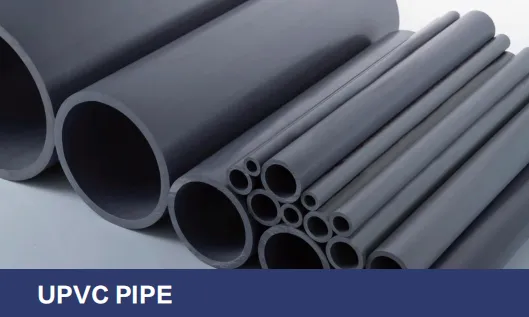
Let's set the scene: You're standing on a construction site, hard hat in hand, staring at a blueprint that calls for new plumbing lines. The project manager mentions that the last building they worked on had to replace its pipes after just 15 years—rust had eaten through the galvanized steel, causing leaks, water damage, and a massive headache. "We can't let that happen here," they say. Suddenly, the choice between pipe materials feels less like a technical detail and more like a make-or-break decision for the project's longevity. That's the reality for contractors, architects, and homeowners everywhere: when it comes to pipes, corrosion resistance isn't just a feature—it's the backbone of a reliable, long-lasting system. Today, we're diving into two heavyweights in the piping world: upvc pipe solutions and galvanized steel. Which one truly stands up to the test of time, especially when corrosion comes knocking?
Before we jump into the corrosion showdown, let's get clear on what these materials are. Galvanized steel has been around for over a century—think of it as the "old reliable" of piping. It's regular steel coated in a layer of zinc, which acts as a protective barrier against rust. For decades, it was the go-to for everything from residential plumbing to industrial pipelines. But then came UPVC, or unplasticized polyvinyl chloride—a plastic polymer that's rigid, lightweight, and, as we'll see, a game-changer in corrosion resistance. UPVC isn't just any plastic; it's engineered to be tough, heat-resistant, and impervious to many of the elements that plague metal pipes. And when we talk about upvc pipe solutions, we're referring to the full package: pipes, fittings, and expertise tailored to specific needs, whether it's a high-rise apartment's water supply or a hospital's drainage system.
Now, galvanized steel isn't going down without a fight. Its zinc coating does work—for a while. The idea is that the zinc corrodes first (a process called "sacrificial protection"), leaving the steel underneath intact. But here's the catch: once the zinc wears thin, the steel is exposed, and rust takes over. UPVC, on the other hand, has no metal to rust. It's a non-metallic material, which means it skips the entire "will it corrode?" question altogether. But is that enough to make it the winner? Let's dig deeper.
Let's start with UPVC. Picture a pipe that doesn't react to water, chemicals, or even salt. That's UPVC in a nutshell. Because it's plastic, it's inherently resistant to corrosion. Whether you're pumping acidic water from a factory, saltwater in a coastal home, or just regular tap water in a residential building, UPVC doesn't flinch. There's no metal to oxidize, no coating to wear off—just a smooth, solid material that holds its ground.
Take pvc dwv pipe solutions, for example. DWV stands for "drain, waste, and vent"—the pipes that carry away everything from kitchen sink water to shower runoff. These pipes are constantly exposed to detergents, soaps, and even mild acids from food scraps. Galvanized steel? It would start to corrode in these conditions over time, especially if the water is slightly acidic. But UPVC? It laughs it off. Contractors who specialize in residential plumbing often swear by pvc dwv pipe solutions because they've seen firsthand how these pipes stay corrosion-free for decades, even in harsh drainage environments.
Another scenario: coastal areas. Saltwater and salt air are metal's worst enemies. A galvanized steel pipe near the ocean might start showing rust within 5–7 years as the salt eats through the zinc coating. UPVC? I visited a beach house in Florida last year that had original UPVC pipes installed in the 1990s. The homeowner said they'd never had a single corrosion issue—no leaks, no rust, just smooth sailing. "We didn't even think about the pipes until we remodeled the kitchen," they told me. "The plumber said they looked as good as the day they were put in." That's the power of upvc pipe solutions in corrosive environments.
Now, let's give galvanized steel its due. When it's new, that zinc coating is impressive. It forms a barrier between the steel and the elements, preventing rust from forming. In dry, indoor environments—like the plumbing in a desert home—galvanized steel can last 40 years or more. I once met a plumber who worked on a 1950s home with original galvanized steel pipes that were still in decent shape. "They were installed in a crawl space that stayed dry year-round," he explained. "No moisture, no rust. But that's rare."
The problem is that zinc isn't invincible. Over time, water flow, chemicals, and even tiny scratches can wear away the coating. Once the steel underneath is exposed, rust takes over. And rust isn't just unsightly—it's destructive. It narrows the pipe's diameter, reducing water pressure. It flakes off, clogging fixtures and causing blockages. And eventually, it eats holes, leading to leaks. In areas with hard water, mineral deposits can speed up the process by trapping moisture against the steel. I spoke to a property manager in Chicago who had to replace an entire building's galvanized steel pipes after 20 years. "The rust was so bad, some pipes were half-blocked," he said. "We had tenants complaining about low water pressure, and then a pipe burst in the basement. It cost us $50,000 to fix—money we could have saved if we'd gone with UPVC."
Corrosion resistance is critical, but it's not the only player in this game. Let's break down how UPVC and galvanized steel compare in other key areas—because at the end of the day, you need a pipe that's not just corrosion-free, but also affordable, easy to install, and durable.
| Factor | UPVC Pipe Solutions | Galvanized Steel |
|---|---|---|
| Corrosion Resistance | Excellent—resistant to water, salt, chemicals, and rust | Moderate—zinc coating protects steel, but wears off over time (5–20 years in harsh environments) |
| Lifespan | 40–50+ years (often outlasts the building itself) | 20–40 years (varies widely based on environment) |
| Installation | Lightweight, easy to cut with basic tools; no welding or threading needed | Heavy, requires specialized tools for cutting/threading; welding may be needed for joints |
| Cost | Moderate upfront cost, but low long-term maintenance | Lower upfront cost, but higher maintenance/replacement costs over time |
| Maintenance | Almost none—just occasional inspections for leaks | Regular checks for rust; may need repairs or replacements every 10–15 years |
| Weight | Lightweight (easy to transport and install) | Heavy (requires more labor to move and mount) |
Let's talk about installation day. Anyone who's hauled a 20-foot galvanized steel pipe up a flight of stairs knows it's no joke. Galvanized steel is heavy—like, "need two people to carry one section" heavy. Cutting it requires a pipe cutter or hacksaw, and threading the ends (to connect fittings) takes specialized tools. Welding? Forget about it unless you've got a pro on site. All of this adds time and labor costs to the project.
UPVC, on the other hand, is a breeze. I watched a plumber install UPVC pipes in a bathroom remodel last month. He used a simple handsaw to cut the pipes to length, applied some solvent cement to the fittings, and twisted them together. Done. No heavy lifting, no power tools, just quick, straightforward work. "Galvanized steel would have taken twice as long," he told me. "And with UPVC, I don't have to worry about the threads stripping or the pipe warping when I cut it." For contractors, time is money—and upvc pipe solutions save both.
Galvanized steel might seem cheaper upfront. A 10-foot section of galvanized steel pipe can cost $10–$15, while UPVC might be $12–$20 for the same length. But here's the kicker: that initial savings disappears when you factor in maintenance and replacement. Let's do the math. Suppose you install galvanized steel pipes in a commercial building. They last 20 years before needing replacement, costing $10,000. UPVC pipes, costing $12,000 upfront, last 50 years. Over 50 years, you'd replace the galvanized steel pipes twice (total cost: $20,000) vs. once for UPVC ($12,000). Suddenly, UPVC is the cheaper option. Add in maintenance—galvanized steel needs regular checks for rust, which means paying a plumber $100–$200 per visit—and the gap widens even more.
Let's get specific. When should you choose upvc pipe solutions, and when might galvanized steel still make sense?
For most homes, UPVC is a no-brainer. From kitchen sinks to bathroom drains (hello, pvc dwv pipe solutions) to water supply lines, UPVC's corrosion resistance, lightweight design, and low maintenance make it ideal. Homeowners don't want to think about their pipes—they just want them to work. UPVC delivers that peace of mind. I recently helped a friend renovate their 1950s home; we replaced the old galvanized steel pipes with UPVC, and they're already noticing the difference: better water pressure (no rust buildup narrowing the pipes), and no more mysterious leaks in the basement. "Why didn't we do this sooner?" they asked.
Industrial settings—think factories, chemical plants, or wastewater treatment facilities—are where UPVC truly flexes its muscles. These environments are full of corrosive substances: acids, alkalis, solvents. Galvanized steel would corrode in months here, but UPVC? It thrives. A chemical plant in Texas I toured last year uses upvc pipe solutions to transport sulfuric acid. "We've had these pipes for 12 years, and they look brand new," the plant engineer told me. "Galvanized steel lasted 18 months before failing. UPVC was the best decision we ever made."
If you live near the ocean or in a humid area, galvanized steel is basically a ticking time bomb. The salt in the air accelerates corrosion, and high humidity keeps the metal damp, speeding up rust. UPVC, though? It's impervious to both. A hotel in (Sanya), China, which is right on the beach, switched to UPVC pipes 10 years ago. "Before, we replaced pipes every 8 years because of rust," the maintenance manager said. "Now, we don't even schedule pipe inspections—they just work."
To be fair, galvanized steel isn't obsolete. It still has a place in certain applications—like high-temperature environments (UPVC can warp if water gets too hot, though modern upvc pipe solutions are rated for most residential hot water systems) or projects where extreme structural strength is needed (though UPVC is surprisingly strong for its weight). But for the vast majority of plumbing and drainage needs, especially where corrosion is a concern, UPVC is the clear winner.
Let's wrap this up. When it comes to corrosion resistance, upvc pipe solutions are in a league of their own. They don't rust, they don't react to chemicals or salt, and they last for decades with minimal maintenance. Galvanized steel, while historically popular, simply can't compete in the long run—its zinc coating wears off, rust sets in, and replacement becomes inevitable. Add in UPVC's easier installation, lower long-term costs, and versatility across residential, commercial, and industrial projects, and the choice is clear.
Whether you're a contractor working on a high-rise, a homeowner remodeling your bathroom, or an engineer designing a chemical plant, upvc pipe solutions—and specialized options like pvc dwv pipe solutions—offer the reliability and durability you need. They're not just pipes; they're a long-term investment in your project's success.
At the end of the day, choosing between UPVC and galvanized steel isn't just about materials—it's about avoiding the stress of leaks, the cost of replacements, and the hassle of constant maintenance. UPVC doesn't just resist corrosion; it resists the chaos that comes with failing pipes. So the next time you're standing on that construction site, blueprint in hand, remember: the best pipe is the one you never have to think about again. And that, without a doubt, is upvc pipe solutions.
Recommend Products












