
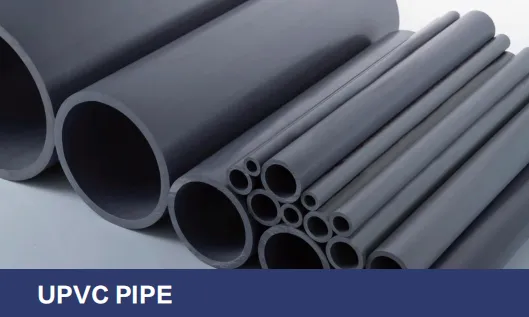
Walk into any construction site—whether it's a bustling residential complex, a state-of-the-art hospital, or a sleek commercial office—and you'll find a silent network working behind the scenes: piping systems. These unassuming channels carry water, waste, and essential fluids, forming the circulatory system of our built environment. Among the stars of this network are UPVC (Unplasticized Polyvinyl Chloride) pipes, celebrated for their strength, corrosion resistance, and affordability. But here's the truth: a UPVC pipe is only as good as the inspection it undergoes. Imagine a school where a leaking pipe damages textbooks in the library, or a hotel where a burst line ruins a guest's stay—these aren't just inconveniences; they're failures of quality. Inspection isn't about nitpicking; it's about protecting the spaces where we live, learn, and thrive. In this guide, we'll explore why UPVC pipe solutions inspection matters, what inspectors really look for, and how it shapes the reliability of the buildings we depend on.
At first thought, you might wonder: "A pipe is a pipe, right?" Wrong. The difference between a well-inspected UPVC pipe and a shoddy one is the difference between a 50-year lifespan and a 5-year disaster. Inspection is the unsung hero that safeguards three critical areas: safety, compliance, and long-term value. Let's break it down.
Safety is non-negotiable. UPVC pipes handle everything from drinking water in homes to chemical waste in factories. A tiny flaw—a hairline crack from poor manufacturing, a weak joint from hasty installation—can lead to leaks, mold growth, or even structural damage. In sensitive settings like hospitals, where "class a fireproof cpl inorganic board for hospital and school solutions" are chosen for their fire resistance, piping systems must meet equally strict standards to avoid endangering patients and staff. Even a small leak in a wall can compromise electrical systems, turning a minor issue into a major hazard.
Compliance keeps projects on track. Every region, from Saudi Arabia to Singapore, has building codes that dictate piping standards—think ASTM for the U.S., SASO for Saudi Arabia, or ISO for global projects. A "saudi arabia building materials supplier" knows that cutting corners on inspection can lead to failed audits, project delays, or even legal penalties. For example, UPVC pipes used in potable water systems must comply with NSF/ANSI 61, a standard that ensures they don't leach harmful chemicals. Inspection verifies that these standards aren't just printed on a label but built into every inch of pipe.
Long-term value saves money. A $100 pipe that fails in 5 years costs far more than a $150 pipe that lasts 50. Inspection catches issues early, preventing costly repairs, replacements, and downtime. For "residential building materials supplier" and "commercial building materials supplier" alike, a reputation for delivering inspected, reliable products builds trust with clients who know they won't be stuck fixing avoidable problems later.
Inspecting UPVC pipe solutions isn't a one-and-done task. It's a journey that starts in the supplier's lab and ends on the construction site. Let's follow the pipe from its earliest stages to its final installation.
Great pipes start with great ingredients. UPVC pipes are made from PVC resin mixed with additives like stabilizers (to resist heat and UV damage), impact modifiers (to prevent brittleness), and pigments (for color). A reputable "upvc pipe supplier" knows that skimping on raw materials is a recipe for disaster. Inspectors dive into this first step by verifying:
Resin quality: High-grade PVC resin has consistent molecular weight and purity. Low-grade resin, often mixed with recycled plastic, leads to weak pipes prone to cracking. Inspectors check resin certificates and run lab tests for purity—no compromises here.
Additive safety: Lead-based stabilizers were once common but are now banned in most countries due to health risks. Today, inspectors ensure suppliers use non-toxic alternatives like calcium-zinc stabilizers, critical for pipes carrying drinking water.
Compatibility: Additives must work together. Too much of one (like a pigment) can weaken the pipe; too little of another (like a stabilizer) leaves it vulnerable to sun damage. Suppliers like "ppr pipe and fitting supplier" often test additive blends in-house to avoid compatibility issues.
Once the raw materials pass muster, they head to the extrusion line, where they're melted, mixed, and shaped into pipes. This is where precision matters most. A single misstep in temperature or speed can create hidden flaws. Inspectors focus on:
Wall thickness: Imagine a pipe with one side 2mm thick and the other 1mm—guess which side will burst first? Inspectors use ultrasonic gauges to check thickness at 12 points around the pipe, ensuring it meets specs (usually ±0.3mm tolerance).
Dimensional accuracy: Outside diameter, inside diameter, and length must match design specs. A pipe that's too narrow won't fit fittings; one that's too long wastes material. Calipers and laser measuring tools are inspectors' best friends here.
Surface defects: Air bubbles, black specks (from burnt resin), or "fish eyes" (unmelted particles) weaken the pipe's structure. Inspectors walk the production line, examining pipes under bright lights, and flag even tiny flaws for rejection.
For specialized pipes like "pvc dwv pipe solutions" (Drain, Waste, Vent), inspectors add extra checks: smooth inner surfaces to prevent clogs and precise slope markings to ensure proper drainage. After all, a DWV pipe that traps waste is just as useless as a broken one.
A perfect pipe from the factory can still fail if mishandled before installation. That's why pre-installation checks are critical. Contractors and inspectors team up to examine pipes when they arrive on-site, looking for:
Physical damage: Dents from rough shipping, cracks from dropping, or kinks from improper storage—these are red flags. Even a small dent weakens the pipe's pressure resistance.
Certifications: Every pipe should come with a "birth certificate"—test reports proving it meets standards like ASTM D1785 (for pressure pipes) or ISO 1452-2. Inspectors cross-verify these with project requirements; a pipe certified for cold water shouldn't end up in a hot water system.
Visual cues: Discoloration (yellowing means overheating during manufacturing), uneven coloring, or rough edges are signs of poor quality. For "bamboo charcoal board wall panel supplier," surface finish matters for aesthetics—for pipes, it's a clue to structural integrity.
Even the best pipe fails with bad installation. Think of it like baking a cake: great ingredients mean nothing if you overmix the batter. Inspectors focus on the "how" of installation, checking:
Jointing technique: UPVC pipes use solvent cement to bond with fittings. Too little cement leads to leaks; too much creates blockages. Inspectors ensure installers clean pipes with primer (to remove dirt), apply cement evenly, and hold joints firmly for the recommended curing time (usually 30 seconds to 2 minutes, depending on size).
Support spacing: Pipes sag without proper support. A 1-inch UPVC pipe needs a bracket every 3 feet horizontally; a 4-inch pipe, every 5 feet. Inspectors measure these distances, ensuring brackets are secure and made of pipe-friendly materials (no sharp metal edges that can scratch or corrode).
Alignment: Pipes must be straight or sloped correctly (for DWV systems). A misaligned joint creates stress, leading to cracks over time. Inspectors use levels and string lines to check alignment—precision here prevents future headaches.
After installation, it's time to put the system to the test. Inspectors simulate real-world conditions to ensure pipes can handle daily use—and then some.
Hydrostatic pressure test: For pressure pipes (like those carrying drinking water), the system is filled with water and pressurized to 1.5 times its maximum operating pressure (MOP) for 1 hour. If pressure drops, there's a leak. For example, a pipe rated for 100 psi gets tested at 150 psi—no exceptions.
Flow testing (DWV systems): For drainage pipes, inspectors run water at full capacity to check for backups or slow flow. Smoke testing (pumping non-toxic smoke into the system) reveals hidden leaks in walls or under floors—critical for preventing mold and structural damage.
Long-term durability tests: While not done on-site, suppliers conduct accelerated aging tests, exposing pipes to UV light, extreme temperatures, and chemicals to predict lifespan. For "class a fireproof cpl inorganic board for hospital and school supplier," fire tests are mandatory—and similarly, UPVC pipes in fire systems undergo flame resistance checks.
Not all plastic pipes serve the same purpose. UPVC, PVC DWV, and PPR pipes each have unique strengths. Understanding their differences helps choose the right pipe—and inspect it properly. Here's how they stack up:
| Feature | UPVC Pipe Solutions | PVC DWV Pipe Solutions | PPR Pipe and Fitting Solutions |
|---|---|---|---|
| Material | Unplasticized PVC (rigid, no plasticizers) | PVC with plasticizers (more flexible) | Polypropylene random copolymer (flexible, heat-resistant) |
| Best For | Potable water, irrigation, industrial piping (cold fluids) | Drainage, waste, vent systems (non-pressurized) | Hot/cold water supply, heating systems |
| Pressure Rating | High (up to 200 psi) | Low (gravity-fed only) | Moderate (up to 160 psi at 73°F) |
| Temp Resistance | Up to 140°F (60°C) | Up to 140°F (60°C) | Up to 203°F (95°C) |
| Inspection Focus | Wall thickness, pressure testing | Slope, flow testing, venting | Fusion joint quality, temperature cycling |
This table shows why inspection varies by pipe type. A "pvc dwv pipe supplier" prioritizes slope and flow, while a "ppr pipe and fitting supplier" focuses on fusion joints (since PPR uses heat fusion instead of solvent cement). UPVC, with its balance of pressure resistance and chemical stability, needs a little of everything—making its inspection a true test of thoroughness.
Even seasoned inspectors can slip up. Here are the pitfalls to watch for—and how to steer clear:
Mistake 1: Ignoring small defects. A tiny crack or a spot of discoloration might seem minor, but it's often a sign of bigger issues. Slow down, document every flaw, and never assume "it'll hold."
Mistake 2: Forgetting the environment. UPVC pipes in direct sunlight need UV protection; those in cold climates need impact modifiers to resist freezing. Inspectors must factor in the pipe's "home" when checking specs.
Mistake 3: Trusting certifications blindly. A supplier's ISO certificate is a start, but it doesn't guarantee every pipe is perfect. Always run your own tests—especially for critical projects like hospitals.
Mistake 4: Skipping post-installation checks. A pipe might pass pressure tests today but fail in a month if joints weren't cured properly. Follow up with a second test after a week to catch slow leaks.
At the end of the day, UPVC pipe solutions inspection is about more than compliance—it's about trust. When a "saudi arabia building materials supplier" delivers inspected pipes, they're promising that those pipes will protect the school, hospital, or home they're built into. When an inspector signs off on an installation, they're saying, "This system is safe for decades to come."
So the next time you turn on the tap or flush the toilet, take a moment to appreciate the unseen work of inspection. It's the quiet guardian that turns raw materials into reliable infrastructure, and construction sites into communities. Because in the world of building, quality isn't an option—it's the only option.
Recommend Products












