
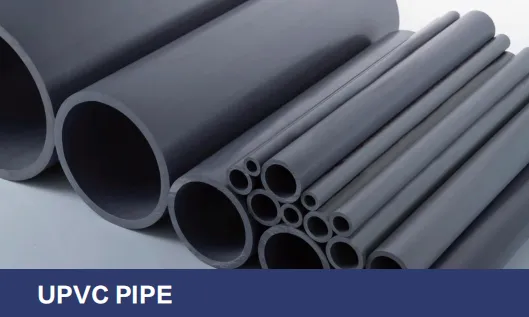
Walk into any home, office, or industrial facility, and you'll likely overlook one of the most critical components keeping everything running smoothly: the pipes hidden behind walls, under floors, and beneath the ground. These unassuming tubes carry water for our morning showers, channel waste away from our kitchens, and ensure heating systems distribute warmth evenly. But when a pipe fails—whether due to cracking under pressure, warping in high temperatures, or corroding over time—the consequences can be messy, expensive, and stressful. For contractors, homeowners, and project managers alike, choosing the right piping material isn't just a technical decision; it's a choice that impacts daily life, project timelines, and long-term peace of mind. In recent years, one material has risen to the top as a reliable, versatile solution: UPVC. Short for unplasticized polyvinyl chloride, UPVC pipes have become a go-to for everything from residential plumbing to large-scale commercial projects. Today, we're diving deep into two of their most impressive features—heat resistance and pressure handling capabilities—and why they matter in real-world applications.
Before we get into the nitty-gritty of heat and pressure, let's clarify what makes UPVC different from the other "PVC" pipes you might have heard of. You've probably encountered "PVC DWV pipe" in hardware stores—those are designed for drain, waste, and vent systems, where flexibility and cost are prioritized over high pressure or temperature resistance. UPVC, on the other hand, is "unplasticized," meaning it doesn't contain the plasticizers that make regular PVC more flexible but less durable. This key difference gives UPVC a stiffer, stronger structure, making it ideal for applications where rigidity, chemical resistance, and long-term performance are non-negotiable. Think of it as the workhorse of the piping world—quietly reliable, even in demanding conditions.
But UPVC isn't just about strength. It's also surprisingly lightweight, easy to install, and resistant to corrosion from chemicals, salts, and minerals—common issues that plague metal pipes over time. For a upvc pipe supplier , these qualities make UPVC a versatile product that can serve diverse markets, from residential homes to hospitals, schools, and industrial plants. And when paired with its impressive heat and pressure handling abilities, it's no wonder UPVC has become a staple in modern construction.
Heat is one of the biggest enemies of many piping materials. Excessive temperatures can cause pipes to soften, warp, or even melt, leading to leaks, blockages, or complete system failure. In applications like hot water distribution, industrial processing, or even outdoor installations exposed to direct sunlight, a pipe's ability to withstand heat isn't just a nice-to-have—it's essential. So how does UPVC stack up?
UPVC pipes are engineered to handle a wide range of temperatures, typically from 0°C (32°F) up to 60°C (140°F) for continuous use. This makes them suitable for most residential and commercial hot water systems, where water temperatures rarely exceed 55°C (131°F). But what about extreme cases? For example, in a hotel kitchen where dishwashers and industrial sinks use near-boiling water, or a school laboratory where heated chemicals might flow through pipes? Here, UPVC's heat resistance still holds strong, as long as the temperature stays within its rated limits. Unlike some materials that become brittle in cold weather, UPVC also performs well in low temperatures, making it a reliable choice for both hot and cold water systems in regions with fluctuating climates.
The secret to UPVC's heat resistance lies in its molecular structure. Without plasticizers, the polymer chains in UPVC are tightly packed, creating a rigid matrix that resists softening when heated. This structure also prevents the material from deforming under thermal expansion, a common problem in pipes that carry hot liquids. When water heats up, it expands, putting stress on pipe walls. UPVC's rigidity helps it absorb this stress without warping, ensuring a tight seal at joints and connections—critical for preventing leaks.
In 2023, a mid-sized hotel in Riyadh, Saudi Arabia, embarked on a plumbing renovation to upgrade its aging copper pipes. The hotel's maintenance team had struggled with frequent leaks in the hot water system, especially in the guest bathrooms on the upper floors. Copper, while durable, had corroded over time due to the city's hard water, and the frequent temperature changes from hot showers had caused joints to loosen. After consulting with a local upvc pipe supplier , the team chose UPVC pipes for the hot water lines. Within six months, leak reports dropped by 90%, and the hotel saved on maintenance costs. The project manager noted, "We were initially worried about UPVC handling the hot water, but the supplier assured us it was rated for our temperature needs. Now, we're recommending it to other hotels in the area."
If heat resistance is about withstanding temperature extremes, pressure handling is about enduring the force of water (or other fluids) flowing through the pipes. Every time you turn on a faucet, flush a toilet, or run a washing machine, water moves through pipes under pressure. In commercial settings—like high-rise buildings, factories, or irrigation systems—this pressure can be significantly higher, requiring pipes that can handle intense, constant force without cracking or bursting.
UPVC pipes excel here, thanks to their inherent strength and carefully engineered design. The key factors that determine a pipe's pressure handling capability include its material thickness (often referred to as "schedule"), diameter, and the quality of its manufacturing. Most UPVC pipes are available in different schedules, such as Schedule 40 and Schedule 80, with higher schedules indicating thicker walls and higher pressure ratings. For example, a 2-inch Schedule 40 UPVC pipe can typically handle pressures up to 160 psi (pounds per square inch), while a Schedule 80 pipe of the same diameter can handle up to 240 psi—more than enough for most residential and light commercial applications.
But UPVC's pressure resistance isn't just about thickness. The material itself is naturally rigid and impact-resistant, meaning it can withstand sudden pressure spikes—like those caused by water hammer (the loud "bang" you sometimes hear when a faucet is shut off quickly). Unlike metal pipes, which can rust and weaken over time, UPVC is corrosion-resistant, so its pressure handling capabilities don't degrade with age. This is especially important in areas with aggressive water chemistry, where minerals or salts can eat away at metal pipes, leading to premature failure.
For projects that require even higher pressure handling—such as industrial cooling systems or fire sprinkler lines—some might turn to cpvc sch80 high pressure piping system supplier options. CPVC (chlorinated polyvinyl chloride) is similar to UPVC but with added chlorine, making it more heat-resistant (up to 93°C/200°F) and suitable for higher pressures. However, UPVC still holds its own for most everyday applications, offering a balance of strength, cost-effectiveness, and ease of installation that's hard to beat.
To truly appreciate UPVC's heat and pressure capabilities, it helps to see how it stacks up against other common piping materials. Let's break down the key differences between UPVC, PPR (polypropylene random copolymer), PVC DWV, and metal pipes in terms of heat resistance, pressure handling, and practical use cases.
| Material | Max Continuous Temperature | Typical Pressure Rating (2" Pipe, Schedule 40) | Best For | Pros | Cons |
|---|---|---|---|---|---|
| UPVC | 60°C (140°F) | 160 psi | Residential/commercial hot/cold water, irrigation, chemical transport | Corrosion-resistant, rigid, low cost, easy to install | Not suitable for temperatures above 60°C; less flexible than PPR |
| PPR (from ppr pipe and fitting supplier ) | 95°C (203°F) | 100 psi (at 70°C) | Hot water systems, radiant heating | Flexible, heat-resistant, good for high-temperature applications | Lower pressure rating than UPVC; more expensive |
| PVC DWV (from pvc dwv pipe supplier ) | 40°C (104°F) | Not rated for pressure (gravity flow only) | Drain, waste, vent systems | Lightweight, cost-effective for non-pressurized applications | Cannot handle pressure or high temperatures |
| Copper | 120°C (248°F) | 200+ psi (depends on thickness) | High-end residential, medical facilities | Durable, heat-resistant, long lifespan | Expensive, prone to corrosion, heavy, hard to install |
As the table shows, UPVC strikes a unique balance: it handles higher pressures than PPR, resists corrosion better than copper, and works for both hot and cold water (unlike PVC DWV). For most projects where temperature and pressure fall within moderate ranges, UPVC is the practical, cost-effective choice. It's no wonder that upvc pipe supplier companies report high demand across residential, commercial, and light industrial sectors.
Even the best piping material is only as good as the supplier behind it. When selecting a upvc pipe supplier , there are a few key factors to consider to ensure you're getting a quality product that will perform as expected. First, look for suppliers who adhere to international standards, such as ASTM (American Society for Testing and Materials) or DIN (Deutsches Institut für Normung). These standards ensure that pipes are tested for heat resistance, pressure handling, and dimensional accuracy—critical for safety and performance.
Next, consider the supplier's range of upvc pipe solutions . A reputable supplier should offer a variety of sizes, schedules, and fittings (like elbows, tees, and valves) to meet the needs of different projects. This saves time and reduces the risk of compatibility issues between pipes and fittings. It's also worth asking about the supplier's quality control processes: Do they test each batch of pipes for defects? Can they provide certificates of compliance? Transparency here is a good sign of reliability.
Finally, don't overlook customer support. A good supplier should be able to answer technical questions about heat resistance, pressure ratings, and installation best practices. They might even offer training for contractors or project managers, ensuring that the pipes are installed correctly—another factor that impacts long-term performance. After all, even the strongest UPVC pipe can fail if installed improperly, such as using the wrong adhesive or not aligning joints correctly.
Installing UPVC pipes is relatively straightforward, but a few best practices can ensure they perform optimally for decades. First, always use the right tools: a pipe cutter (not a saw, which can leave rough edges), a deburring tool to smooth cut ends, and a solvent cement designed specifically for UPVC. Applying the cement evenly to both the pipe and fitting, then pushing them together firmly and holding for 30 seconds, creates a strong, leak-proof bond. It's also important to support long runs of pipe with hangers or brackets to prevent sagging, which can strain joints over time.
When it comes to maintenance, UPVC pipes are low-maintenance compared to metal alternatives. They don't require painting or corrosion protection, and their smooth inner surface resists scale buildup—meaning water flow remains consistent over time. If a clog does occur, UPVC can handle standard drain cleaning methods, such as plungers or snakes, without damage. For commercial systems, regular inspections of joints and connections (especially in areas with high vibration or temperature changes) can catch potential issues early, before they become major problems.
As construction practices evolve, so too do the demands on piping materials. Today's projects require solutions that are not only strong and reliable but also sustainable. UPVC is well-positioned to meet this need: it's recyclable, energy-efficient to produce, and has a long lifespan (often 50+ years), reducing the need for frequent replacements. Some manufacturers are even developing eco-friendly versions of UPVC, using recycled materials or bio-based additives, without compromising on heat or pressure performance.
Another trend is the integration of smart technology into piping systems, such as sensors that monitor pressure and temperature in real time. UPVC's compatibility with these sensors—thanks to its non-conductive properties—makes it a future-proof choice for smart buildings and cities. Imagine a hospital where UPVC pipes equipped with sensors alert maintenance staff to a pressure drop before a leak occurs, or a residential complex where temperature sensors ensure hot water stays within safe limits. With UPVC as the foundation, these innovations become not just possible, but practical.
At the end of the day, choosing a piping material is about balancing performance, cost, and peace of mind. UPVC pipes deliver on all three fronts, with heat resistance that handles most hot water needs, pressure handling capabilities that stand up to daily use, and a durability that lasts for decades. Whether you're a homeowner upgrading your plumbing, a contractor working on a commercial project, or a facility manager maintaining a large building, UPVC offers a reliable, versatile solution that's hard to match.
By partnering with a trusted upvc pipe supplier and following best practices for installation and maintenance, you can ensure that your UPVC pipe system performs flawlessly, even in demanding conditions. From the quiet reliability of a residential bathroom to the high-stakes environment of a hospital or school, UPVC pipes prove time and again that they're more than just a construction material—they're the backbone of modern infrastructure, keeping our world flowing smoothly, safely, and efficiently.
Recommend Products












