
In the heart of Saudi Arabia, where the sun blazes for over 300 days a year and annual rainfall averages less than 100 millimeters, water isn't just a resource—it's a lifeline. For homeowners in Riyadh, business owners in Jeddah, and farmers in Al-Qassim, the struggle to manage water scarcity is a daily reality. Leaky pipes, corroded infrastructure, and inefficient systems waste millions of liters annually, exacerbating a crisis that affects everything from household routines to industrial productivity. But what if the solution to preserving this precious resource lies in the very pipes that carry it? Enter UPVC pipe solutions—a game-changing innovation that's quietly revolutionizing water conservation in arid regions, supported by dedicated suppliers committed to sustainable infrastructure.
Water scarcity in Saudi Arabia isn't new, but its impact is growing. With a population exceeding 35 million and urbanization accelerating, demand for freshwater has surged by 500% in the past three decades, according to the Ministry of Environment, Water, and Agriculture. Yet, up to 30% of the country's treated water is lost before it reaches taps—much of it due to outdated, leak-prone piping systems. In rural areas, this number climbs even higher, with some communities losing nearly half their water supply to cracks, corrosion, and poor installation.
For a saudi arabia building materials supplier operating in this context, the challenge isn't just about selling products—it's about addressing a national urgency. "We don't just supply pipes," says a senior engineer at a leading regional supplier. "We supply peace of mind. A family in Dammam shouldn't have to choose between watering their garden and bathing their children because a rusted pipe is wasting water underground."
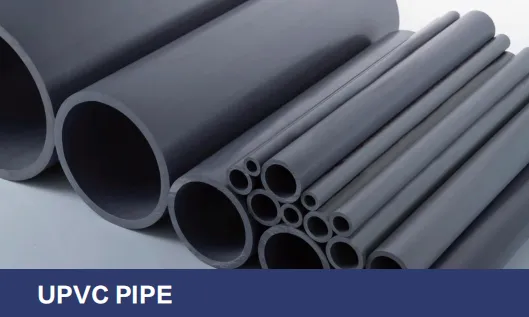
UPVC (Unplasticized Polyvinyl Chloride) pipes have emerged as a beacon of hope in this crisis, and for good reason. Unlike traditional materials like galvanized steel, concrete, or even standard PVC, UPVC is engineered for durability in harsh environments—exactly the kind found in Saudi Arabia. Here's why they stand out:
UPVC pipes boast a seamless, precision-fit design that minimizes joint connections—the most common culprit for leaks. Their smooth inner surface reduces friction, allowing water to flow efficiently without pressure buildup, which often leads to cracks in older systems. For a upvc pipe supplier serving coastal cities like Jeddah, where salt-laden air accelerates corrosion, this feature is non-negotiable. "We've seen metal pipes corrode within 5 years in coastal areas," notes a technical consultant. "UPVC? We have projects from 2010 still running with zero leaks."
Saudi Arabia's climate is unforgiving: extreme temperatures (reaching 50°C in summer), high humidity in coastal regions, and saline soil that eats away at traditional materials. UPVC pipes are UV-resistant, meaning they won't degrade under relentless sunlight, and their chemical inertness makes them impervious to corrosion from salt, minerals, or even aggressive cleaning agents. This resilience translates to longer lifespans—up to 50 years—compared to 15-20 years for galvanized steel.
Anyone who's installed heavy concrete or steel pipes knows the hassle: cranes, specialized labor, and extended project timelines. UPVC pipes, by contrast, are lightweight and easy to handle, cutting installation time by up to 40%. For a pvc dwv pipe supplier working on a high-rise residential project in Riyadh, this efficiency isn't just about speed—it's about cost. "Faster installation means lower labor bills, and lighter materials reduce transportation costs," explains a project manager. "Those savings get passed to clients, making sustainable infrastructure accessible to more communities."
| Material | Expected Lifespan (Years) | Corrosion Resistance | Installation Time (Per 100m) | Water Loss Reduction |
|---|---|---|---|---|
| UPVC | 40-50 | Excellent (resists salt, chemicals, UV) | 8-10 hours | Up to 70% vs. old steel pipes |
| Galvanized Steel | 15-20 | Poor (corrodes in saline/acidic soils) | 18-22 hours | Minimal (prone to leaks after 5+ years) |
| Concrete | 25-30 | Moderate (susceptible to cracks from ground movement) | 24-30 hours | 30-40% vs. steel, but heavy and rigid |
| Copper | 20-25 | Good (but expensive and prone to pinhole leaks) | 15-18 hours | 40-50% vs. steel, but high cost limits scalability |
UPVC pipes aren't a one-size-fits-all solution—they're a versatile tool that adapts to diverse needs across Saudi Arabia's built environment. Here are some key applications:
In Riyadh's rapidly growing suburbs, developers are turning to upvc pipe solutions to ensure new homes are water-efficient from day one. From supply lines to drainage systems (where pvc dwv pipe solutions shine), UPVC ensures that every liter delivered to a household stays there. "We recently completed a 500-unit complex in East Riyadh," says a project engineer. "By using UPVC, we reduced projected water loss from 25% (the city average) to under 5%. That's enough to supply an additional 125 families annually."
Hospitals, schools, and factories have unique water needs—hospitals require sterile, reliable systems; factories need to handle high-pressure flows; schools must prioritize safety. UPVC's Class A fire resistance (a feature highlighted by suppliers of specialized products like "class a fireproof cpl inorganic board") and chemical resistance make it ideal for these settings. A Riyadh-based food processing plant recently switched to UPVC for its cooling water system, cutting water waste by 60% and maintenance costs by 40% in just two years.
Agriculture accounts for 80% of Saudi Arabia's water usage, making it a critical area for conservation. UPVC's durability in irrigation systems—resisting clogging from sand and mineral deposits—has transformed farms in Al-Hassa, a major agricultural hub. "Traditional aluminum pipes would get blocked by sand, requiring weekly cleaning," says a farmer. "UPVC's smooth surface self-cleans, and we've increased crop yields by 15% because water reaches plants consistently."
In 2022, a small town outside Dammam faced a crisis: its aging steel water network was losing 40% of its supply to leaks, leaving residents with just 2 hours of running water daily. Enter a local saudi arabia building materials supplier specializing in UPVC solutions. The supplier partnered with the municipality to replace 12 km of pipes with UPVC, including DWV systems for wastewater management.
Within six months, the results were staggering: water loss dropped to 8%, and residents now have 24/7 access. "The difference is life-changing," says a local teacher. "My students no longer miss school to collect water, and our community garden—once a dry patch—now grows tomatoes and herbs. It's not just about pipes; it's about dignity."
Water scarcity in arid regions like Saudi Arabia isn't going away—but neither are the solutions. UPVC pipes, supported by dedicated suppliers and forward-thinking infrastructure planning, offer a path to a more water-secure future. They're not just building materials; they're investments in communities, in businesses, and in the planet.
As a upvc pipe supplier in Jeddah puts it: "We don't sell pipes—we sell the promise that tomorrow's taps will flow as reliably as today's. In a country where water is worth its weight in gold, that's a promise worth keeping."
Recommend Products












