
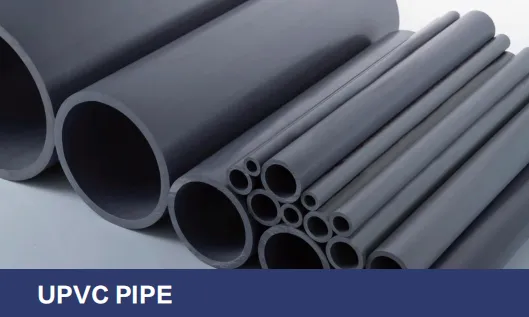
If you've ever walked through a hardware store or peeked under the sink in your kitchen, you've probably seen them—those white or gray pipes snaking through walls, under floors, or connecting to your water heater. Chances are, many of those pipes are made of UPVC. But what exactly is UPVC, and why does it matter in the world of building materials? Whether you're a homeowner planning a plumbing upgrade, a small business owner setting up a commercial space, or just someone curious about the materials that make our buildings work, this guide will break down the science behind UPVC pipe solutions in simple, everyday terms. We'll explore how UPVC is made, what makes it unique, and how to choose the right products for your project—including tips on finding a reliable upvc pipe supplier and pipes fittings supplier.
First things first: UPVC stands for "Unplasticized Polyvinyl Chloride." Let's unpack that. Polyvinyl Chloride (PVC) is a type of plastic made from vinyl chloride monomers—tiny molecules that link together to form long chains called polymers. But here's the key: regular PVC often includes plasticizers, chemicals that make it flexible (think vinyl shower curtains or garden hoses). UPVC, on the other hand, skips the plasticizers. That might sound like a small change, but it makes a huge difference in how the material behaves.
So, why no plasticizers? Without them, UPVC becomes rigid, strong, and more resistant to heat and chemicals. It's like the difference between a rubber band (flexible PVC) and a hard plastic ruler (UPVC). This rigidity is what makes UPVC ideal for pipes—it can handle pressure, resist bending under weight, and stand up to the wear and tear of daily use in homes, schools, hospitals, and factories.
To make UPVC, manufacturers start with vinyl chloride monomers, which undergo a process called polymerization (fancy word for "linking together") to form PVC resin. Then, they add stabilizers (to prevent degradation from sunlight or heat), impact modifiers (to make it less brittle), and pigments (for color). No plasticizers, though—that's the "unplasticized" part. The mixture is then melted, shaped into pipes using extrusion (imagine squeezing toothpaste out of a tube, but with plastic), and cut to length. The result? A pipe that's lightweight, durable, and ready to tackle everything from carrying drinking water to draining wastewater.
What makes UPVC such a popular choice for pipes? Let's dive into the material science that gives it its "superpowers." These properties aren't just random—they're carefully engineered through the manufacturing process, and they directly impact how well UPVC pipes work in real-world settings.
1. Chemical Resistance: Your Pipes' Shield Against Corrosion
One of UPVC's biggest claims to fame is its ability to resist chemicals. Unlike metal pipes (which can rust or corrode when exposed to salt, chlorine, or acidic water), UPVC is inert to most acids, alkalis, and salts. That's why you'll often find UPVC pipes in places like swimming pools (where chlorine levels are high), labs (with chemical waste), or even agricultural settings (carrying fertilizers). The polymer structure of UPVC forms a tight, non-porous barrier, so chemicals can't seep in or break down the material over time. For homeowners, this means fewer leaks and longer-lasting plumbing—no more replacing rusted pipes every decade.
2. Durability: Built to Last (Decades, Actually)
UPVC pipes are tough. We're talking 50+ years of service life tough, if installed and maintained properly. Why? Because they don't rot, rust, or degrade from UV light (thanks to those stabilizers we mentioned earlier). Even underground, where pipes are exposed to moisture and soil bacteria, UPVC holds its own. Compare that to galvanized steel pipes, which might last 20-30 years, or copper pipes, which can develop pinhole leaks after 25-50 years. For a beginner, this longevity is a big win—investing in UPVC means you won't have to think about repiping again anytime soon.
3. Lightweight but Strong: The Perfect Balance
Despite being rigid, UPVC is surprisingly lightweight. A 10-foot length of 2-inch UPVC pipe weighs around 5 pounds, while a similar steel pipe might weigh 20+ pounds. This makes installation a breeze—you won't need a team of people to carry it, and you can cut it with basic tools (more on that later). But don't let the lightness fool you: UPVC can handle significant pressure. SCH40 UPVC pipes (a common type for water supply) can withstand pressures up to 160 psi (pounds per square inch), which is more than enough for most residential and commercial water systems (typical household water pressure is 40-80 psi).
4. Fire Resistance: A Safer Choice for Public Spaces
Safety first, right? UPVC is self-extinguishing, meaning it stops burning once the flame source is removed. It also doesn't release toxic fumes in a fire, unlike some plastics. While it's not "fireproof" in the sense that it won't melt at very high temperatures (it starts softening around 140°F), its low flammability makes it a good fit for buildings like schools, hospitals, and apartments—places where fire safety is a top priority. Some UPVC pipes even meet Class B or Class C fire ratings, depending on the additives used, which is a key consideration for commercial projects.
Now that you know what UPVC is and why it's great, let's talk about the different types of UPVC pipe solutions available. UPVC isn't a one-size-fits-all material—manufacturers design specific pipes for specific jobs, based on pressure, temperature, and use case. Here are the most common types you'll encounter:
1. UPVC Pressure Pipes: For When Water Needs a Push
These pipes are built to handle pressurized water systems, like the ones that bring fresh water into your home or office. They're rated by their "schedule," which refers to wall thickness—thicker walls mean higher pressure tolerance. The two most common schedules are SCH40 and SCH80. SCH40 pipes are the standard for most residential and light commercial use (e.g., drinking water lines, irrigation). SCH80 pipes have thicker walls and can handle higher pressures, making them ideal for industrial settings or areas with high water demand (like hotels or factories). When shopping, look for labels like "PVC-U SCH40 pressure piping system"—this tells you the pipe meets industry standards for pressure resistance.
2. UPVC DWV Pipes: Drains, Wastes, and Vents (Oh My!)
DWV stands for "Drain, Waste, and Vent," and these pipes are all about moving wastewater and sewage out of buildings. Unlike pressure pipes, DWV pipes don't need to handle high pressure—they rely on gravity to flow. Instead, their design focuses on smooth interiors (to prevent clogs) and proper sizing (to handle the volume of water and waste). You'll find DWV pipes under sinks, in showers, and in the main sewage lines of homes and businesses. They're usually white or gray and have larger diameters than pressure pipes (think 1.5 inches and up).
3. Specialized UPVC Solutions: For Unique Needs
Beyond standard pressure and DWV pipes, there are specialized UPVC solutions for specific industries. For example, some UPVC pipes are treated with antimicrobial additives to prevent the growth of bacteria—perfect for hospitals or schools where hygiene is critical. Others are designed for extreme temperatures, like hot water systems (though UPVC has limits here—more on that later). You might also find UPVC well casing pipes (used in water wells) or electrical conduit pipes (to protect wires). A good upvc pipe supplier will offer a range of these specialized options, so you can get exactly what your project needs.
UPVC isn't the only pipe material out there. You've probably heard of PPR (Polypropylene Random Copolymer), PEX (Cross-Linked Polyethylene), or even regular PVC (with plasticizers). So how do you know which one is right for your project? Let's compare UPVC to these common alternatives using a simple table—no confusing jargon, just the facts you need to decide.
| Material | Best For | Cost (Low to High) | Expected Lifespan | Installation Difficulty | Chemical Resistance | Heat Tolerance |
|---|---|---|---|---|---|---|
| UPVC | Water supply, drainage, chemical transport | Low-Medium | 50+ years | Easy (solvent cement or threaded fittings) | Excellent (resists most acids/alkalis) | Up to 140°F (avoid hot water above this) |
| PPR (Polypropylene Random Copolymer) | Hot and cold water systems | Medium | 40-50 years | Moderate (heat fusion required) | Good (resists water and mild chemicals) | Up to 200°F (great for hot water) |
| PEX (Cross-Linked Polyethylene) | Residential plumbing, radiant heating | Medium-High | 40-50 years | Easy (crimp or push-fit fittings) | Good (but not for harsh chemicals) | Up to 200°F (flexible, works in tight spaces) |
| PVC (Plasticized) | Garden hoses, flexible ducts | Low | 10-20 years | Easy (clamps or glued fittings) | Fair (can degrade with UV exposure) | Up to 120°F (not for high pressure/temp) |
So, when should you choose UPVC? If you need a budget-friendly, durable pipe for cold water supply, drainage, or chemical transport, UPVC is hard to beat. It's also a solid choice if you want something easy to install yourself (no special tools needed for basic jobs). For hot water systems, though, PPR or PEX might be better since they handle higher temperatures. And if flexibility is key (like navigating around tight corners in walls), PEX's bendable nature could be a plus. The takeaway? UPVC is a workhorse, but it's not the only option—always match the pipe to the job.
UPVC pipe solutions aren't just for plumbers—they're everywhere, from your local coffee shop to the hospital down the street. Let's take a look at some of the most common places you'll find UPVC pipes in action:
Residential Buildings: The Backbone of Home Plumbing
In most homes, UPVC pipes are the unsung heroes of the plumbing system. They carry cold water from the main line to your faucets, showers, and washing machine. They also handle drainage: sink water, shower runoff, and even toilet waste (via DWV pipes). Because UPVC is lightweight, it's easy to install in tight spaces (like between floor joists or inside walls). Homeowners love it because it's affordable, quiet (no clanging like metal pipes), and low-maintenance—just check for leaks occasionally and you're good to go.
Commercial Spaces: Hospitals, Schools, and Beyond
Commercial buildings have unique needs, and UPVC rises to the challenge. In hospitals, for example, UPVC's chemical resistance makes it ideal for carrying sanitizing solutions or medical waste. Schools benefit from its fire resistance and low cost—important for tight budgets. Restaurants use UPVC for drainage systems, where grease and food particles won't corrode the pipes. Even hotels rely on UPVC for consistent water pressure in guest rooms. For commercial projects, working with a upvc pipe supplier that offers customizable solutions (like different lengths or colors) can make a big difference in meeting building codes and design needs.
Industrial Settings: Tough Jobs Require Tough Pipes
Factories, chemical plants, and agricultural facilities need pipes that can handle harsh conditions—and UPVC delivers. It's used to transport fertilizers, acids, and industrial wastewater, thanks to its chemical resistance. In farming, UPVC irrigation pipes efficiently carry water to crops without rusting or clogging. And in construction, UPVC pipes often serve as temporary drainage systems on job sites, where durability and easy setup are key.
Okay, so you're sold on UPVC—now how do you find a supplier you can trust? Not all upvc pipe suppliers are created equal, and choosing the wrong one can lead to shoddy products, missed deadlines, or hidden costs. Here's what to keep in mind:
Remember, a good pipes fittings supplier is a partner in your project—not just a vendor. Take the time to research, ask questions, and compare options. It'll save you headaches (and money) in the long run.
You've bought your UPVC pipes and fittings—now it's time to install them. Don't worry, it's easier than you might think, even if you're new to DIY projects. Here's a step-by-step guide to get you started:
Tools You'll Need: A pipe cutter (hacksaw or ratchet cutter), measuring tape, pencil, deburring tool (to smooth rough edges), solvent cement (the "glue" for UPVC), primer (helps the cement bond), and a rag. Optional: a level to ensure pipes are straight, and a pipe clamp to hold pipes in place while the cement dries.
Step 1: Measure Twice, Cut Once
Measure the length of pipe you need, then mark it with a pencil. Use a pipe cutter to make a straight cut—ragged edges can cause leaks, so take your time. After cutting, use the deburring tool to smooth the inside and outside edges of the pipe (this removes plastic shavings and ensures a tight fit with fittings).
Step 2: Dry Fit First
Before applying any cement, "dry fit" the pipe and fittings to make sure they line up correctly. Push the pipe into the fitting as far as it will go—there should be a small gap (about 1/8 inch) between the end of the pipe and the bottom of the fitting socket. If it's too loose or too tight, double-check your measurements or try a different fitting.
Step 3: Prime and Cement
Now for the bonding part. First, apply primer to the outside of the pipe and the inside of the fitting—this cleans the surface and helps the cement adhere. Let the primer sit for 10-15 seconds (it should look dull). Then, apply a thin, even layer of solvent cement to both surfaces. Push the pipe into the fitting quickly and twist it a quarter-turn to spread the cement evenly. Hold it in place for 30 seconds—this gives the cement time to set. Wipe away any excess cement with a rag (it dries fast, so work quickly!).
Step 4: Let It Cure
Solvent cement needs time to fully cure. Most manufacturers recommend waiting 24 hours before turning on the water, though some quick-set cements may be ready in a few hours. Check the cement label for cure times, and avoid moving or stressing the pipes during this period.
Pro Mistakes to Avoid: Skipping primer (cement won't bond as well), applying too much cement (it can block the pipe), or rushing the curing time (leaks are almost guaranteed). Take it slow, and don't hesitate to ask for help if you're unsure—better to be safe than sorry!
UPVC pipes are low-maintenance, but they're not "set it and forget it." A little care goes a long way in ensuring they last 50+ years. Here's what you need to do:
As building materials evolve, UPVC is keeping up. Scientists and manufacturers are constantly finding ways to make UPVC even better. Here are a few trends to watch:
Eco-Friendly Innovations: While UPVC is recyclable, the process can be energy-intensive. New technologies are making it easier to recycle UPVC pipes into new products, reducing waste. Some manufacturers are also experimenting with bio-based additives to make UPVC more sustainable without sacrificing performance.
Smart Pipes: Imagine pipes with built-in sensors that detect leaks, monitor water pressure, or even track water usage in real time. While still in the early stages, smart UPVC pipe solutions could revolutionize home and building management—alerting you to issues before they become major problems.
Enhanced Heat Resistance: Researchers are working on UPVC formulations that can handle higher temperatures, potentially expanding its use in hot water systems (currently dominated by PPR and PEX). If successful, this could make UPVC an even more versatile option for both cold and hot water applications.
From its humble beginnings as a polymer chain to its role as a backbone of modern plumbing, UPVC has proven itself to be a reliable, affordable, and versatile material. Whether you're tackling a home renovation, setting up a commercial space, or just curious about the pipes in your walls, understanding the science behind UPVC helps you make smarter choices—from selecting the right pipe to finding a trustworthy upvc pipe supplier.
Remember, UPVC's strength lies in its simplicity: it's durable, easy to install, and built to last. And with ongoing innovations, it's only getting better. So the next time you turn on the tap or flush the toilet, take a moment to appreciate the UPVC pipes working behind the scenes—they're more than just plastic; they're a testament to how material science shapes the world we live in.
Recommend Products












