
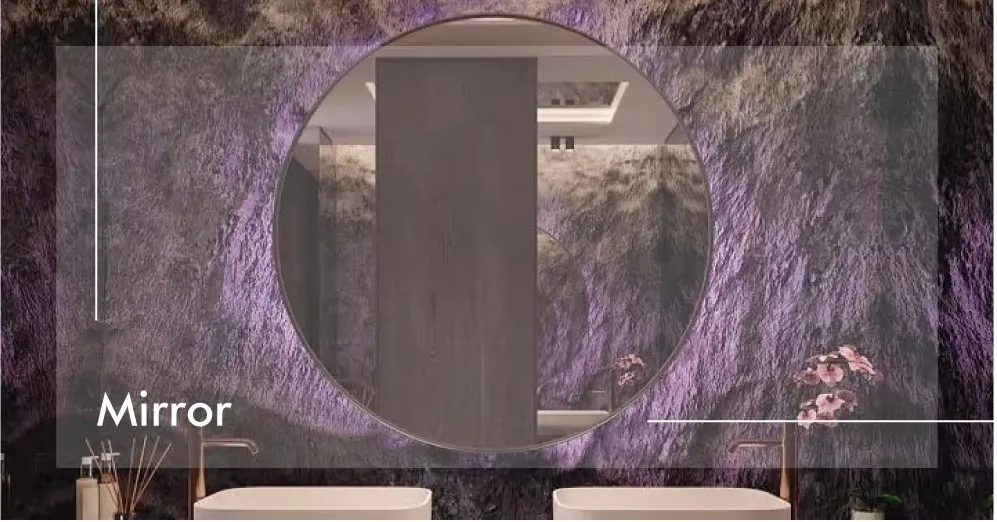
When we talk about unlimited possibilities in interior design, we're talking about tearing down those imaginary fences that box in our creativity. You know what I mean? Those mental barriers that whisper "mirrors should be rectangular" or "frames must follow tradition". True unlimited expression means looking at a blank wall and seeing a canvas that could hold literally anything your imagination cooks up.
Unlike limited options that constrain us to catalog choices, unlimited design freedom feels like stepping into an art studio where every tool, material, and idea is available. It's that moment when you realize, hey—who said mirrors need corners anyway?
Real-world magic: Imagine walking into a Parisian loft where an asymmetrical starburst mirror captures light from odd angles, creating constellations on the ceiling at golden hour. That's unlimited creativity in action—using form, function and fantasy without restrictions.
In artistic contexts, unlimited is more than a technical term—it's permission to break rules. It signals there are no guardrails on your vision.
Let's rewind a bit. For centuries, mirrors were strictly utilitarian objects—polished metal discs for kings to check their crowns, then later, uniform glass rectangles in gilded frames. The idea of shaping mirrors? Unthinkable! Early craftsmen would've laughed at the suggestion like you'd joke about flying cars.
But here's where things get juicy. The real shift came when artisans started saying, "Why not?" Why not curve the edges? Why not create frames that mimic nature? This rebellious spark transformed mirrors from mere functional items into statement pieces. And this is when custom-shaped trims entered the design lexicon as game changers, turning functional edges into expressive contours.
Art Nouveau period really kicked open the doors. Designers like Mucha created flowing, organic mirror frames resembling vines and blossoms. Suddenly, mirrors weren't just showing reflections—they were creating environments. This was the first big leap toward the unlimited mirror philosophy we celebrate today.
Cool fact: The Hall of Mirrors at Versailles contains 357 mirrors, but every single one was rectangular. When Marie Antoinette secretly commissioned an oval boudoir mirror, it caused such a scandal it was listed as an "extravagant indulgence" during her trial!
Today's shaped mirrors do something extraordinary—they manipulate physics with artistry. A well-placed crescent mirror will catch morning light differently than an angular piece. Circular mirrors soften harsh architecture, while geometric designs create visual rhythm. It’s literally bending reality!
The real magic happens when framers get playful. I've seen frames using fused glass fragments, reclaimed wood sculpted into waves, and even metal frames mimicking brush strokes. There’s no rulebook anymore. At a recent design fair in Milan, I spotted a mirror framed with actual dried botanicals suspended in resin—unlimited innovation in action.
Here’s a trade secret: professionals often include strategic lighting elements behind custom frames. Tiny LEDs integrated into custom-shaped trims create halo effects that make mirrors appear to float. This is how you build that jaw-dropping "how did they do that?" factor.
Try this: In small entryways, place an irregular hexagon mirror opposite the door. Guests stepping inside immediately see multiple angles of the space, creating an instant feeling of expanded dimensions.
Ever notice how your mood shifts in different spaces? That’s environmental psychology at work. Unlimited mirror design taps into this deliberately. Psychologists confirm that curved shapes reduce anxiety, while dynamic angles stimulate creativity. A mirror’s shape literally changes how we experience a room.
Fascinating case study: A Berlin design firm transformed a corporate office by replacing rectangular conference room mirrors with amorphous, cloud-like shapes. Employee surveys later showed 33% increase in creative problem-solving. That’s not decoration—that’s environmental psychology!
Shaped frames also disrupt our visual habits. Normally we glance at reflections passively. But place an irregular rhombus mirror where you’d expect a rectangle? Suddenly you pause, really see yourself, reconsider angles. This mindful interruption helps break autopilot thinking in living spaces.
Design therapist note: Clients reporting seasonal depression benefit greatly from mirror placements that catch winter sunlight at low angles.
The renaissance of artisanal mirror framing is rewriting interior design. Small workshops from Portland to Prague are pioneering techniques that factories can’t replicate. Chemical etching, custom bevelling, layered texturing—each mirror becomes unique art.
Glassblower Elena Martini shared an insight from her Venice studio: "We’re seeing customers reject mass-produced shapes. They want imperfections—tiny bubbles in the glass, irregularities in silvering. These slight flaws become conversation points, humanizing spaces." This shift celebrates the handmade soul over sterile uniformity.
Cutting-edge framers like Oslo’s Nordic Glass Collective even collaborate with clients to create molds from personal memorabilia. One breathtaking piece incorporated sand from a couple’s beach proposal into frame resin surrounding their mirror. Unlimited expression indeed!
Worth knowing: Sustainable framers now offer "living edges" where frames incorporate repurposed materials—think salvaged window frames from Parisian attics or NYC fire escapes melted down into contemporary custom-shaped trims .
Placement is everything. I’ve seen stunning mirrors lose impact due to poor positioning. The key? Think like a film director composing shots. Where will light travel? What unexpected angles can you reveal? How will reflection paths change throughout the day?
Circular mirrors amplify natural pathways. Position them to bounce light along hallways, creating rhythmic patterns. Angular pieces work wonders in stagnant corners, energizing dead zones. Install multi-faceted mirrors near garden windows to bring exterior greenery deep into rooms.
Height tricks? Mount mirrors at oblique angles instead of flush to walls—this creates thrilling visual tension. For really dramatic effects, suspend horizontal oval mirrors at slight forward tilts. They’ll reflect floors and ceilings simultaneously, multiplying perceived volume incredibly.
Essential tip: Always check reflection paths from sitting positions. You don’t want to create accidental sightlines to laundry piles!
The next frontier? Interactive mirrors that redefine unlimited functionality. Prototypes already exist: embedded touchscreens showing weather and news, mood-lighting adjustment panels, even display surfaces for digital art. Your mirror becomes command central.
Material innovations are equally mind-blowing. Imagine lightweight polymer mirrors that curve without distortion. Energy-harvesting surfaces that absorb ambient light to power integrated LEDs. Self-cleaning nano coatings eliminating maintenance. We're entering an era where mirrors don’t just reflect reality—they augment it.
Framing possibilities expand exponentially too. With 3D printed metals and ceramics, bespoke frames become affordable luxuries. Design platforms let homeowners co-create patterns, then manufacture custom-shaped trims locally. Unlimited no longer means expensive!
Peek ahead: At next year’s CES, a tech startup will debut shape-shifting frames using polymer tech—your mirror could change contours daily to match your mood!
Ultimately, embracing unlimited creativity with mirrors is about permission—letting your space evolve beyond safe choices. Start small: replace a standard bathroom mirror with an asymmetric circle. Notice how morning routines feel different.
Then go bigger. Design a statement wall using differently shaped mirrors like an evolving constellation. Work with artisans to build layers of meaning into frames—inlaid stones from meaningful places, engraved coordinates of special locations. This isn’t decoration; it’s storytelling through reflection.
The magic happens at that moment when someone enters your space, stops at an unexpected mirror shape, and actually smiles. You've transformed a functional object into emotion. You've turned glass and frame into an experience. That's unlimited creativity working its alchemy.
Recommend Products












