
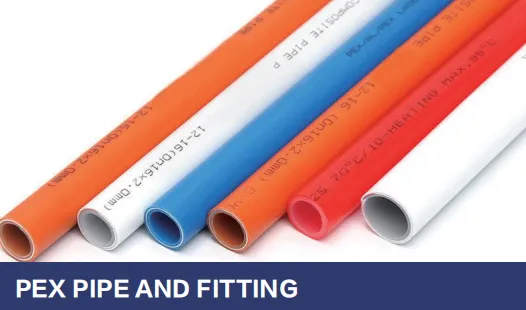
It's 6:30 on a crisp winter morning. You swing your legs over the edge of the bed, expecting the usual jolt of cold that makes you want to dive back under the covers. But today, something's different. Your feet meet not icy hardwood, but a gentle, even warmth that creeps up your ankles, spreading slow and steady through your body. No more huddling over radiators or tripping over space heaters. This is the magic of underfloor heating—and at the heart of that magic lies a material that's revolutionized how we heat our homes and businesses: PEX pipe.
For decades, radiators and forced-air systems dominated the heating landscape, leaving rooms with hot spots near the vents and cold corners that never quite warmed up. But underfloor heating, particularly when paired with PEX pipes, has rewritten that story. It's not just about heat—it's about comfort that feels intuitive, luxurious, and surprisingly accessible. Let's dive into how PEX pipe and fitting solutions are transforming spaces, one warm floor at a time.
At its core, underfloor heating is exactly what it sounds like: a system that heats a room from the ground up. Unlike radiators that blast hot air upward (where it often gets trapped near the ceiling), underfloor systems distribute heat evenly across the entire floor surface. This creates a consistent temperature from floor to ceiling, eliminating cold spots and making every inch of the room feel cozy.
There are two main types: electric and hydronic. Electric systems use heating cables or mats installed under the floor, while hydronic systems circulate warm water through a network of pipes. For most residential and commercial projects, hydronic systems are the go-to choice—and that's where PEX pipe shines. Why? Because hydronic systems are more energy-efficient, easier to scale for large spaces, and work seamlessly with boilers or heat pumps. And when it comes to the pipes that carry that heated water, PEX is in a league of its own.
Walk into any plumbing supply store 30 years ago, and you'd likely see copper or steel pipes dominating the shelves. These materials were reliable, but they came with a laundry list of headaches: they're rigid, heavy, prone to corrosion, and expensive to install. Then PEX (cross-linked polyethylene) arrived, and everything changed.
PEX pipes are made from a durable plastic that's been "cross-linked"—a chemical process that bonds the polymer chains, making the material stronger, more flexible, and resistant to temperature extremes. Think of it as the difference between a stiff garden hose and a supple yoga mat: PEX bends without kinking, twists around obstacles, and adapts to the unique layout of any room. That flexibility alone makes installation a breeze compared to metal pipes, which often require elbow joints and careful measuring to fit into tight spaces.
But flexibility is just the start. PEX is also:
Not all PEX is created equal. There are three main types—PEX-A, PEX-B, and PEX-C—each with its own manufacturing process and set of strengths. Choosing the right one depends on your project, budget, and local building codes. Let's break them down:
For underfloor heating, PEX-A and PEX-B are the most popular choices. PEX-A's superior flexibility makes it ideal for retrofitting older homes, where pipes might need to navigate around floor joists or existing plumbing. PEX-B, on the other hand, is a workhorse for new builds, offering a balance of performance and affordability. Either way, you can't go wrong—both types are designed to last 50+ years with proper installation.
A great pipe is only as good as the fittings that connect it. PEX fittings are the unsung heroes of the system, ensuring that water flows smoothly from the boiler to the floor and back again without a single drop leaking. Over the years, fitting technology has evolved to make installation faster and more reliable than ever.
The most common types of PEX fittings include:
No matter which fitting type you choose, material matters. Most PEX fittings are made from brass or poly alloy (a mix of plastic and metal). Brass is durable and compatible with all PEX types, while poly alloy fittings are lightweight and corrosion-resistant. For underfloor heating systems, brass fittings are often preferred for their strength, especially in high-temperature applications.
Installing a PEX underfloor heating system might sound intimidating, but with the right tools and a little know-how, it's more manageable than you'd think. Here's a simplified breakdown of the process:
While some ambitious DIYers take on underfloor heating projects, most homeowners opt to hire a professional. Why? Because proper design and installation ensure the system is energy-efficient and leak-free. A good installer will also help you choose the right PEX type, fittings, and flooring to match your space—more on that later.
At this point, you might be thinking, "Okay, PEX sounds great, but is underfloor heating really worth the investment?" The short answer: absolutely. Here's why:
Imagine stepping out of the shower onto a warm floor, or sitting on the living room floor to play with your kids without grabbing a blanket first. Underfloor heating creates a "radiant heat" that warms objects (and people!) directly, rather than just heating the air. This feels more natural and comfortable than forced-air systems, which can dry out the air and stir up dust.
Radiant floor heating is up to 30% more energy-efficient than traditional radiators. Why? Because it operates at lower temperatures (remember, 80–120°F vs. 180°F for radiators), and the even heat distribution means you can lower your thermostat by 2–4°F without sacrificing comfort. Over time, those savings add up—many homeowners report cutting their heating bills by $100 or more per month during winter.
Say goodbye to bulky radiators taking up wall space. Underfloor heating frees up your walls for furniture, artwork, or windows, making rooms feel larger and more open. This is especially valuable in small spaces like bathrooms or apartments, where every square inch counts.
No more clanging radiators or the whoosh of forced-air vents. Underfloor systems are silent—you'll forget they're even there until you feel that gentle warmth underfoot.
Now that you're sold on PEX underfloor heating, the next step is finding a reliable supplier. A good pex pipe and fitting supplier isn't just someone who sells products—they're a partner who can help you navigate the options, answer technical questions, and ensure you get the right solutions for your project.
What should you look for in a supplier? Start with quality certifications. Reputable suppliers will carry PEX pipes and fittings that meet industry standards, such as ASTM (American Society for Testing and Materials) or ISO (International Organization for Standardization) certifications. These certifications ensure the products are safe, durable, and perform as advertised.
Next, consider product range. A great supplier will offer a variety of PEX types (A, B, C), fittings, manifolds, and accessories, so you can get everything you need in one place. This saves time and ensures compatibility between components—no more worrying if a fitting from Supplier X will work with a pipe from Supplier Y.
Technical support is another must. Installing underfloor heating can be complex, and you'll want a supplier who can walk you through the details: Which PEX type is best for your retrofit? How many fittings do you need for a 500 sq. ft. room? A supplier with knowledgeable staff (or even online resources like installation guides and videos) can make all the difference.
Finally, don't overlook delivery and availability. A supplier with local warehouses or fast shipping ensures you won't be left waiting for parts while your project sits idle. And if you're working on a tight timeline, look for suppliers who offer rush orders or same-day pickup.
You've chosen your PEX system—now, what about the flooring? The good news is that underfloor heating works with most flooring types, but some are better than others at conducting heat. As any experienced flooring supplier will tell you, the key is to choose a material with good thermal conductivity—meaning it transfers heat from the pipes to the room efficiently.
Tile and stone are top performers here. Their dense, hard surfaces conduct heat quickly, making them ideal for bathrooms and kitchens. Hardwood is also a great option, though you'll want to choose engineered hardwood (rather than solid hardwood), which is more stable and less likely to warp with temperature changes. Laminate and luxury vinyl plank (LVP) work well too, as long as they're labeled "underfloor heating compatible."
Carpet is a bit trickier. Thick carpets with heavy padding can insulate the floor, trapping heat and reducing efficiency. If you love carpet, opt for a low-pile option with a thin, heat-conductive underlay. And avoid rubber-backed carpets, which can block heat entirely.
PEX pipe and fitting solutions aren't just for residential homes. They're versatile enough to handle everything from cozy bedrooms to bustling commercial spaces. Let's take a look at how they shine in different environments:
In homes, underfloor heating turns ordinary rooms into retreats. Imagine a master bathroom where the floor stays warm during winter showers, or a home office where you can work barefoot without freezing your toes. PEX systems are easy to zone, too—you can set different temperatures for the kitchen, bedroom, and living room, so everyone stays comfortable.
Restaurants, offices, and retail stores love underfloor heating for its space-saving design and quiet operation. No more radiators cluttering dining areas or vents blowing papers off desks. Plus, the even heat keeps customers and employees comfortable, which can boost satisfaction and productivity.
Hospitals and schools have unique needs—they require systems that are hygienic, low-maintenance, and energy-efficient. PEX underfloor heating fits the bill perfectly. It's easy to clean (no dusty radiators to harbor germs), operates quietly (important in classrooms and patient rooms), and can be paired with Class A fireproof materials for added safety—though that's a topic for another day.
As homeowners and businesses prioritize comfort, energy efficiency, and sustainability, underfloor heating is only growing in popularity. And at the center of that growth is PEX pipe. Its flexibility, durability, and affordability make it the top choice for hydronic systems, and advancements in manufacturing are only making it better. New PEX formulations are even more resistant to UV rays and chemical damage, expanding their use to outdoor spaces like patios and pool decks.
So, whether you're building a new home, renovating a bathroom, or upgrading your commercial space, PEX pipe and fitting solutions offer a warm, efficient, and reliable way to heat your floors. They're not just a heating system—they're an investment in comfort, energy savings, and the joy of stepping onto a warm floor on a cold morning.
After all, in a world that's always rushing, isn't it the small, everyday comforts that make life feel richest? With PEX underfloor heating, that comfort is right at your feet.
Recommend Products












