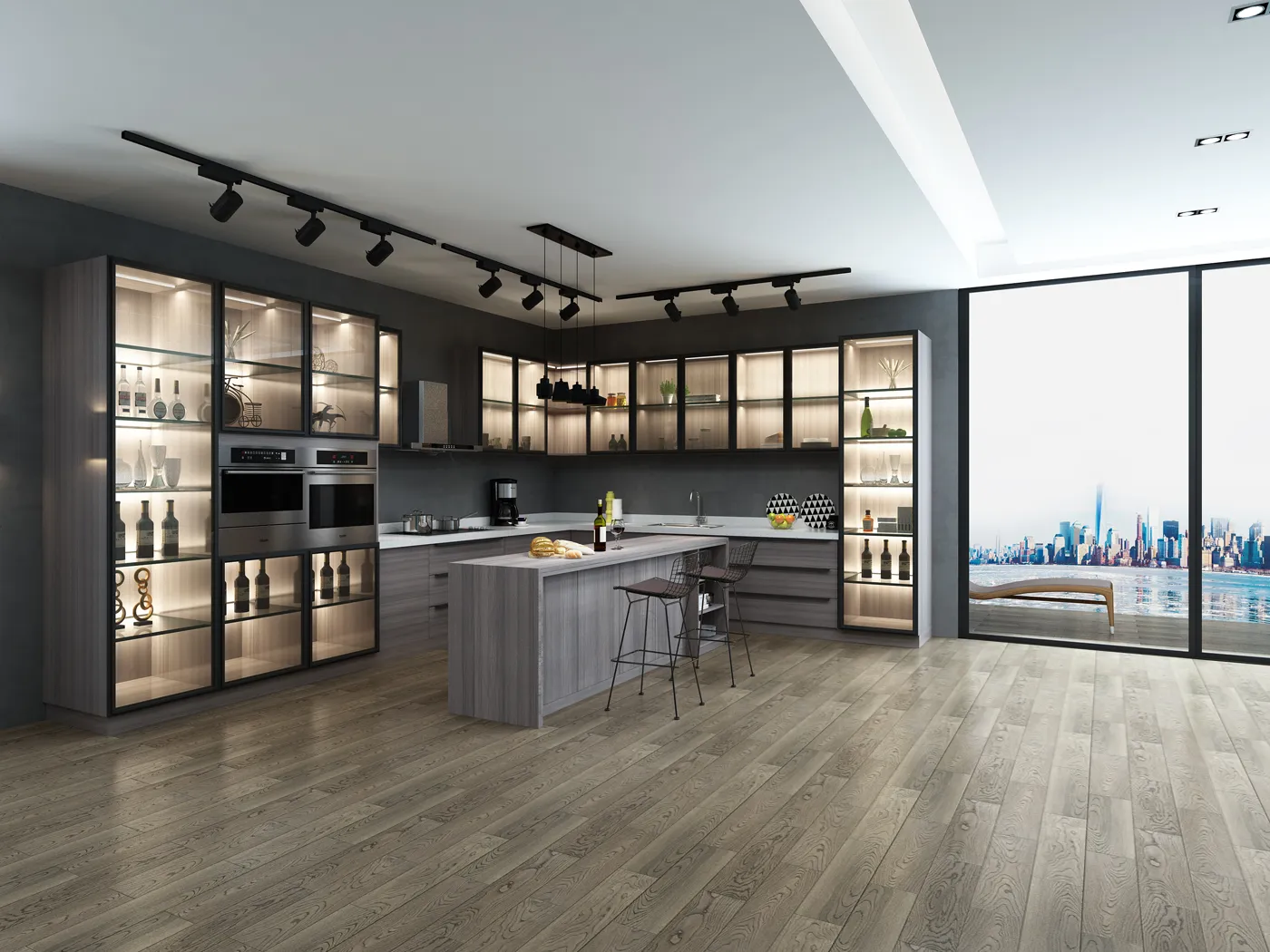
When you step into a kitchen that makes you pause with that "wow" feeling, it's often because of that magical harmony between surfaces and cabinetry. The secret? It's usually hidden in the seamless integration between countertops and cabinets—a design choice that turns ordinary kitchens into extraordinary spaces.
In the world of modern kitchen design, the conversation has shifted from simply choosing materials to creating holistic solutions. Enter ultra-thin sintered stone—the rockstar of contemporary surfaces. Paired with thoughtfully designed cabinetry, this combination doesn't just look stunning; it fundamentally transforms how we experience and use our kitchens.
The Magic of Ultra-Thin Sintered Stone
Let's talk about what makes this material so special. Sintered stone is born from natural minerals under intense heat and pressure—imagine Mother Earth's geology lab creating the perfect surface material. The result? A product with the soul of natural stone but without its temperamental nature.
When we thin it down, magic happens. Ultra-thin sintered stone measures between 3mm to 6mm in thickness—about the same as two stacked pennies. But don't let that delicate measurement fool you. Underneath that slender profile beats the heart of Hercules.
Why Thin is In: The Practical Benefits
-
Weight Revolution:
Traditional countertops weigh your cabinets down (literally!). Ultra-thin versions reduce weight by up to 65%, meaning your cabinetry can be lighter and more creative.
-
Installation Ease:
Remember those stressful countertop installations where half your kitchen needs plastic wrap protection? With these feather-light surfaces, installers glide them into place with minimal disruption.
-
Seamless Transitions:
That sleek waterfall edge wrapping to the floor? With thinner materials, we can create jaw-dropping continuous designs that seem physically impossible with chunkier stones.
-
Material Savings:
Using less raw material makes this an environmentally conscious choice—important in our sustainability-focused world.
Sarah, a chef and kitchen designer, shares: "The first time I cooked on an ultra-thin sintered countertop, I felt like I'd been cooking on concrete slabs my whole career. The precision you gain at the edges—where you chop and roll dough—is transformative. And when it's integrated with the cabinetry underneath? It completely redefines the workspace."
The Art of Material Integration
True design magic happens when countertops don't just sit on cabinets—they collaborate with them. This integrated approach creates harmony where previously we had visual breaks and functional compromises.
Crafting the Perfect Partnership
Custom Edge Profiles
Instead of a standard countertop edge meeting a cabinet frame, we can mold the sintered stone to flow seamlessly into
decorative profiles that match cabinet finishes.
Continuous Material Flow
By using the same sintered stone material for countertops and cabinet fronts, we eliminate visual disruptions—creating breathtaking monolithic appearances.
Integrated Lighting
The slim profile allows for lighting installations that seem to glow from within the stone itself, eliminating bulky under-cabinet fixtures.
Hidden Functionality
Built-in drainage grooves, induction charging pads, and pop-up outlets become invisible features rather than afterthought additions.
Imagine preparing dinner while your countertop subtly illuminates your workspace with embedded LEDs that automatically adjust based on natural light levels. As you slide ingredients into concealed storage beneath, the surface maintains its flawless appearance—no seams, no gaps, just continuous beauty.
Living with Integrated Design
Beyond the initial "wow," how does this integrated approach actually improve daily life? Let's explore the lived experience:
The Dance of Cooking
With uninterrupted surfaces and invisible functional elements, your movements around the kitchen become fluid. Chopping flows into mixing, which glides into cooking without hitting seams or transitioning between different textures. It's kitchen choreography with fewer stumbles and more grace.
Maintenance Made Simple
Remember constantly cleaning crumbs out of the gaps between your countertop and backsplash? Integrated designs eliminate those traps. Spills? They wipe clean across a unified surface without crevices. Stains? Sintered stone laughs at coffee, wine, and turmeric stains that would permanently mark natural stones.
The Emotional Space
There's a calm that comes from visual harmony. Kitchens designed with integration principles create serene environments that feel spacious even in modest footprints. The absence of visual clutter reduces anxiety in a space where we already feel performance pressure—especially when entertaining.
Design Possibilities Beyond White
While those pristine white marble-inspired sintered stones capture attention in magazines, the true magic lies in the diversity of aesthetic options:
-
Nature's Palette:
Deep emerald greens mimicking tropical rainforest stones, desert sand veining, volcanic rock textures—all available with consistent patterning that natural stone can't match across multiple slabs.
-
Metallic Marvels:
Brushed copper, weathered brass, and oxidized steel effects that play beautifully with metallic cabinet hardware and fixtures.
-
Concrete Reimagined:
Urban loft lovers can achieve authentic concrete looks without actual concrete's maintenance nightmares.
-
Translucent Dreams:
Some sintered stones offer surprising translucency, creating ethereal backlit effects at bars and breakfast stations.
For the Martins' mountain retreat, we paired slate-gray sintered countertops that subtly mirrored the view outside with vertically-grained oak cabinetry stained to match the countertop's undertones. The material integration created such harmony that visitors often commented on how "right" the kitchen felt, even if they couldn't articulate why.
Future-Proofing Your Kitchen
Investing in integrated design isn't just about current aesthetics. The resilient nature of sintered stone means your countertops won't need replacement in a few years. When trends shift (as they inevitably do), switching out cabinet fronts becomes dramatically easier since they're not structurally supporting massive stone slabs.
Consider the evolving nature of technology too. With wiring and smart home integration routed through purpose-built channels within the integrated system, upgrading tech becomes plug-and-play rather than demolition-and-rebuild.
Sustainable Considerations
In an increasingly eco-conscious world, sintered stone's durability reduces replacement waste. Manufacturing techniques continue improving to reduce environmental impacts. And the weight savings translate to smaller carbon footprints during transportation. When paired with sustainably-sourced cabinetry, an integrated kitchen becomes an environmentally responsible choice.
The Design Journey
Creating this level of integration isn't a simple cabinet-and-countertop purchase. It's a journey that unfolds in careful stages:
-
Vision Quest:
Establishing how your kitchen should feel and function, beyond aesthetics
-
Material Matchmaking:
Selecting sintered stone patterns that complement cabinet materials
-
Precision Planning:
Creating 3D renderings to visualize integration details
-
Technical Coordination:
Ensuring cabinets and countertop systems communicate perfectly
-
Handcrafted Installation:
Artisan-level fitting of integrated elements
The transformation of the Harrisons' cramped galley kitchen illustrates this journey. By extending sintered stone as a backsplash that wrapped around window frames and flowed into integrated open shelving, we visually expanded their space by 30% without removing walls. The thin profile maintained precious counter depth while creating a chef-worthy workspace within modest confines.
Your kitchen isn't just a workspace—it's the heartbeat of your home. Ultra-thin sintered countertops with integrated cabinetry design remove visual barriers to create spaces that feel intuitively right. This approach creates kitchens where beautiful design solves practical problems, where surfaces flow with your movements, and where the space feels quietly harmonious on both conscious and subconscious levels.
This isn't just a trend—it's a fundamental shift in how we conceive kitchen spaces. As we continue pushing boundaries of design and material science, these integrated solutions will only become more refined, more accessible, and more revolutionary. Your next kitchen could be a seamless masterpiece where countertops and cabinets aren't separate elements but partners in creating functional beauty that makes you smile every time you enter.