
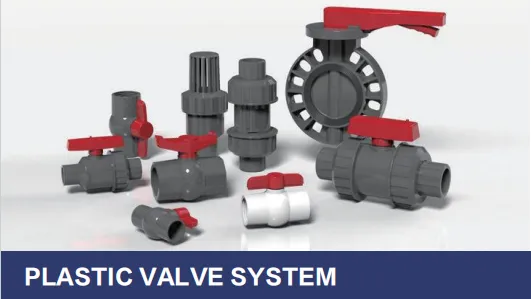
When it comes to building or renovating a space—whether it's a cozy home, a bustling hospital, or a towering commercial complex—the unsung heroes behind functional plumbing, heating, and fluid management systems often lie in the details: valves. These small but critical components control the flow of liquids and gases, ensuring safety, efficiency, and reliability. For those in the construction or facility management industry, choosing the right plastic valve system can feel overwhelming with the sheer variety of options available. That's where a trusted partner comes in. As a plastic valve system supplier with years of experience, we've seen firsthand how the right materials and designs can make or break a project. In this guide, we'll walk you through the essentials of plastic valve systems, from the materials that give them strength to the designs that tailor them to specific needs. By the end, you'll have a clearer picture of how to select solutions that align with your project's goals—because great buildings start with great components.
Plastic valves owe their versatility to the diverse range of polymers used in their construction. Each material brings unique properties to the table, making it suited for specific environments, pressures, and temperatures. Let's break down the most common materials you'll encounter, and why a knowledgeable plastic valve system supplier will always start the conversation here.
PVC is the workhorse of the plastic valve world—and for good reason. It's affordable, lightweight, and resistant to corrosion, making it a staple in residential and light commercial plumbing. You'll find PVC valves in everything from sink drains to irrigation systems. However, it's important to note that standard PVC isn't ideal for high temperatures; exposure to hot water can cause warping over time. That said, for cold water applications or low-pressure systems, it's hard to beat PVC's cost-effectiveness. As a supplier, we often recommend PVC valves for projects where budget and basic functionality are top priorities, such as rental properties or simple irrigation setups.
If PVC is the workhorse, UPVC is the heavyweight champion. Unplasticized means it's rigid and, which gives it superior strength and chemical resistance compared to standard PVC. UPVC valves handle higher pressures and temperatures (up to around 60°C) and are highly resistant to acids, alkalis, and saltwater—qualities that make them a favorite in industrial settings, water treatment plants, and coastal construction. As an upvc pipe supplier, we often pair UPVC valves with UPVC piping systems for projects that demand longevity, like municipal water supply lines or chemical processing facilities. Their smooth inner surface also reduces friction, improving flow efficiency—a detail that doesn't go unnoticed by engineers looking to optimize system performance.
When hot water is in the mix, PPR takes center stage. This material is designed to withstand continuous exposure to temperatures up to 95°C, making it perfect for domestic hot water systems, radiators, and even underfloor heating. PPR valves are also highly resistant to scaling and corrosion, which means less maintenance over time. As a ppr pipe and fitting supplier, we frequently recommend PPR systems for residential projects, hotels, and hospitals where reliable hot water distribution is non-negotiable. What sets PPR apart is its flexibility; it can expand and contract with temperature changes without cracking, reducing the risk of leaks in dynamic environments. Plus, its heat fusion joining method creates a seamless, leak-proof seal—something contractors appreciate for both speed and reliability.
CPVC is PVC with an extra dose of chlorine, and that small modification makes a big difference. It can handle temperatures up to 93°C and higher pressures than standard PVC, making it suitable for industrial processes, commercial HVAC systems, and even fire sprinkler lines. Hospitals and schools, which require materials that meet strict safety standards, often turn to CPVC for its fire resistance and low smoke emission properties. We've worked on projects where CPVC valves were specified for their ability to stand up to aggressive chemicals, such as in laboratory plumbing or industrial wastewater treatment. While it's pricier than PVC, the peace of mind it offers in high-stakes environments is well worth the investment.
PEX valves are all about adaptability. Cross-linking the polyethylene molecules gives PEX exceptional flexibility, allowing it to bend around corners without the need for elbows or joints—reducing potential leak points. It's also resistant to freezing (it can expand up to 400% without bursting) and doesn't corrode, making it ideal for radiant floor heating, residential plumbing, and even outdoor applications in colder climates. PEX valves are often used in conjunction with PEX piping, which is easy to install and requires fewer tools than rigid materials. While PEX isn't typically used for high-pressure industrial systems, its versatility has made it a favorite in modern home construction, where speed and durability are key.
| Material | Max Temperature Resistance | Pressure Rating (Typical) | Best For | Key Advantage |
|---|---|---|---|---|
| PVC | 40°C | Low (up to 10 bar) | Cold water, drainage, irrigation | Affordability |
| UPVC | 60°C | Medium (up to 16 bar) | Industrial, coastal, chemical handling | High chemical resistance |
| PPR | 95°C | Medium-High (up to 20 bar) | Hot water systems, residential plumbing | Heat and scaling resistance |
| CPVC | 93°C | High (up to 25 bar) | HVAC, fire sprinklers, hospitals | Fire safety compliance |
| PEX | 95°C (short-term) | Low-Medium (up to 12 bar) | Radiant heating, residential plumbing | Flexibility and freeze resistance |
Understanding these materials is the first step, but remember: a great plastic valve system supplier won't just list specs—they'll ask about your project's unique conditions. Is the valve going to be exposed to sunlight? (UPVC handles UV better than PVC.) Will it carry drinking water? (Look for lead-free certifications.) Does it need to withstand frequent temperature fluctuations? (PEX or PPR might be better choices.) The material sets the foundation, but the design determines how well the valve performs in action.
If materials are the "what" of plastic valves, designs are the "how." Each valve type is engineered to control flow in a specific way, whether that means stopping it completely, regulating pressure, or preventing backflow. Let's explore the most common designs and how they're applied in real-world projects—because choosing the wrong design can lead to inefficiencies, leaks, or even system failures.
Ball valves are the most recognizable valves on the market, and for good reason: they're simple, reliable, and fast to operate. Inside a ball valve is a hollow sphere (the "ball") with a hole through the center. When the handle is turned, the ball rotates—aligning the hole with the pipe to allow flow, or turning perpendicular to block it. This "on/off" functionality makes ball valves ideal for applications where you need quick, full shut-off, like main water lines or emergency shutoffs. They're also highly durable; with no complicated moving parts, they're less prone to wear and tear. We often recommend ball valves for residential plumbing systems, where homeowners need an easy-to-use valve that won't require frequent maintenance. Pro tip: Look for full-port ball valves if you need unrestricted flow—they're designed with a hole the same size as the pipe, minimizing pressure drop.
Gate valves operate like a drawbridge: a flat gate (or wedge) is raised or lowered to control flow. Turn the handle clockwise, and the gate lowers to block the pipe; turn it counterclockwise, and the gate rises to allow flow. Unlike ball valves, gate valves can adjust flow gradually, making them useful for systems where precise regulation is needed, such as irrigation lines or industrial processes. However, they're not ideal for frequent use—their slow operation and tendency to get stuck if left closed for long periods make them better suited for "set and forget" applications. As a supplier, we often caution against using gate valves in situations where quick shut-off is critical, like in fire safety systems. But for low-pressure, infrequent operation, they're a solid choice.
Check valves are the guardians of one-way flow. They automatically open to allow fluid to pass in one direction and close to prevent backflow—a vital function in systems where reverse flow could cause contamination or damage. For example, in a sump pump system, a check valve ensures that water pumped out of the basement doesn't flow back in when the pump turns off. There are several types of check valves, including swing check (a hinged flap), lift check (a piston that rises with flow), and ball check (a ball that seals against a seat). Swing check valves are common in large-diameter pipes, while ball check valves are popular in smaller, low-pressure systems like residential plumbing. We often specify check valves in conjunction with other valves to add an extra layer of safety—because even the best systems need a failsafe.
Butterfly valves get their name from the circular disc (resembling a butterfly's wing) that rotates inside the pipe to control flow. When the disc is parallel to the flow, it allows maximum passage; when perpendicular, it shuts off flow. They're lightweight, compact, and quick to operate, making them ideal for large-diameter pipes where space is limited—think municipal water treatment plants or HVAC systems. Butterfly valves are also cost-effective for large-scale projects, as they're cheaper to manufacture than gate or ball valves of the same size. However, they do create more pressure drop than ball valves, so they're not the best choice for systems where flow efficiency is critical. As a plastic valve system supplier, we often pair butterfly valves with UPVC or CPVC pipes in industrial settings, where their durability and low maintenance needs shine.
Globe valves are the precision instruments of the valve world. They use a movable plug (or disc) and a stationary seat to regulate flow, allowing for adjustments. Unlike gate valves, which are either fully open or closed, globe valves can maintain a partially open position to control flow rate—making them perfect for applications like regulating water pressure in a hospital's hydrotherapy pool or controlling chemical dosages in industrial processes. However, this precision comes at a cost: globe valves create significant pressure drop and are more expensive than ball or gate valves. They're also bulkier and harder to operate, requiring more turns of the handle to open or close. For projects where accuracy is non-negotiable, though, globe valves are worth the investment. We often recommend them for systems that handle sensitive fluids or require strict flow control, such as pharmaceutical manufacturing or research laboratories.
Valves don't exist in a vacuum—they're part of larger systems, each with unique demands. A great plastic valve system supplier understands that what works for a residential bathroom won't cut it for a hospital operating room or a chemical plant. That's why we talk about "solutions" rather than just "products": it's about matching the right valve (material, design, and features) to the challenges of your industry. Let's take a look at how plastic valve systems are customized across key sectors.
In homes and offices, plastic valves need to be affordable, easy to install, and reliable. Ball valves are a staple here—imagine the shut-off valve under your kitchen sink; chances are it's a ball valve. PPR valves are also common in hot water systems, as they handle the 50-60°C temperatures of domestic hot water without warping. For drainage lines, PVC gate valves or check valves prevent sewage backflow. As a supplier, we often work with homebuilders to standardize valve selections across projects, streamlining installation and reducing costs. For example, using UPVC ball valves for main water lines and PPR valves for hot water distribution creates a system that's both durable and budget-friendly.
Hospitals, schools, and nursing homes have zero tolerance for valve failures—leaks or contamination can put lives at risk. That's why these facilities often require valves made from materials like CPVC, which meets strict fire safety standards (Class A fire resistance) and is resistant to mold and bacteria growth. In addition, valves in healthcare settings need to be easy to clean and sanitize, so smooth, non-porous surfaces are a must. We recently supplied CPVC check valves for a children's hospital, where they were used in the HVAC system to prevent cross-contamination between patient rooms. The key here is compliance: a reputable plastic valve system supplier will provide valves with certifications like NSF/ANSI 61 (for drinking water) or ASTM D2846 (for CPVC pipe and fittings), ensuring they meet health and safety regulations.
Industrial facilities demand valves that can handle aggressive chemicals, high pressures, and extreme temperatures. UPVC and CPVC valves are workhorses here, thanks to their chemical resistance. For example, a wastewater treatment plant might use UPVC ball valves to control the flow of chlorine, while a food processing facility could rely on PPR valves for hot water sanitization lines. Butterfly valves are also popular in industrial settings for their ability to handle large flow rates with minimal pressure drop. As a supplier, we often collaborate with engineers to test valves under specific conditions—like exposure to sulfuric acid or high-temperature steam—to ensure they'll hold up over time. In industrial applications, "good enough" isn't enough; valves need to perform consistently, even in harsh environments.
Farmers and landscapers need valves that can withstand the great outdoors—UV radiation, temperature swings, and exposure to fertilizers or pesticides. PVC and UPVC valves are ideal here; they're resistant to corrosion and UV damage (when properly rated), and their lightweight design makes them easy to install in remote fields. Check valves are critical in irrigation systems to prevent backflow from contaminated irrigation water into drinking water supplies, while gate valves allow for zone-specific control of water flow. We recently supplied a vineyard with UPVC gate valves for their drip irrigation system, where they needed to adjust water flow to different grape varieties. The valves held up to years of sun exposure and chemical treatments, proving that plastic can be just as tough as metal in agricultural settings.
Now that you know the basics of materials and designs, the next step is finding a supplier you can trust. With so many options on the market, it's easy to get lured by low prices—but cutting corners here can lead to costly repairs down the line. As a plastic valve system supplier ourselves, we believe transparency and expertise are just as important as the products we sell. Here are the key qualities to look for in a supplier:
The first question to ask is: Do their valves meet industry standards? Reputable suppliers will have certifications from organizations like NSF (for drinking water safety), ASTM (for material performance), or ISO (for quality management). For example, our PPR pipe and fitting supplier partners provide valves certified to ISO 9001, ensuring consistent quality control. Avoid suppliers who can't provide certification documents—this is a red flag for subpar materials or manufacturing processes.
A great supplier should offer more than just one or two valve types. Look for a partner with a wide range of materials (PVC, UPVC, PPR, etc.) and designs (ball, gate, check, etc.), as well as accessories like fittings and actuators. This way, you can source all your valve needs from one place, simplifying logistics and ensuring compatibility. For example, if you're working on a mixed-use project with residential and commercial components, you'll need valves for both low-pressure plumbing and higher-pressure HVAC systems—a supplier with a diverse inventory can meet both needs.
Valve selection isn't always straightforward. A good supplier will have technical experts on staff who can answer questions like, "Will this PEX valve work with my existing copper pipes?" or "What material is best for a chemical processing line?" At our company, we offer free consultations to help clients navigate these decisions—because we know that a project's success depends on getting the details right. Avoid suppliers who rush you to buy without understanding your needs; the best partners act as advisors, not just salespeople.
Construction schedules wait for no one, so your supplier needs to deliver on time, every time. Ask about lead times, inventory levels, and backup plans for rush orders. A supplier with a network of warehouses or manufacturing partners is more likely to meet tight deadlines. We've built relationships with local distributors to ensure that even hard-to-find valves (like specialized CPVC globe valves) can be delivered within 48 hours for emergency repairs. Reliability isn't just about products—it's about peace of mind.
The plastic valve industry isn't standing still. As sustainability and smart technology take center stage in construction, we're seeing exciting innovations that will shape the next generation of valve systems. For example, manufacturers are developing biodegradable plastics for low-pressure applications, reducing environmental impact. Smart valves with sensors and IoT connectivity are also on the rise—these valves can monitor flow, pressure, and temperature in real time, sending alerts to maintenance teams if something goes wrong. Imagine a hospital where the HVAC valves automatically notify engineers of a pressure drop, preventing system failures before they happen. As a plastic valve system supplier, we're keeping a close eye on these trends, because staying ahead of the curve means better solutions for our clients.
Plastic valve systems may not be the most glamorous part of a construction project, but they're undeniably essential. From the materials that give them strength to the designs that tailor them to specific needs, every detail matters. As you embark on your next project, remember that the best outcomes come from collaboration. A knowledgeable plastic valve system supplier won't just sell you a valve—they'll listen to your goals, ask about your challenges, and recommend solutions that fit your budget, timeline, and industry requirements. Whether you're building a home, a hospital, or an industrial facility, the right valves will ensure your system runs smoothly for years to come. So don't settle for generic products—invest in solutions that are designed with your success in mind. After all, great buildings are built on great partnerships.
Recommend Products












