
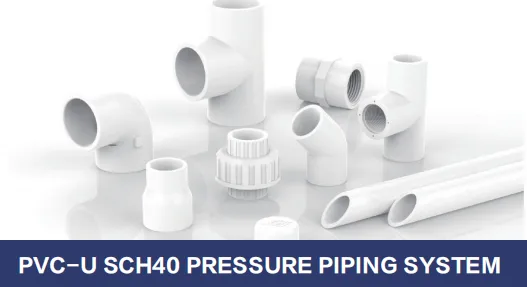
Walking through any modern construction site today, you'll notice something unmistakable – those distinctive gray and white pipes snaking through frameworks and foundations. PVC-U SCH40 pipes aren't just construction materials; they're the unsung heroes ensuring our water flows cleanly, our industries operate safely, and our buildings stand strong. In 2025, this technology has quietly revolutionized how we build and maintain vital infrastructure.
We've come a long way from the metallic clunks and corrosion headaches of older systems. Today's PVC-U SCH40 piping solutions represent a perfect marriage of durability and smart engineering. With plastic alternatives becoming both economically sensible and environmentally friendlier options, we're standing at an exciting juncture in piping technology. This comprehensive guide walks you through what makes these systems indispensable in modern construction and industrial applications.
Let's break it down without the engineering jargon. Imagine a pipe material that won't rust when exposed to water or chemicals, won't accumulate scale that clogs flow over time, and handles pressure like a champ – that's SCH40 PVC in a nutshell. The "Schedule 40" designation refers to its wall thickness, giving it a special balance between strength and flexibility that makes it ideal for pressurized systems.
When technicians talk about its versatility, they're not exaggerating. Whether it's carrying drinking water in apartment buildings, handling chemical flows in factories, or managing agricultural irrigation systems, this plastic warrior consistently outperforms traditional materials.
Unlike regular PVC with softening additives, PVC-U (Unplasticized Polyvinyl Chloride) maintains its rigid form while offering surprising impact resistance. Think of it as plastic engineered to behave like metal without metal's drawbacks. Its molecular structure creates something like an armored barrier that repels corrosion and maintains integrity under stress.
| Diameter (inches) | Common Applications | Pressure Capacity | Standard Lengths |
|---|---|---|---|
| ½" to 1" | Residential plumbing, appliance connections | 600-850 PSI | 10ft, 20ft segments |
| 1¼" to 3" | Commercial water supply, light industrial | 370-550 PSI | 10ft, 20ft, custom lengths |
| 4" to 6" | Main supply lines, municipal projects | 320-470 PSI | Custom lengths (up to 40ft) |
| 8" to 14" | Industrial processing, waste treatment facilities | 230-370 PSI | Custom fabricated |
| 16" to 24" | Major infrastructure, water utilities | 170-290 PSI | Special order fabrication |
While industrial gray remains the industry standard, colored PVC isn't just decorative:
Contractors who've struggled with corroded steel pipes will tell you: PVC-U SCH40 feels like discovering a hidden cheat code in construction. Imagine installing pipe systems that'll likely outlast the buildings they're installed in – that's the reality with modern PVC solutions.
Forget about rust stains and pinhole leaks that plague metallic alternatives. PVC laughs in the face of corrosion from:
Contrary to assumptions about plastic, PVC-U SCH40 demonstrates impressive durability:
The real kicker comes during installation. Compared to metals:
For water supply and drainage systems, PVC-U SCH40 is becoming the material of choice. In municipal projects, its leak-proof nature has been a game-changer - imagine communities finally stopping the billions of gallons lost through leaky metallic pipes annually.
Walk through any modern plant and you'll likely spot gray SCH40 pipes handling:
In irrigation applications, these pipes have transformed farming efficiency. Their smooth interior cuts pump energy use by up to 30% compared to rough-surfaced alternatives. That means more water where it's needed with lower electricity bills.
Connecting SCH40 pipes is surprisingly approachable. Unlike welding that requires specialists, PVC joining lets any competent technician achieve professional results.
The most common approach creates molecular bonds stronger than the pipe itself. The process:
This creates permanent joints in minutes that cure fully in just hours.
For applications requiring periodic disassembly, threaded fittings work beautifully. Modern SCH40 systems include:
| Pipe Diameter | Price per Foot | Standard Fitting Cost | 20ft Section Price |
|---|---|---|---|
| ½" | $1.20 - $1.50 | $0.85 - $2.25 | $28 - $35 |
| 1" | $2.80 - $3.50 | $1.60 - $4.75 | $60 - $75 |
| 2" | $6.50 - $9.00 | $4.30 - $12.50 | $145 - $200 |
| 4" | $16.75 - $22.40 | $22.00 - $38.00 | $385 - $515 |
| 6" | $38.50 - $52.00 | $65.00 - $130.00 | $880 - $1,200 |
While the material costs matter, consider the bigger picture:
The future looks bright for PVC-U SCH40 systems as R&D pushes boundaries:
In 2025, choosing PVC-U SCH40 isn't just a practical decision—it's an investment in infrastructure that quietly works for generations. With sustainability concerns driving innovation, these systems are poised to become even more efficient and environmentally responsible.
When considering materials for your pressure systems, remember that PVC-U SCH40 isn't just the economical choice—it's increasingly the responsible one. With long-term reliability surpassing alternatives and manufacturing becoming more sustainable, it represents smart engineering meeting environmental consciousness. Whether replacing aging metallic systems or installing new infrastructure, this modern solution delivers peace of mind through silent, consistent performance.
As we move deeper into the 2020s, plastic piping technology continues disrupting traditional approaches to infrastructure. What began as an affordable alternative has matured into a sophisticated engineering solution that outperforms established materials. For water supply, industrial processes, and specialized applications alike, PVC-U SCH40 has proven itself not as a substitute, but as the new standard.
Recommend Products












