
Building the Future, One Reliable Material at a Time—Your Partner in Middle East's Construction Journey
Walk through the skylines of Riyadh, Dubai, or Doha, and you'll see a region in motion. Cranes pierce the sky, mega-projects rise from the desert, and cities redefine what's possible. From the futuristic skyscrapers of Dubai's Downtown to the sustainable communities of Riyadh's King Abdullah Economic City, the Middle East is building not just structures, but legacies. Yet behind every groundbreaking skyscraper, every state-of-the-art hospital, and every cozy family home lies a critical question: who can you trust to supply the materials that turn blueprints into reality?
For decades, construction in the Middle East has been shaped by two forces: ambition and resilience. Ambition to dream big—think NEOM's linear city or Abu Dhabi's Louvre—and resilience to overcome challenges: scorching temperatures, strict regulatory standards, and the need for materials that stand the test of time. In this fast-paced, high-stakes industry, a reliable building material supplier isn't just a vendor; they're a partner. They're the ones who ensure that when the desert sun blazes at 50°C, pipes don't crack. When a hospital treats thousands, fireproof materials don't falter. When a family moves into their new home, the floors and walls feel solid, safe, and built to last.
That's where we come in. With over three decades of boots-on-the-ground experience in the Middle East, we've grown alongside the region's construction boom. We've supplied pipes that carry water to residential towers in Jeddah, fireproof boards that protect schools in Kuwait, and fittings that keep commercial complexes in Bahrain running smoothly. We're not just a PPR pipe and fitting supplier—though that's where our journey began. Today, we're a one-stop partner, offering everything from UPVC pipes for industrial projects to Class A fireproof CPL inorganic boards for hospitals and schools. Because in construction, reliability isn't optional. It's the foundation.
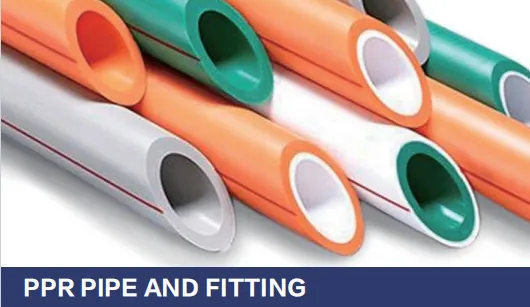
Let's start with the basics: PPR (Polypropylene Random Copolymer) pipes and fittings. If you've ever turned on a tap in a Middle Eastern home or walked through a hospital corridor, chances are you've benefited from PPR without even knowing it. These pipes are the workhorses of plumbing systems, and for good reason. But what makes them so essential, especially in a region as demanding as the Middle East?
First, durability. The Middle East's climate is no joke—temperatures soar, water can be scarce, and infrastructure faces constant stress. PPR pipes laugh in the face of these challenges. Unlike traditional metal pipes, they're corrosion-resistant, so they won't rust or degrade over time, even when carrying hard water (a common issue in many Gulf countries). They're also heat-resistant, handling hot water temperatures up to 95°C without warping—a must for residential and commercial buildings where consistent hot water is non-negotiable.
Then there's installation. In a region where construction timelines are tight, every minute counts. PPR pipes are lightweight and flexible, making them easy to transport and install. Their heat-fusion joining method creates a seamless, leak-proof seal, reducing the risk of costly water damage down the line. For contractors racing to finish a project before summer, that's not just a convenience—it's a game-changer.
But don't just take our word for it. Let's compare PPR with other common pipe materials used in the region, like UPVC and PVC DWV, to see why it's often the top choice:
| Feature | PPR Pipes | UPVC Pipes | PVC DWV Pipes |
|---|---|---|---|
| Temperature Resistance | Up to 95°C (ideal for hot water systems) | Up to 60°C (best for cold water only) | Up to 60°C (primarily for drainage, not potable water) |
| Corrosion Resistance | Excellent (no rust, chemical-resistant) | Excellent (but brittle in extreme cold) | Good (designed for waste, not high pressure) |
| Installation Ease | Heat fusion for seamless, leak-proof joints | Solvent cement joining (requires drying time) | Solvent cement joining (lower pressure rating) |
| Best For | Residential plumbing, hot/cold water systems, hospitals | Cold water supply, irrigation, industrial lines | Drainage, waste, and vent systems |
As the table shows, PPR pipes shine in versatility and performance—especially for projects where reliability and longevity are non-negotiable. And as a trusted PPR pipe and fitting supplier, we've made it our mission to ensure every pipe and fitting we deliver meets the highest standards, tailored to the Middle East's unique needs.
While PPR pipes are our bread and butter, we know construction projects are rarely one-dimensional. A hospital needs more than just plumbing; it needs fireproof walls. A commercial complex requires drainage systems that can handle heavy use. A residential tower needs pipes that are both efficient and eco-friendly. That's why we've expanded our offerings to become a true one-stop solution—because your success depends on having a supplier who can keep up with your project's every demand.
Take our UPVC pipe supplier division, for example. UPVC (Unplasticized Polyvinyl Chloride) pipes are a staple in industrial and agricultural projects, thanks to their affordability and chemical resistance. We supply UPVC pipes that meet international standards (think ASTM and DIN), perfect for irrigation systems in Qatar's farms or cooling lines in Dubai's data centers. And because we source locally and globally, we can scale quickly—whether you need 100 meters for a small project or 10,000 meters for a mega-development.
Then there's our PVC DWV pipe supplier range. DWV stands for Drainage, Waste, and Vent—systems that keep buildings hygienic and functional. In a region where sanitation is a top priority (especially in hospitals and schools), these pipes can't fail. Our PVC DWV pipes are designed for high flow rates, with smooth interiors that prevent clogs and ensure waste moves efficiently. We've supplied them for everything from luxury hotels in Abu Dhabi to affordable housing in Oman, and the feedback is always the same: "They just work."
But perhaps our most impactful offering is our Class A fireproof CPL inorganic board for hospital and school supplier line. When it comes to buildings where lives are on the line—hospitals treating patients, schools filled with children—fire safety isn't just a regulation; it's a moral obligation. Our Class A fireproof boards are non-combustible, meaning they won't catch fire or release toxic fumes even in extreme heat. They're also moisture-resistant, making them ideal for hospital bathrooms and school kitchens. We recently supplied these boards for a new pediatric hospital in Riyadh, and seeing the architects' relief when they tested the fire resistance? That's the kind of reward no invoice can match.
Let's step into the shoes of a project manager named Ahmed. Ahmed was overseeing the construction of a 200-bed hospital in Riyadh, scheduled to open in time for the start of the school year (a deadline set by the Ministry of Health, no less). The pressure was on: not only did the hospital need to be ready on time, but it also had to meet Saudi Arabia's rigorous safety codes—including strict fireproofing and plumbing standards.
Ahmed's team ran into two major roadblocks. First, the plumbing contractor was struggling to find PPR pipes that could handle the hospital's high-pressure hot water system. Second, the original fireproof wall supplier backed out, leaving Ahmed scrambling to find a replacement for the operating rooms and pediatric wards.
That's when he called us. We'd worked with Ahmed on a previous residential project, so he knew we could deliver. For the plumbing, we supplied our high-pressure PPR pipes (rated for 20 bar), which we guaranteed would handle the hospital's hot water demands. For the walls, we recommended our Class A fireproof CPL inorganic boards, which are not only fire-resistant but also easy to install—critical for making up lost time.
The result? The hospital opened on schedule, and the fire marshal gave it a perfect safety score. Ahmed later told us, "You didn't just supply materials—you gave us peace of mind." That's the kind of partnership we pride ourselves on.
Anyone can sell pipes or boards. But to thrive in the Middle East, you need more than a catalog—you need local knowledge. We've spent 30 years learning the ins and outs of this region, and that experience has taught us that success here isn't about "one-size-fits-all" solutions. It's about understanding the nuances.
Take regulations, for example. Every country in the Middle East has its own set of standards, from Saudi Arabia's SASO to the UAE's ESMA. What's compliant in Kuwait might not fly in Bahrain, and vice versa. Our team includes local engineers and compliance experts who stay up-to-date on the latest codes, ensuring every product we supply is certified and approved. For our clients, that means no last-minute delays because a pipe doesn't meet a obscure local standard.
Then there's logistics. The Middle East is vast, and getting materials to remote sites (looking at you, NEOM) can be a nightmare. We've built a network of warehouses across the region—in Dubai, Riyadh, and Doha—so we can deliver materials within 24-48 hours, even to the most challenging locations. During the construction of a solar farm in Oman's desert, we used our local partners to airlift PPR pipes to the site when roads were impassable. That's the kind of flexibility you only get from a supplier who knows the lay of the land.
And let's not forget cultural understanding. In the Middle East, business is personal. We don't just send invoices; we build relationships. We know that a contractor in Jeddah might prefer face-to-face meetings, while a developer in Abu Dhabi wants real-time updates via WhatsApp. We adapt to your style because we respect your way of doing business. As one client put it, "You speak our language—both literally and figuratively."
These days, construction isn't just about building structures—it's about building a future. The Middle East is leading the charge in green building, with initiatives like Dubai's 2040 Urban Master Plan and Saudi Arabia's Vision 2030 pushing for sustainable, eco-friendly development. We're proud to be part of that movement, because we believe that reliability and sustainability go hand in hand.
Take our PPR pipes, for example. They're made with recycled materials where possible, reducing our carbon footprint. They're also energy-efficient—their smooth interiors reduce water pressure loss, meaning pumps use less energy to move water through the system. For LEED-certified projects (a growing trend in the region), that's a tangible way to earn green building points.
Our Class A fireproof CPL inorganic boards are another example. Traditional fireproof materials can be heavy and resource-intensive. Ours are lightweight and low-VOC (Volatile Organic Compounds), improving indoor air quality in schools and hospitals—critical for spaces where children and patients spend hours each day. Plus, they're 100% recyclable at the end of their life, so they don't end up in landfills.
We also prioritize waste reduction in our operations. Our warehouses use solar panels to reduce energy use, and we've implemented a "just-in-time" delivery model to cut down on excess inventory (and thus, waste). Even our packaging is eco-friendly—we use biodegradable materials and encourage clients to return pallets for reuse.
It's simple: we want to leave the Middle East better than we found it. Whether it's through reducing our own emissions or supplying materials that help clients meet their sustainability goals, we're committed to building a greener future—one pipe, one board, one project at a time.
The Middle East's construction story is far from over. If anything, it's just getting started. With mega-projects like NEOM (the $500 billion futuristic city), the Dubai 2040 plan, and Qatar's post-World Cup development boom, the region is poised to redefine what's possible in urban living. And we're ready to be there every step of the way.
What does the future hold? We're investing in R&D to develop next-gen PPR pipes that are even more heat-resistant, perfect for NEOM's desert climate. We're exploring new fireproof materials that meet the strictest global standards, so hospitals and schools can be safer than ever. And we're doubling down on digital tools—think AI-powered inventory management and real-time tracking—to make ordering and delivery even smoother for our clients.
But at the end of the day, our biggest asset isn't our products or our technology—it's our people. The engineers who test every pipe for quality, the sales reps who stay up late to answer a client's call, the logistics team who finds a way to deliver to a remote site in the middle of a sandstorm. They're the reason we've thrived for 30 years, and they're the reason we'll thrive for 30 more.
So whether you're building a hospital in Kuwait, a school in Bahrain, or a skyscraper in Riyadh, we're here. We're not just a PPR pipe and fitting supplier, or an UPVC pipe supplier, or a fireproof board supplier. We're your partner—someone who understands your vision, shares your ambition, and has the experience to turn both into reality.
Because in the end, construction isn't about materials. It's about trust. And trust? That's something we've spent decades building.
Recommend Products












