
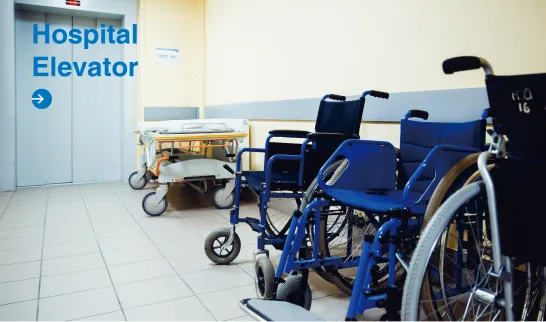
When we walk into a private healthcare facility, we often notice the clean corridors, the calming lighting, and the seamless flow of patients and staff. But behind these smooth operations lies a critical component that's easy to overlook—yet impossible to function without: the elevators. For private healthcare chains, hospital elevators aren't just metal boxes moving between floors; they're lifelines that connect patients to treatment, staff to emergency rooms, and medical supplies to critical areas. That's why choosing the right hospital elevator manufacturer isn't just a procurement decision—it's a commitment to safety, reliability, and the overall quality of care.
Let's start with the basics: in a busy hospital, every second counts. A patient in a wheelchair needs to reach the fifth-floor imaging department quickly. A nurse rushing with a crash cart can't afford a delay. An elevator that stalls or breaks down isn't just an inconvenience—it could put lives at risk. That's why private healthcare chains demand elevators that go beyond the standard "up and down" function. They need systems built for fireproof performance, designed to withstand heavy daily use, and tailored to the unique layout of medical facilities.
But it's not just about speed and durability. Modern hospitals are also prioritizing sustainability, aligning with global trends toward green building materials . Elevators, too, are part of this shift—from energy-efficient motors to materials that reduce carbon footprints. And in regions like the Middle East, where healthcare chains are expanding to meet growing demand, elevators must also adapt to local regulations, extreme weather conditions, and the specific vision of projects like Saudi Arabia's "2030 Vision," which emphasizes sustainable development and localized solutions.
Private healthcare chains don't just "buy elevators"—they invest in solutions that align with their brand promise of quality care. So, what makes a hospital elevator stand out for these demanding buyers? Let's break down the must-haves:
| Key Requirement | Why It Matters | Coloria's Approach |
|---|---|---|
| Safety First | Fire accidents in hospitals are rare but catastrophic. Elevators must comply with strict fireproof building materials standards to contain risks and ensure safe evacuation. | Our elevators integrate Class A fireproof components, tested to meet international standards and local regulations—because patient safety is non-negotiable. |
| Reliability Under Pressure | Hospitals operate 24/7. An elevator breakdown during peak hours disrupts workflows and delays critical care. | Decades of engineering experience mean our elevators are built with high-quality parts and rigorous testing—minimizing downtime and maximizing uptime. |
| Sustainability | Green healthcare isn't just a trend; it's a responsibility. Elevators contribute to a hospital's carbon footprint through energy use and materials. | We prioritize green building materials in design, from energy-efficient motors to recyclable cabin materials, aligning with global "green building" goals. |
| Customization | Every hospital has unique needs—narrow corridors, high-traffic areas, or specific aesthetic requirements (like antimicrobial finishes for infection control). | Our team works closely with healthcare chains to tailor elevator size, capacity, and design, ensuring they fit seamlessly into existing layouts. |
Here's the thing about running a private healthcare chain: managing multiple suppliers for different needs—elevators, wall panels, fireproof materials, and more—can be a logistical nightmare. That's where a one-stop architectural solution provider changes the game. At Coloria, we don't just sell hospital elevators; we offer a full ecosystem of building materials that work together to create safer, more efficient healthcare spaces.
Imagine this: You're overseeing the construction of a new hospital wing in Riyadh. You need elevators that meet Saudi fire safety codes, rust-resistant wall building materials for exterior cladding, and green building materials to qualify for sustainability certifications. Instead of coordinating with five different suppliers, you work with one partner who understands your vision, your timeline, and the local market—because they've been there.
That's the value of building materials supplier expertise. With 14 product categories spanning from solar panels to smart lighting, we integrate your elevator needs with everything else—so your project stays on schedule, under budget, and aligned with your brand's commitment to quality.
Private healthcare chains in the Middle East face unique challenges. Extreme temperatures, strict local regulations (like Saudi Arabia's "2030 Vision" focus on sustainability), and the need for rapid scalability demand a partner with building materials manufacturing experience and on-the-ground presence. That's where our decades of in the region come into play.
With a dedicated agency in Saudi Arabia, we don't just ship products—we understand the local landscape. We know that a hospital elevator in Jeddah needs to withstand sandstorms, while one in Dubai might prioritize energy efficiency to combat high cooling costs. Our elevators are engineered with these realities in mind, using lightweight building materials for easier installation and corrosion-resistant components to stand the test of time.
And it's not just about materials—it's about people. Our team in the Middle East works alongside your architects and contractors, offering technical support from design to delivery. We're not just a supplier; we're an extension of your project team, committed to making your healthcare facility the best it can be.
Today's private healthcare chains aren't just building hospitals—they're building legacies of care, and that includes caring for the planet. "Green building materials" isn't just a checkbox for LEED certifications; it's about creating healthier environments for patients and staff alike. Our hospital elevators reflect this commitment:
It's how we align with both global "green building materials manufacturers" standards and the growing demand for sustainable solutions in healthcare design.
For private healthcare chains, choosing a hospital elevator manufacturer is about trust. Trust that the elevators will work when lives depend on them. Trust that the materials are safe, sustainable, and built to last. Trust that you're partnering with a team that understands your unique needs—whether you're building a new facility in Riyadh or upgrading an existing chain in Kuwait.
At Coloria, we don't just sell elevators. We deliver one-stop architectural solution provider services that integrate safety, sustainability, and efficiency—because your patients deserve the best, and your team deserves peace of mind.
Let's build healthcare spaces that rise to the challenge—together.
When you partner with Coloria, you're not just getting a product. You're getting decades of building materials manufacturing expertise, a global network of support, and a commitment to your success. From our factory floors in China to our on-the-ground team in Saudi Arabia, we're with you every step of the way—because building better healthcare starts with better partnerships.
So, whether you're scaling your private healthcare chain or breaking ground on a new facility, remember: the right elevator manufacturer isn't just a supplier. They're a partner in care.
When you step into a private hospital, what catches your eye first? Maybe the warm lighting, the spotless corridors, or the reassuring presence of medical staff. But there's an unsung hero working behind the scenes, ensuring everything runs smoothly: the elevators. For private healthcare chains, hospital elevators are more than just a way to move between floors—they're critical links in the chain of care. Choosing the right hospital elevator manufacturer isn't just about buying equipment; it's about investing in patient safety, staff efficiency, and the reputation of your healthcare brand.
Think about a typical day in a private hospital. An elderly patient in a wheelchair needs to reach the third-floor dialysis unit. A nurse rushes to the emergency room with a stretcher. Medical supplies—from medication to surgical tools—must be transported quickly to operating theaters. In all these scenarios, elevators are the silent workhorses. But when they fail, the consequences can be dire. That's why private healthcare chains demand elevators that are reliable , safe , and built to handle the unique pressures of a medical environment.
It's not just about moving people and goods, though. Modern hospitals also prioritize patient comfort. A slow, noisy elevator can increase anxiety for someone already stressed about treatment. A cramped cabin makes it hard to maneuver a stretcher or wheelchair. That's why today's hospital elevators need to be as human-centered as they are functional—spacious, quiet, and designed with the well-being of passengers in mind.
Not all elevators are created equal, especially when it comes to healthcare. Private healthcare chains have strict criteria, and for good reason. Here's what sets a top-tier hospital elevator apart:
| Feature | Why It Matters | Our Solution |
|---|---|---|
| Fire Safety | Hospitals are high-risk environments for fires. Elevators must prevent flame spread and allow safe evacuation. | Our elevators use fireproof building materials in cabins and shafts, meeting Class A fire resistance standards for critical healthcare zones. |
| Sanitation | Hospital-acquired infections are a major concern. Elevator surfaces must resist bacteria growth and be easy to disinfect. | Antimicrobial stainless steel interiors and smooth, non-porous finishes that stand up to daily cleaning with harsh disinfectants. |
| Accessibility | Compliance with disability standards (like ADA) ensures all patients, including those with mobility issues, can use elevators safely. | Extra-wide doors, low buttons, and voice announcements for visually impaired passengers—customizable to local regulations. |
| Energy Efficiency | Green healthcare is no longer optional. Elevators contribute to a hospital's carbon footprint and operational costs. | Regenerative drives that capture energy during descent, cutting power usage by up to 35%—aligned with green building materials goals. |
| Durability | Hospitals run 24/7. Elevators face constant use, from heavy stretchers to frequent stops. | Heavy-duty motors and wear-resistant components, tested to handle 10,000+ cycles monthly without performance drops. |
Private healthcare chains in the Middle East have unique needs, shaped by local climate, regulations, and ambitious visions like Saudi Arabia's "2030 Vision." As a building materials supplier with decades of experience in the region, we understand these needs firsthand. Our elevators aren't just imported—they're engineered for the Middle East:
One of our recent projects involved a private healthcare chain expanding in Jeddah. They needed elevators that could handle daily traffic of 500+ passengers, resist sand erosion, and align with the chain's green building goals. Today, those elevators are the backbone of their facility, with zero breakdowns in three years—proof that understanding local needs makes all the difference.
"Working with Coloria wasn't just about buying elevators. They helped us integrate the elevators with our overall building materials—from fireproof wall panels to energy-efficient lighting. It's the one-stop building materials supplier approach that saved us time and headaches." – Healthcare Project Manager, Riyadh-based Private Chain
Here's the advantage of choosing Coloria: we don't just stop at elevators. As a one-stop architectural solution provider , we integrate your elevator needs with everything else your hospital requires. Need fireproof building materials for walls? We've got you. Looking for sustainable building materials for your facade? We supply those too. From ceiling panels to smart lighting, we streamline your supply chain so you can focus on what matters—caring for patients.
Our 14 product categories mean you can source all your building materials from a single partner, reducing logistics complexity and ensuring consistency in quality. For example, the same team that designs your elevators can also provide the WPC wall panels for your corridors or the PVC pipe fittings for your plumbing—all under one roof.
Private healthcare chains today aren't just building hospitals—they're building healthier communities, and that includes the planet. Our commitment to green building materials isn't just a marketing line; it's in our products. Our hospital elevators use recycled aluminum frames, low-VOC interior finishes, and energy-saving controls that reduce your facility's carbon footprint. It's how we support your brand's mission to be a leader in responsible healthcare.
We're also proud to contribute to Saudi Arabia's 2030 Vision, which emphasizes sustainable development and. By investing in green building materials and local talent, we help your healthcare chain align with national goals while creating jobs and supporting the community.
For private healthcare chains, every decision impacts patient care—and elevators are no exception. They're more than equipment; they're a reflection of your commitment to safety, efficiency, and innovation. When you partner with Coloria, you're choosing a building materials supplier who understands the unique demands of healthcare, has deep roots in the Middle East, and offers the high-quality, sustainable solutions your brand deserves.
Don't settle for generic elevators. Invest in solutions that grow with your chain, support your sustainability goals, and keep your patients and staff moving safely. Talk to Our Healthcare Materials Expert Today
Recommend Products












