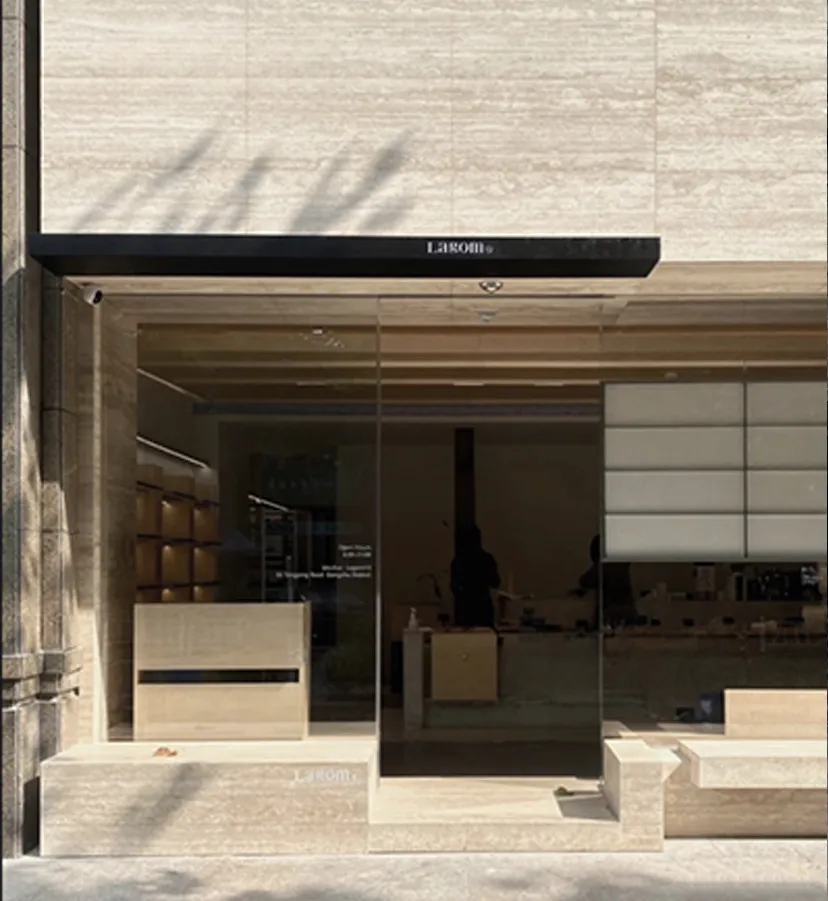
More Than Just a Pretty Stone
Picture water trickling through ancient limestone caves over centuries. That's travertine's origin story – mother nature's slow art project. Formed when mineral-rich groundwater deposits calcium carbonate, this sedimentary rock takes thousands of years to develop its signature look. Unlike granite or marble forged under intense pressure, travertine forms in tranquil settings like hot springs, resulting in its unique porous personality.
What really sets it apart? Those little holes you see aren't flaws – they're travertine's fingerprint. As organic materials like leaves decay during formation, they leave behind voids that become its characteristic texture. Some call these pores, others see them as nature's brushstrokes. Either way, they tell the stone's authentic story.
Texture: Travertine's Visual Signature
Close your eyes and run your hand over travertine. You'll feel a landscape of bumps, pits, and grooves that digital printing can't replicate. Those pores aren't random accidents – their size and distribution depend on the water's mineral content and flow speed during formation. Fast-flowing waters create finer textures, while gentle seeps allow larger cavities to develop.
Three main textures shape its personality:
-
Honed:
Silky smooth with understated matte sophistication
-
Tumbled:
Worn edges and softened surfaces that whisper "vintage charm"
-
Brushed:
Rustic linear grooves that catch the light beautifully
And let's talk fills – those creamy veins running through the stone. During processing, craftsmen fill cavities with resin or cement. Fully filled travertine offers sleek uniformity, while unfilled versions celebrate raw texture. There's no right choice here – only personal preference speaking.
Hardness: The Surprising Truth
On the Mohs scale (geology's hardness ruler), travertine scores 3-4 – softer than your kitchen granite but tougher than drywall. Don't let numbers fool you though. Actual durability depends on that porous structure we mentioned.
Think of travertine as a sponge in rock form. Those tiny cavities give it:
-
Impressive shock absorption (good at handling impacts)
-
Natural temperature regulation (cool under summer feet)
-
Surprising grip (especially when tumbled or brushed)
Where its softness matters:
Travertine Strength Snapshots
Compressive Strength: 80 N/mm²
Density: 2.71 g/cm³
Porosity: High
Heavy objects can dent it. Acidic spills might etch the surface. But with sensible care, it lasts generations – just look at the Roman Colosseum!
Where Travertine Shines (Literally)
Understanding texture and hardness unlocks smart applications:
Interiors: Bringing Earth Inside
Flooring:
Brushed or tumbled finishes offer slip resistance perfect for high-traffic kitchens. Just avoid lemon juice spills!
Feature Walls:
Unfilled travertine creates living art with shadows dancing across its cavities all day
Fireplace Surrounds:
Handles heat beautifully while radiating cozy vibes
Vanities:
Pair with matte fixtures for spa-like serenity
Exteriors: Tougher Than It Looks
Pool Coping:
Remains cool under bare feet while resisting water damage
Facades:
When integrated into a
wall cladding system
, its breathability prevents moisture buildup
Pathways:
Filled travertine withstands freeze-thaw cycles in temperate climates
Outdoor Kitchens:
Natural resistance to heat makes ideal countertops
Commercial Charm
Hotels adore it for lobbies – durable enough for luggage wheels, beautiful enough for Instagram moments. Boutiques use tumbled travertine floors to create gallery-like sophistication.
A Stone of Many Colors
Travertine's palette comes from mineral visitors during formation:
Ivory Travertine
Nearly pure calcium carbonate creates these soft creams and whites – perfect for brightening spaces
Walnut Travertine
Iron oxides introduce warm caramel tones that deepen with age like fine whiskey
Red Travertine
Manganese creates sunset hues ranging from peachy blush to deep rust
Silver Travertine
Glimmering quartz deposits give grey tones metallic sparkle under light
Pro tip: Always see large slabs before committing. Like snowflakes, no two pieces show identical patterns!
Choosing Your Perfect Match
Use this cheat sheet based on needs:
High-Impact Zones
Go for filled travertine with honed finish for maximum durability
Splash-Prone Areas
Choose filled varieties or quality sealants
Outdoor Installations
select frost-resistant grades with non-slip finishes
Feature Walls
Unfilled versions showcase dramatic natural textures
Living With Travertine
Travertine isn't high-maintenance – it just communicates clearly:
-
Wipe spills promptly (especially anything acidic)
-
Use pH-neutral cleaners – no harsh chemicals
-
Reseal annually for high-traffic floors
-
Accept minor dents and patina as character development
Unlike synthetic materials, travertine actually improves with age. A scratch isn't damage – it's the beginning of your shared history.
More Than Just Rock
That's the travertine journey – from ancient springs to modern spaces. Its porous texture tells geological tales, while its modest hardness invites connection. Few materials balance natural beauty and practical function so gracefully.
Whether creating a timeless entryway, a spa bathroom sanctuary, or an entire facade as part of a
wall cladding system
, travertine's variations become virtues. Those pores aren't imperfections – they're reminders of nature's artisanal process.
So next time you see travertine, run your hand across its surface. Feel those thousands of years of formation. See how light plays in its cavities. Then imagine it in your space – not as perfect stone, but as perfectly natural stone.