


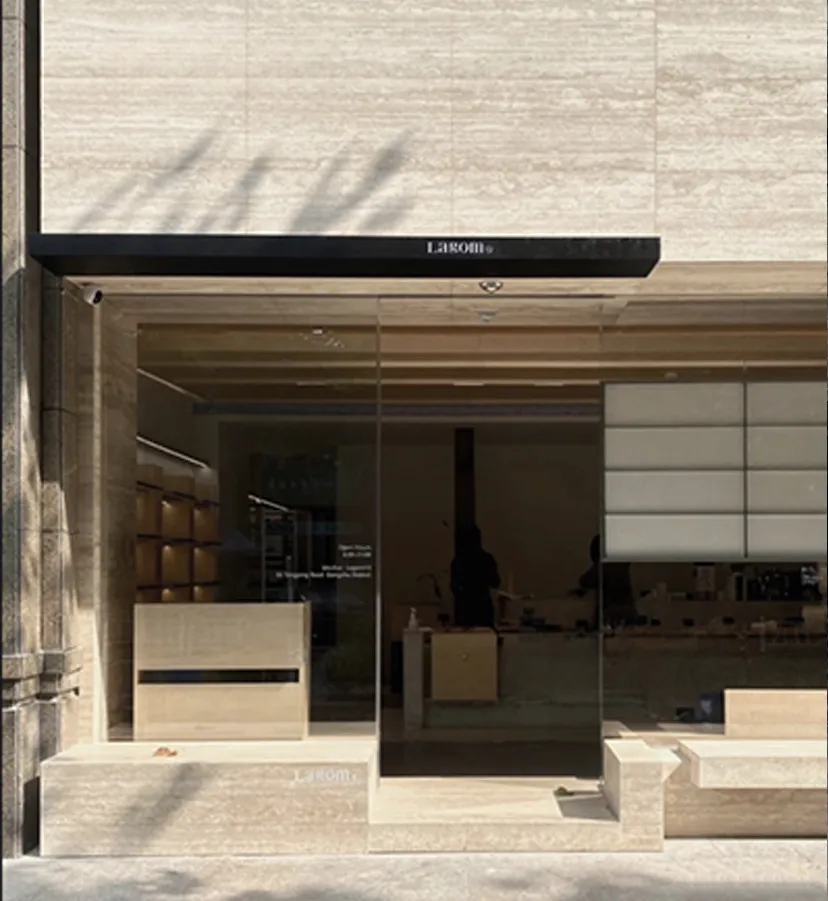
Imagine the earth slowly breathing over millennia, sculpting a stone that captures both timeless beauty and functional elegance. That's the story of travertine – nature's canvas where mineral-rich water weaves tales through stone.
Few natural stones bridge ancient craftsmanship and contemporary design like travertine. What makes it extraordinary isn't just its appearance but its biography – formed through Earth's slow-motion chemistry. As water travels through limestone landscapes, it dissolves calcium carbonate only to release it again through springs, creating layer upon layer of porous stone. This geological romance gives us travertine's signature holes and textures that designers have cherished since Roman engineers built the Colosseum.
What draws architects and homeowners isn't merely nostalgia but how travertine answers modern needs: it keeps bare feet cool around pools, provides tactile safety through natural grip, and whispers elegance without shouting extravagance. But the magic truly happens at the crossroads – where nature's imperfect beauty meets human craftsmanship. That's where travertine becomes a high-performance decorative stone .
Why Designers Fall For Travertine
Textured Charm
Those characteristic pores and veins? They're travertine's fingerprints. Each groove catches light differently throughout the day, creating living surfaces that interact with sunlight and shadow like nature's kaleidoscope.
Cool Comfort
Unlike artificial materials that trap heat, travertine naturally breathes. On scorching afternoons, patio tiles stay comfortably cool underfoot. Its thermal properties make it perfect around pools or sun-drenched courtyards.
Nature's Safety Net
When left in natural or textured finishes, those same holes and crevices create micro-grips underfoot. This inherent slip resistance makes travertine ideal for wet areas like bathrooms, spas, and pool decks.
Earth-Friendly Elegance
Created through Earth's slow filtration systems, travertine carries an intrinsically low carbon footprint. Being naturally formed and quarried rather than manufactured, it's biodegradable and lasts generations.
Where Travertine Shines
| Application | Ideal Finish | Why It Works |
|---|---|---|
| Pool Surrounds & Patios | Tumbled, Brushed | Natural texture provides grip when wet; stays cool; blends with landscape |
| Bathroom Walls & Floors | Honed, Resin-Filled | Water resistant when sealed; warm visual texture; spa-like ambiance |
| Kitchen Backsplashes | Polished, Vein-Cut | Adds organic warmth to cooking spaces; resistant to heat splatter |
| Fireplace Surrounds | Chiseled, Split-Face | Contrasts fire's movement with natural texture; heat-resistant |
| Statement Furniture | Open-Pored, Brushed | Showcases natural holes as art features; durable for daily use |
Finishes That Shape Character
Honed Finish
Smooth as silk under your palm but matte in appearance, this finish feels substantial and modern. It reveals subtle mineral patterns without glare, making walls appear softly luminous without overwhelming a space.
Tumbled & Brushed
This gentle aging process rounds edges and softens surfaces, giving stone a naturally weathered character. Ideal for creating rustic charm where foot traffic should feel organic rather than polished.
Resin-Filled
A clear epoxy fills the natural holes while leaving the texture visually intact. You get the porous beauty with a smooth, stain-resistant surface perfect for kitchens where spills happen.
Open-Pored
Celebrating nature's handiwork, this untamed finish lets light play in the crevices, creating dramatic shadows and organic artfulness. Showstopper feature walls take on sculptural qualities.
Caring For Your Stone Story
Like anything naturally beautiful, travertine thrives with mindful attention:
- Sealant Friends: Apply impregnating sealants annually to create invisible barriers against stains without altering the stone's breathability
- pH Balance: Use neutral pH cleaners specifically formulated for natural stone – vinegar and citrus etch surfaces
- Blot Don't Rub: Treat spills like wine or oil with quick absorption rather than scrubbing
- Rug Strategy: Place mats in high-traffic indoor areas to capture abrasive particles that could scratch
With this care, travertine develops a richer patina over decades, like leather softening with use.
Travertine's Modern Renaissance
Contemporary designers are rediscovering travertine not just as cladding but as sculptural material. Those very holes that once made architects hesitant are now celebrated as organic art. The play between solid and void creates depth that flat materials can't replicate.
In custom furniture, travertine slabs become tables where meals happen above mineral landscapes formed over millennia. The juxtaposition creates meaning – your morning coffee sits atop geological history.
Architects are pushing boundaries too, using translucent travertine slices as backlit feature walls where light filters through the stone's organic cavities. Other innovators combine rough-chiseled edges with polished surfaces on single slabs, celebrating tension between nature and craftsmanship.
Contrast Play
Modern interiors juxtapose travertine's warmth against glass, steel, and concrete. The organic texture softens sleek architecture.
Sculptural Element
Designers commission monolithic sinks and bathtubs carved from single blocks, turning functional items into gallery pieces.
Dimension Fusion
New fabrication techniques combine multiple stone layers, creating functional art where texture changes dramatically across surfaces.
True sustainability lies not just in eco-friendly materials but in enduring designs. Travertine satisfies both – requiring minimal processing compared to manufactured composites while offering timeless beauty that avoids trends. This ancient stone remains relevant precisely because it connects us to natural processes while adapting to modern aesthetics through thoughtful surface treatments.
From quarry to finished piece, travertine teaches us balance. We preserve its geological narrative through careful treatments that protect without disguising its character. Those holes? They're not imperfections but geological signatures. And the finishes? They're conversations between human ingenuity and nature's artistry. This balanced approach creates surfaces filled with depth, character, and quiet sophistication – proving durability and beauty aren't mutually exclusive.










